
Ebola: The Memory and Cynicism
By Bagudu Mohammed
It began, again, with a journey. On October 3, 2026, a woman arrived in Abuja from Uganda. By October 7, she developed symptoms, but when she visited a private hospital on October 11, her fever was initially mistaken for malaria. It was not until October 19 that her travel history raised concerns. On October 21, Olajumoke Babatunde, Director of Public Health Laboratory Service at the NCDC, confirmed that molecular tests had identified the Bundibugyo strain of Ebola.
This was not the strain Nigeria encountered in 2014. The Bundibugyo strain is associated with the ongoing outbreak in the Democratic Republic of Congo (DRC), where thousands of infections and deaths have been reported. Unlike the Zaire strain responsible for Nigeria’s 2014 outbreak, Bundibugyo has no licensed vaccine or specific approved treatment. By October 22, reports indicated that the patient, identified as a diplomat, had developed multiple-organ failure.
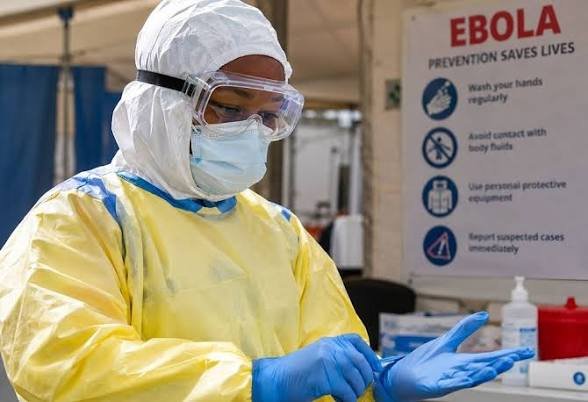
Authorities subsequently intensified contact tracing and surveillance. Forty-four close contacts were reportedly being monitored, while Anambra and Ogun states announced tracing efforts involving 40 and 111 persons respectively. Niger State also began activating its isolation centre. The familiar advice followed: avoid contact with bodily fluids, practise hand hygiene and report symptoms after travelling to affected areas.
But familiarity is part of the problem. Nigeria has been here before, and memory is a complicated teacher.
On July 20, 2014, Liberian-American Patrick Sawyer arrived in Lagos with Ebola. At First Consultants Medical Centre, Dr Ameyo Stella Adadevoh resisted pressure to release him and insisted on isolation. Sawyer died five days later, but transmission had already occurred, including a subsequent chain linked to Port Harcourt. Nigeria recorded 20 cases, comprising 19 confirmed and one probable, with eight deaths.
The response became an international example of successful containment. Federal and Lagos State authorities, the NCDC and the World Health Organization established an Emergency Operations Centre, traced 894 contacts and conducted more than 18,500 face-to-face visits. The last case was recorded on August 31, and the WHO declared Nigeria Ebola-free on October 20, 2014.
Between 2014 and 2026, Nigeria experienced no indigenous Ebola outbreak. Yet the present case raises a different challenge: the virus belongs to a strain without the vaccine available for the Zaire strain.
Ulrich Beck’s Risk Society theory explains how modern mobility creates new risks, as international flights transport people across continents within hours. Paul Slovic’s research on risk perception similarly shows why unfamiliar, uncontrollable and frightening threats provoke disproportionate public anxiety. Ebola embodies these characteristics.
However, Nigeria’s response cannot be understood without remembering COVID-19. Under President Muhammadu Buhari, the pandemic generated extraordinary fear, lockdowns, restrictions and economic disruption. Although the disease caused substantial suffering, many Nigerians experienced relatively mild illness or recovered, while the catastrophic mortality witnessed in some countries abroad was not replicated on the same scale locally.
For some citizens, this difference created a troubling perception that precautions had been excessive or financially motivated. Pregnant women asked to undergo tests that returned negative, patients subjected to precautionary procedures and communities facing restrictions began questioning the intentions behind public health interventions.
This reflects the Social Amplification of Risk Framework developed by Kasperson and colleagues: public perceptions of danger are shaped and magnified through institutions, media and social interactions. When feared consequences do not materialise on the anticipated scale, precaution can be misinterpreted as exploitation, creating fertile ground for conspiracy theories.
Political and religious figures reinforced this distrust. Kogi State’s former governor, Yahaya Bello, repeatedly questioned the presence and seriousness of COVID-19 in his state, described it as glorified malaria and challenged aspects of the federal response. Cross River’s former governor, Ben Ayade, also disputed the reported situation in his state. Religious figures, including Pastor Chris Oyakhilome, promoted claims connecting the pandemic to broader conspiracies, while Bishop David Oyedepo opposed restrictions on church services. Other public figures amplified vaccine and depopulation theories.
These controversies illustrate how misinformation can undermine public cooperation during health emergencies.
The Health Belief Model, associated with Rosenstock and colleagues, explains that health behaviour depends not only on medical facts but also on perceived susceptibility, severity and the benefits of preventive action. When citizens believe a disease poses little danger, they become less willing to accept costly restrictions. Trust is therefore indispensable. Without it, even scientifically justified measures can appear politically motivated.
The dilemma is particularly difficult because successful prevention can make the original threat seem exaggerated. When a disaster is avoided, people may question why precautions were necessary. Yet the absence of catastrophe does not prove that preparation was unnecessary. In public health, the cost of precaution must be weighed against the potentially irreversible consequences of inaction.
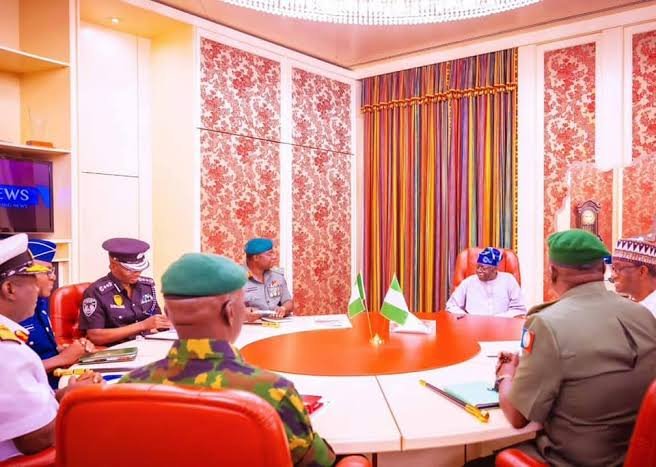
It is against this background that former Vice President Atiku Abubakar’s reported reaction to the latest Ebola case must be understood. According to Daily Trust, Atiku questioned the Tinubu administration’s handling of Ebola preparedness, demanded an audit of the ₦10 billion reportedly approved for preparedness in June and warned against using the outbreak to discourage participation in the 2027 elections. His campaign communication team described the alleged political strategy as the “Bola-Ebola strategy.”
These are political allegations that require evidence and independent scrutiny. Accountability for public funds is legitimate, just as concerns about the politicisation of public health deserve examination. However, neither should distract from the immediate need to contain the outbreak.
Nigeria’s experience demonstrates how political distrust can influence public health behaviour. When citizens suspect that health authorities serve political interests, even credible warnings may be dismissed. People may embrace political narratives not because they are scientifically established, but because those narratives confirm existing suspicions.
The consequences could be serious. Ebola containment requires cooperation among government agencies, health workers, communities and individual citizens. Delayed reporting, concealment of symptoms and refusal to cooperate with contact tracing can undermine an otherwise effective response.
The danger, therefore, is not merely the virus but the environment of suspicion surrounding it. When rumours become more persuasive than evidence, public discourse loses its capacity to distinguish facts from speculation. Informal conversations begin to carry greater authority than professional medical advice, while political narratives overshadow the practical requirements of disease control.
Nigeria must confront both challenges simultaneously: the biological threat posed by Ebola and the cynicism inherited from previous public health controversies. Transparency, credible communication, accountable leadership and public cooperation are essential.
Lastly, we must fight two outbreaks at once: the virus in the blood and the cynicism in the mind.
Bagudu Mohammed is the founder of Alternative Perspectives, a widely read commentary platform on social media, and writes a weekly newspaper column published every Monday on the back page of Peoples Daily.Web: https://alternativeperspective.onrender.com