
Stable, prosperous North essential for Nigeria’s unity, growth – CEDDERT Executive Director

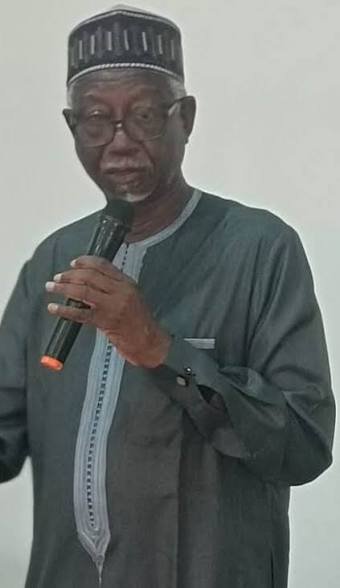
Professor Abubakar Siddique Mohammed
The Executive Director, Centre for Democratic Development Research and Training (CEDDERT), Professor Abubakar Siddique Mohammed, has called for deliberate investments to counter the high level of insecurity and underdevelopment in Northern Nigeria, which contains majority of Nigeria’s population and poor people.
In a paper on Nigerian Socio-economic and Security Challenges: Implications for Northern States, presented at the 2nd General Hassan Usman Katsina Memorial Lecture on Saturday in Kaduna, Professor Siddique said <span;>Nigeria would not move from its present level of development if it continues to leave half the country behind.
“Northern Nigeria is at the heart of Nigeria’s challenges – and its potential. The region’s sheer scale is pivotal: it contains majority of Nigeria’s population and the majority of the country’s poor.
“With poverty rates around 70% and literacy around 30% in the North-West/North-East, Nigeria cannot achieve middle-income or developed status while leaving half the country behind,” he said.
He noted that the World Bank had observed that almost all the increase in the number of Nigerians living in extreme poverty since 2010 has come from the North, thereby offsetting any progress in the South.
“This means national poverty reduction targets (e.g. lifting 100 million out of poverty in a decade) are unattainable without a drastic turnaround in the North.”
“A stable, prosperous Northern Nigeria is essential for Nigeria’s unity and growth,” the Professor added, explaining that if the North’s per-capita income and human development matched the South’s, Nigeria’s GDP could be at least 2–3% higher and the national poverty rate would drop by more than 20 percentage points.
“Likewise, achieving the Sustainable Development Goals (SDGs) for Nigeria by 2030 heavily depends on progress in the North – currently, states like Sokoto and Bauchi rank at the bottom on nearly all SDG indicators (UN SDG Index, 2022).”.
He observed that insecurity in the North also has national spillovers on food inflation, which hit 23% a 17-year high in 2022, because of supply disruptions driven by conflicts.
“Conversely, peace in the North would boost investor confidence countrywide and allow reallocating billions from military spending to development.
“In short, Nigeria’s long-term stability, economic ambitions (e.g., becoming a top-20 economy), and international standing hinge on effectively addressing Northern Nigeria’s socio-economic and security crises.
“The data and analysis presented reinforce that without bold reforms and inclusive growth in the North, Nigeria’s overall development will remain fragile and uneven.
“The urgency for evidence-based strategies and sustained commitment to transform Northern Nigeria cannot be overstated – it is both a regional imperative and a national necessity,” Professor Sadique said.
He also called for thorough institutional reforms to enhance security, access to education, i<span;>nterfaith and inter-ethnic dialogue, leveraging agricultural and mineral resources to drive development, and deliberate job creation strategies to address mass unemployment in the region.
The Professor said that the traditional justice and reconciliation mechanisms should be revived while efforts must be strengthened in b<span;>uilding public trust through rule of law reforms.
He added that anti-corruption and transparency measures are needed to restore trust as Nigeria’s corruption perception presently is very poor, and also c<span;>ivil service and local government reforms to ensure the delivery of critical services to the public.
On security, he backed ongoing r<span;>eintegration of ex-combatants to break the cycle of violence, saying that the <span;>mix of force and reconciliation are needed to restore peace.
In this respect, he called for the institutionalisation of c<span;>ommunity-led early warning systems to reinforce efforts of security forces to prevent major violence, and the i<span;>nterfaith and inter-ethnic dialogue platforms, which have shown success in reducing violence in some states like Plateau and Kaduna.
He also advocated for the re-orientation of the security forces toward intelligence and prevention, so as to predict and prevent outbreaks of violence through data – a needed shift from the past, where lack of timely intel often meant the military arrived only after mass casualties.
Professor Sadique said efforts toward modernizing the military’s capabilities for asymmetric warfare should continue, with focus on<span;> investment in surveillance drones, mine-resistant vehicles, and special forces training, which will enable security forces to better protect communities without excessive collateral damage.
On unemployment, Professor Sadique said targeted empowerment for young women and vulnerable youth are necessary, in addition to e<span;>ncouraging entrepreneurship, aligning the NYSC and similar programs with entrepreneurship, s<span;>kills acquisition and vocational trainings, and p<span;>romoting entrepreneurship and MSMEs in Northern Nigeria.
He also said l<span;>everaging the North’s solid minerals and renewable energy potential will improve electricity access and could make the North a net power supplier.
The CEDDERT Executive Director said there should be massive investment in agriculture value-chain development to move beyond the present subsistence farming while livestock and ranching initiatives to reduce herder-farmer conflict and boost the meat and dairy industry should be given priority.
According to him, these measures including expanding access to secondary and tertiary education in the North, and improving quality via teacher training and curriculum reform, as well as mass enrollment drives and safety of schools must be pursued with vigour to change the negative development narratives in the Northern region.