
Jigawa is committed to establishing 
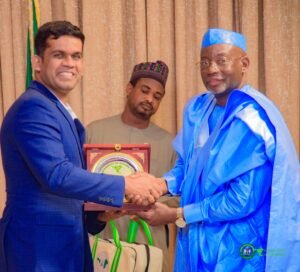 hatchery, feed production facility- Gov Namadi
By Ali Baba-Inuwa
Gov. Umar Namadi of Jigawa State, says the state is committed to establishing a hatchery and feed production facility, alongside promoting training and technology transfer to empower local farmers.
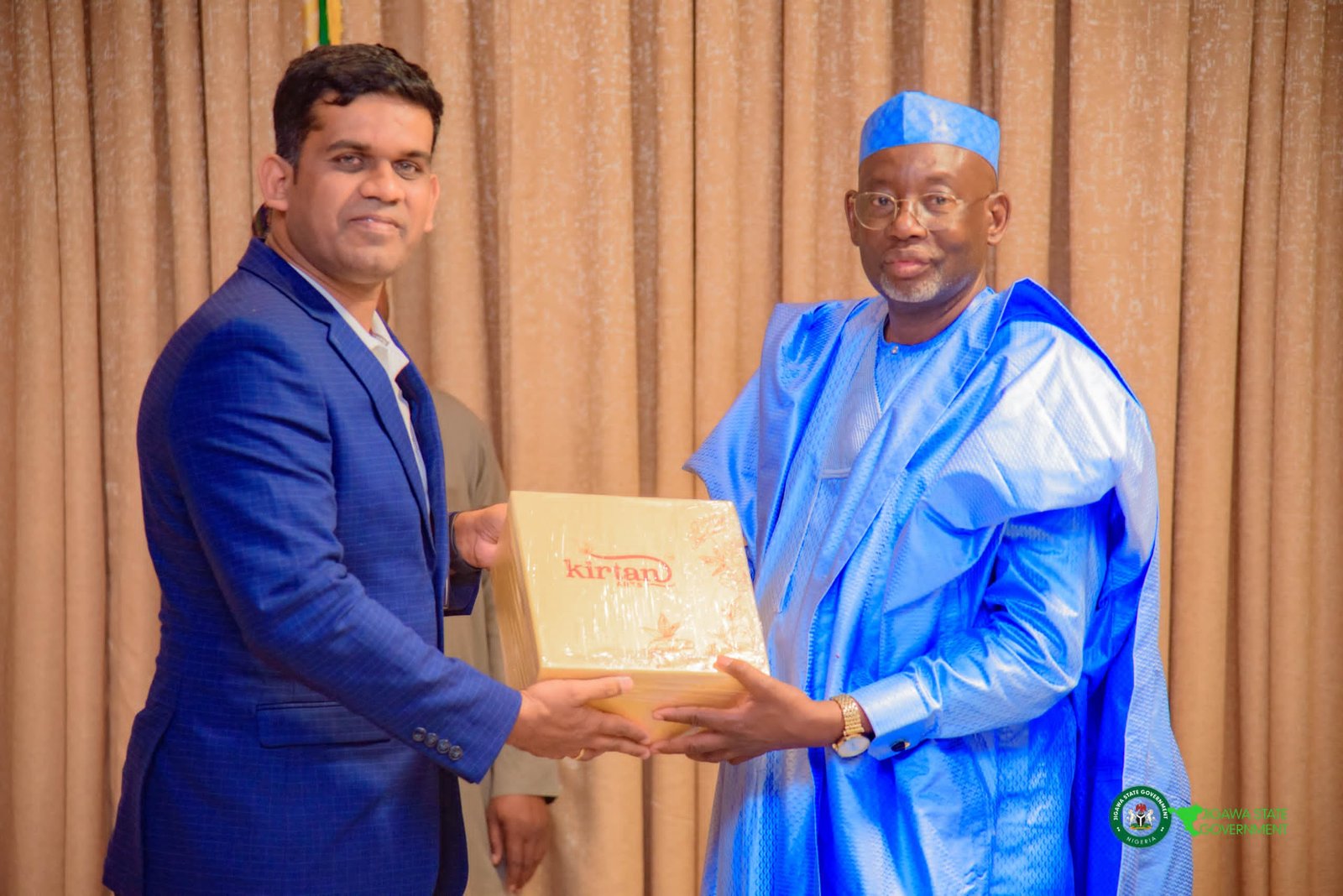
Namadi stated this over the weekend, when he received a high-level technical delegation from Srinivasa Farms Pvt. Ltd., India, led by the company’s Vice President, Mr. Senthil Kumar Krishnan, during a courtesy visit at the Government House, Dutse.
The visit followed the Jigawa State Government’s earlier investment mission to India in May 2025, where discussions were held on strategic partnerships in agriculture, particularly in poultry development.
As part of its engagement in the state, the delegation is undertaking a four-day technical assessment across Kazaure, Gumel, Hadejia, and Dutse where they will be evaluating both private and state-owned poultry facilities, engaging local farmers, and exploring key areas of collaboration, including the establishment of a modern hatchery and poultry feed mill in Jigawa State.
Namadi described the partnership as a major step toward unlocking vast economic opportunities for the state, emphasizing its potential to generate large-scale employment for youths, boost internally generated revenue (IGR), and transform rural livelihoods.
He highlighted that the engagement represented a continuation of earlier discussions held in India.
“This collaboration will be a win-win situation, with direct benefits to poultry farmers across Jigawa State, which remains our core objective,” he stated.
The governor reaffirmed his administration’s commitment to leveraging private sector expertise to drive food security and industrial growth, stating that the state was deliberately building a sustainable poultry value chain that benefits all citizens.
“This is a return visit following our earlier engagement in India, where we explored partnerships in several areas, including poultry development. This is the fourth group from India visiting us as a direct outcome of that trip,” he said.
He said that Jigawa State had already begun reaping the benefits of the investment mission, including agreements on seed production with CornTech and collaborations with Agrighar, an agribusiness enterprise, as well as engagements in dairy development.
“Today, we are pleased to receive representatives of Srinivasa, a major poultry company in India. You have seen our environment, assessed our potential, and we believe this collaboration will significantly improve poultry production and increase farmers’ incomes,” the governor added.
Namadi emphasized that the state is committed to establishing a hatchery and feed production facility, alongside promoting training and technology transfer to empower local farmers.
“This collaboration will be a win-win situation, with direct benefits to poultry farmers across Jigawa State, which remains our core objective,” he stated.
In his remarks, Mr. Senthil Kumar Krishnan delivered a presentation outlining the structure and operations of Srinivasa Farms Pvt. Ltd., noting that the company has over 60 years of experience in the poultry industry, with operations spanning multiple countries.
He explained that the company specializes in hatchery management, feed production, and egg production, among other areas. He added that the delegation’s tour across Jigawa State revealed strong potential for partnership, due to similarities in climate and agricultural conditions between parts of India and Jigawa State.
Krishnan further highlighted that the proposed collaboration is designed to support small and medium-scale farmers through access to quality chicks, affordable feed, veterinary support, and guaranteed market linkages, thereby enabling them to transition into more productive and profitable poultry enterprises.
He also said that the initiative would introduce modern poultry practices, improve biosecurity standards, and strengthen the entire ecosystem, ensuring consistent supply of eggs and poultry meat while reducing losses and inefficiencies.
Jigawa is committed to establishing hatchery, feed production facility- Gov Namadi