
 Nigeria, Mali Reset Ties, Deepen Sahel Security Talks at UNGA81
By Michael Olugbode
Nigeria and Mali have moved to strengthen political engagement and bilateral cooperation, with the worsening security situation in the Sahel emerging as a major focus of high-level talks between the two countries on the sidelines of the 81st United Nations General Assembly in New York.
Nigeria, Mali Reset Ties, Deepen Sahel Security Talks at UNGA81
By Michael Olugbode
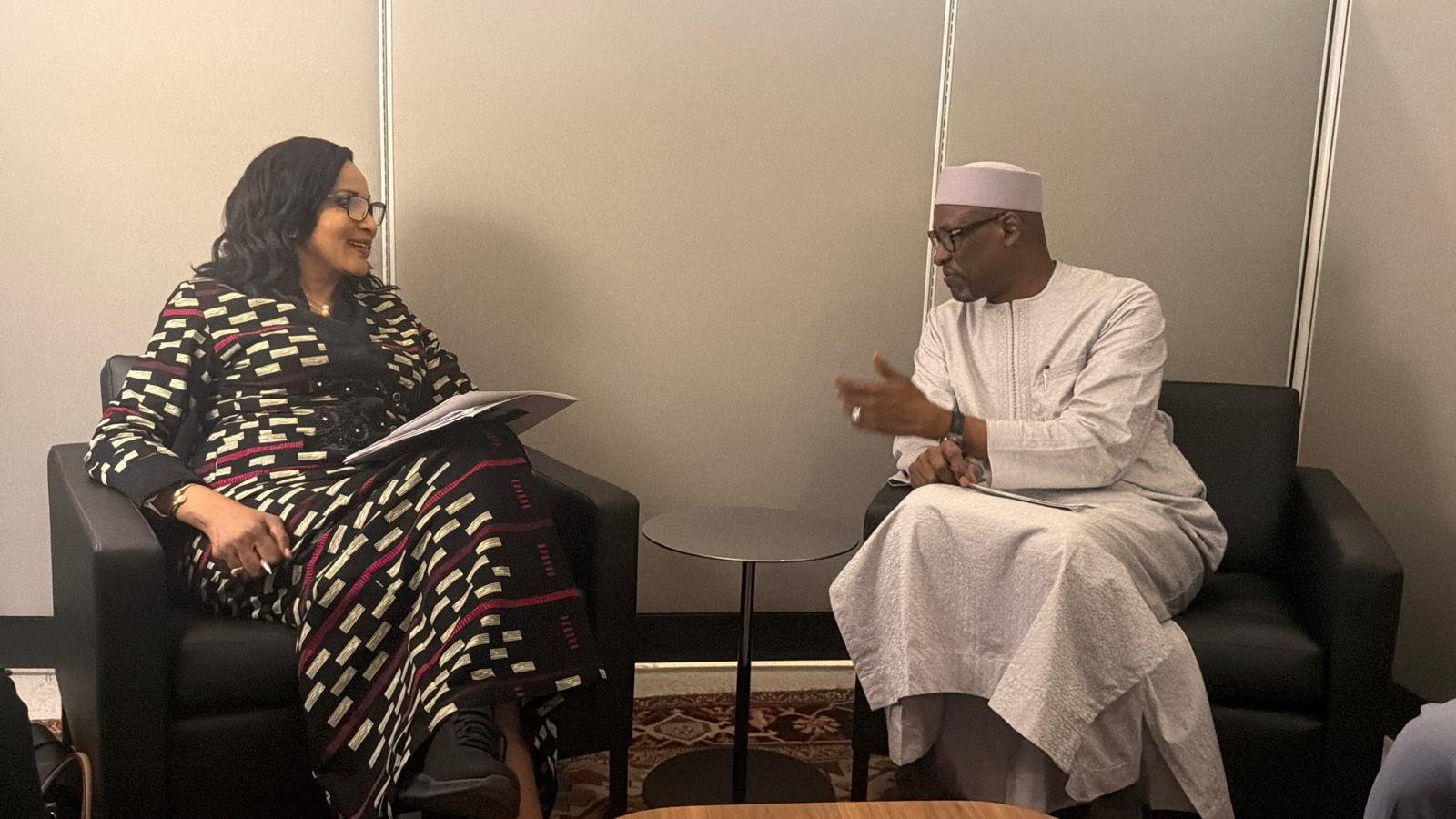
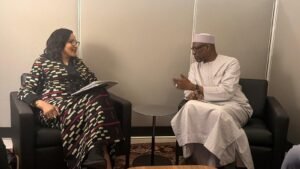
Nigeria and Mali have moved to strengthen political engagement and bilateral cooperation, with the worsening security situation in the Sahel emerging as a major focus of high-level talks between the two countries on the sidelines of the 81st United Nations General Assembly in New York.The development came as Nigeria’s Minister of Foreign Affairs, Ambassador Bianca Odumegwu-Ojukwu, held bilateral discussions with her Malian counterpart, Minister of Foreign Affairs and International Cooperation, Abdoulaye Diop, in an effort to deepen direct political consultations between Abuja and Bamako.
The meeting is significant against the backdrop of profound political and security realignments in West Africa, particularly Mali’s evolving relationship with the Economic Community of West African States (ECOWAS) and its membership of the Alliance of Sahel States (AES).
At the meeting, Odumegwu-Ojukwu reaffirmed Nigeria’s historical ties with Mali and stressed Abuja’s interest in seeing a stable, peaceful and prosperous Sahel, warning implicitly that insecurity in the region cannot be effectively contained by individual countries acting in isolation.
She identified terrorism, violent extremism, organised crime, trafficking, proliferation of arms and illicit financial flows as cross-border threats requiring stronger regional responses and sustained cooperation among neighbouring states.
The minister also stressed the principle of African ownership of solutions to the continent’s peace and security challenges, while encouraging sustained dialogue between Mali, other West African countries and regional institutions.
The discussions extended beyond security to the changing political architecture of the region, including Mali’s relationship with ECOWAS, the dynamics of the AES and the role of African Union peace and security mechanisms.
The two ministers also examined regional integration, bilateral trade and economic relations, mobility and people-to-people contacts, reflecting an effort to ensure that the relationship between Abuja and Bamako is not defined solely by security concerns.
Odumegwu-Ojukwu further expressed Nigeria’s willingness to sustain constructive bilateral consultations with Mali and strengthen cooperation at the multilateral level, including mutual support for Nigeria’s multilateral candidatures.
The latest engagement builds on steps taken by both countries in July 2026 to revitalise their Joint Commission, with security, trade, energy, irregular migration, human trafficking and the Bilateral Air Services Agreement (BASA) identified as priority areas.
The renewed engagement comes at a critical juncture for West Africa, where political transitions, security threats, shifting regional alliances and questions over the future of regional integration have complicated relations among neighbouring states.
For Nigeria, deeper engagement with Mali provides an avenue for maintaining dialogue with a strategically important Sahelian country while continuing to pursue broader regional cooperation on security, economic relations and integration.
The Foreign Affairs Minister therefore reiterated Nigeria’s commitment to supporting peaceful and African-led responses to the interconnected security and development challenges confronting West Africa and the Sahel.
The meeting, held during UNGA81, effectively placed Nigeria-Mali relations within the wider debate over how African countries can rebuild regional cooperation and coordinate responses to threats that increasingly transcend national borders.