

 ECOWAS, AfDB Launch $650m Rice Programme, Target 100% Self-Sufficiency by 2035
…Over one million farmers targeted across 14 countries as West Africa moves to close production gap, strengthen food security and cut import dependence
The Economic Community of West African States (ECOWAS), the African Development Bank (AfDB) and AfricaRice have launched a regional rice development initiative aimed at transforming the agricultural value chain across West Africa, with a target of achieving 100 per cent rice self-sufficiency by 2035.
The Regional Rice Value Chain Development Programme, known as REWARD, is designed to boost local production, strengthen processing and marketing infrastructure, expand regional trade and reduce the sub-region’s dependence on imported rice.
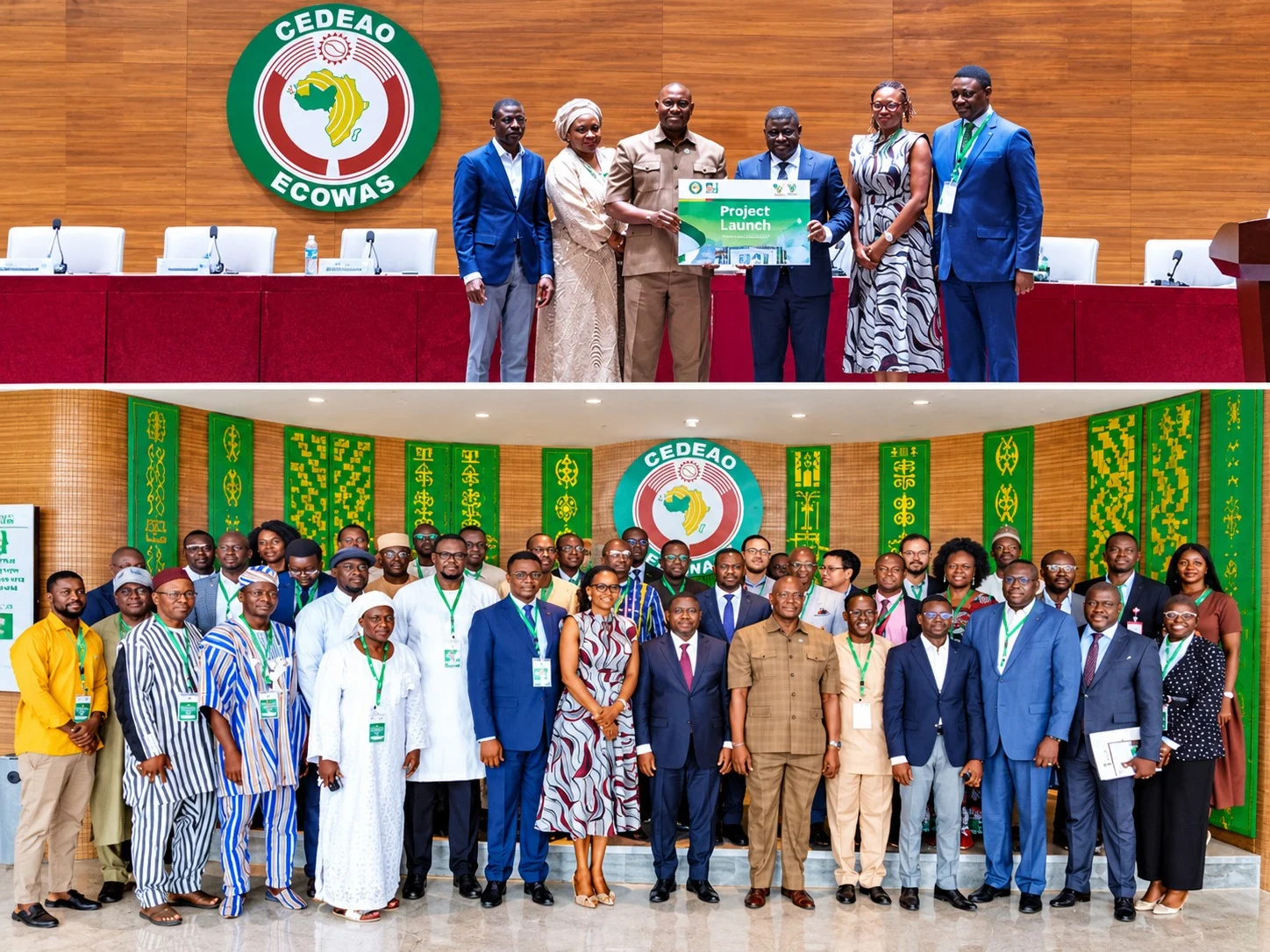
The initiative, unveiled on Wednesday at the ECOWAS Commission headquarters in Abuja, comes as West Africa faces the challenge of meeting rapidly growing rice consumption demand amid persistent production deficits, inadequate agricultural infrastructure and vulnerability to international food market disruptions.
The programme is expected to mobilise substantial investments across participating countries, with more than one million farmers projected to benefit, particularly women and young people.
Speaking at the launch, the ECOWAS Commissioner for Economic Affairs and Agriculture, Mr Dehpue Yenpea Zuo, stressed that achieving food sovereignty in West Africa required a decisive shift towards increased local production, stronger agricultural value chains and reduced exposure to external market shocks.
The Commissioner identified low agricultural productivity, inadequate irrigation facilities, limited access to quality seeds and other agricultural inputs, insufficient processing infrastructure and funding constraints as major obstacles undermining the region’s rice sector.
He maintained that addressing these challenges would require coordinated regional action, sustained investment and stronger partnerships among governments, financial institutions, research organisations and private-sector operators.
The Commissioner disclosed that the wider REWARD investment portfolio was estimated at approximately $25 billion, while $1.5 billion in firm commitments had been mobilised at a regional financing conference in Accra, Ghana, to support agricultural production, farmers, agribusinesses and rice value-chain development.
He said the launch also marked the establishment of a steering committee to provide strategic oversight for the programme’s implementation within the 2025–2035 framework.
In his goodwill message, the representative of the African Development Bank emphasised that West African countries must move beyond producing rice merely to satisfy domestic consumption and develop sufficient capacity to support processing, exports and cross-border trade.
He disclosed that the wider REWARD investment platform was designed to mobilise $850 million across 14 countries, with more than one million farmers expected to benefit from its interventions.
Women and young people, he said, would be among the major beneficiaries of the initiative.
The AfDB representative further disclosed that the programme component being launched had received a $12 million grant from the bank, alongside an in-kind contribution of $1.2 million from the ECOWAS Commission.
He called for stronger agricultural production systems and investment in the entire value chain to enable West African countries to become competitive rice producers and suppliers within the regional market.
Also delivering a goodwill message on behalf of the Director-General of AfricaRice, Dr Baboucarr Manneh, his representative described REWARD as an important step towards developing a more productive, competitive and sustainable rice industry in West Africa.
He identified poor access to quality seeds, climate variability, inadequate mechanisation, post-harvest losses and limited private-sector investment as persistent challenges affecting rice production across the sub-region.
He stressed the importance of regional cooperation, scientific innovation and increased public- and private-sector investment in addressing the constraints and improving the competitiveness of locally produced rice.
According to him, strengthening research, technology adoption and agricultural innovation would be critical to improving productivity and building a rice sector capable of responding to changing climatic conditions and growing food demand.
Under the programme, interventions will be organised around four major components: sustainable and climate-resilient rice production; improved processing and marketing; regional policy and regulatory reforms; and programme coordination and management.
The interventions are expected to improve farmers’ productivity and incomes, strengthen the capacity of rice processors, create economic opportunities for women and young people, and facilitate trade in locally produced rice across national borders.
Providing further details on the regional rice agenda, the Coordinator of the ECOWAS Rice Agenda and REWARD Project, Boladale Adebowale, said West Africa currently produces only about 60 per cent of the rice it consumes, leaving a substantial supply gap that continues to be met through imports.
He explained that the region would need to produce approximately 35 million metric tonnes of rice to meet projected consumption requirements, making increased production and productivity essential to achieving the 2035 self-sufficiency target.
Adebowale said the programme would focus not only on increasing production but also on developing efficient processing, marketing and distribution systems to ensure that locally produced rice could compete effectively in regional markets.
He disclosed that the ECOWAS Rice Observatory had been established to coordinate interventions, investments and activities in the regional rice sector, improve collaboration among stakeholders and ensure that resources were deployed more effectively.
He described the $1.5 billion mobilised at the Accra Regional Rice Roundtable earlier in the year as an important commitment towards advancing the regional rice development agenda.
On implementation, Adebowale disclosed that Côte d’Ivoire, Guinea-Bissau, The Gambia, Mali and Senegal constituted the first group of participating countries, with other ECOWAS member states expected to join in subsequent phases.
Nigeria, one of West Africa’s major rice-producing and consuming countries, is expected to participate in the next phase.
The event attracted key regional and international development stakeholders, including the Director of Agriculture and Rural Development at the ECOWAS Commission, Dr Madadozi Tezike; the Director-General of AfricaRice, Dr Baboucarr Manneh, represented by a senior official; and the African Development Bank Vice-President, Dr Abdul Kamara.
The organisers said the programme’s performance would be assessed through measurable improvements in rice production, farmers’ incomes, regional trade and reduced dependence on imported rice.
Beyond the immediate objective of increasing production, REWARD represents an effort to reposition agriculture as a major driver of regional economic integration, employment generation and food security.
For West Africa, the initiative also underscores the need to transform the rice sector from fragmented national production systems into a more integrated regional value chain in which countries can leverage their agricultural capacities, processing industries and markets.
However, achieving the 2035 target will depend on the effective implementation of commitments, sustained financing, access to modern agricultural technologies, improved irrigation, climate-resilient farming and the ability of participating governments to create an enabling environment for private-sector investment.
With more than one million farmers expected to benefit from the wider investment platform, ECOWAS and its development partners are betting on coordinated regional action to reduce import dependence, strengthen agricultural resilience and secure a more sustainable food future for West Africa.


Comments