
UMTH Advances Women’s Health with Minimally Invasive Uterine Fibroid Treatment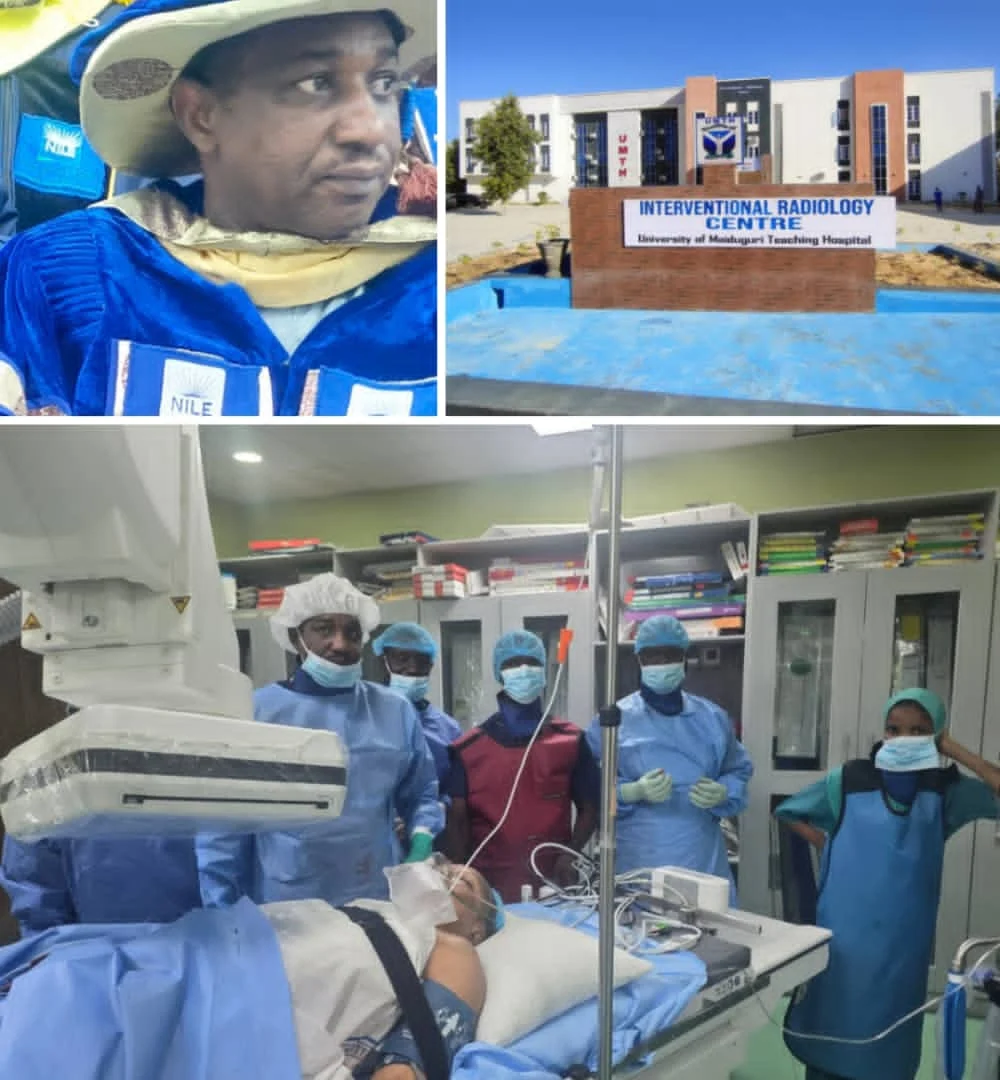
By: Dr. James Bwala
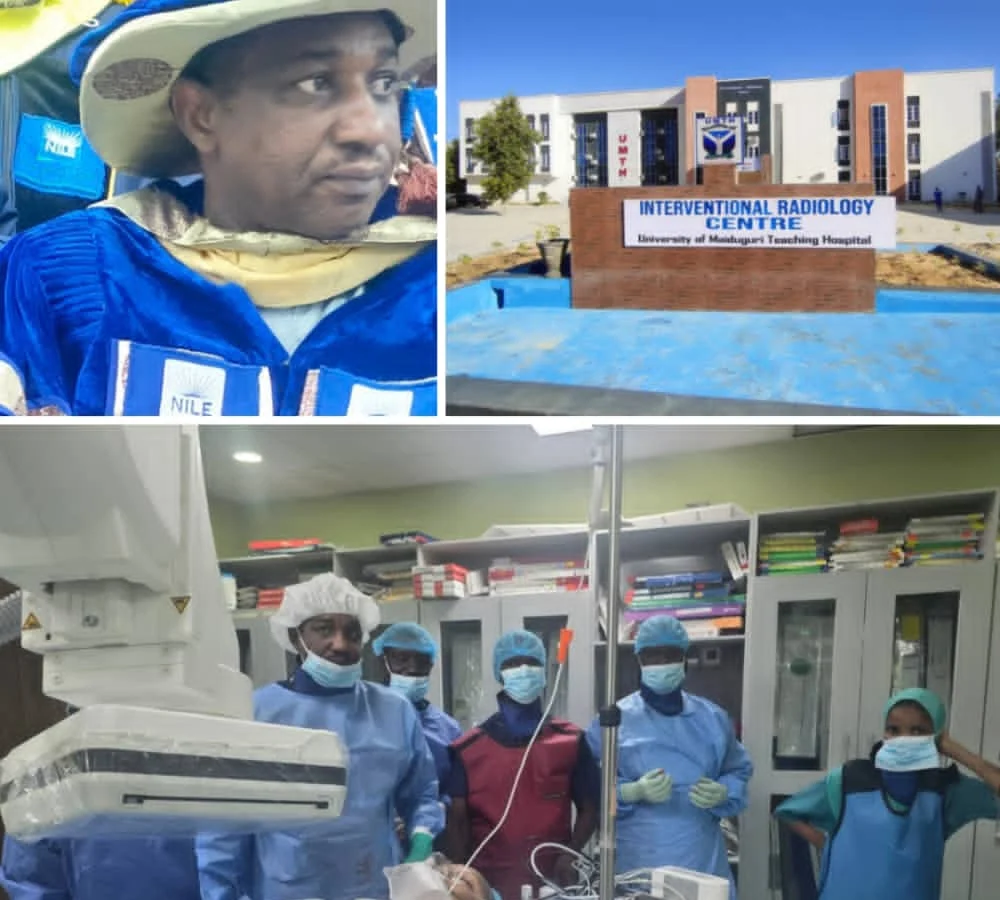
On Monday, 16 November 2026, the University of Maiduguri Teaching Hospital (UMTH) achieved another important milestone in the advancement of modern healthcare in Nigeria. A dedicated team from the hospital successfully performed a Uterine Fibroid Embolization (UFE), a minimally invasive procedure used to treat uterine fibroids without open surgery. This achievement demonstrates the growing capacity of UMTH to provide advanced, specialist medical services and reinforces the hospital’s position as a leading center for interventional radiology in Nigeria and West Africa.
Uterine fibroids are non-cancerous growths that develop in or around the uterus. They are common among women of reproductive age and may cause heavy or prolonged menstrual bleeding, pelvic pain, abdominal swelling, pressure on the bladder or bowel, painful intercourse, infertility, or recurrent pregnancy complications. Although some fibroids cause no symptoms and require only observation, others significantly affect a woman’s health, emotional well-being, productivity, and quality of life. Traditionally, many women with troublesome fibroids have been treated through open surgical procedures such as myomectomy or hysterectomy. While these operations can be effective, they may involve considerable pain, blood loss, longer hospital stays, surgical scars, and prolonged recovery.
Uterine fibroid embolization offers an effective alternative for appropriately selected patients. The procedure is performed by an interventional radiologist through a small puncture, usually in an artery in the wrist or groin. Using real-time imaging guidance, the specialist navigates a thin catheter to the blood vessels supplying the fibroids. Tiny medical particles are then introduced to reduce the blood flow to the fibroids. As the fibroids lose their blood supply, they gradually shrink and symptoms improve. Importantly, the uterus is preserved, and there is no need for a large abdominal incision.
One of the major advantages of UFE is that it is minimally invasive. Unlike open surgery, it does not require a large surgical wound. This generally means less blood loss, reduced postoperative discomfort, lower risk of wound-related complications, and a faster return to normal activities. Often, UFE can be performed as a day-case procedure or with only a short period of hospital observation. This is particularly valuable for women who have family responsibilities, demanding careers, or limited access to prolonged hospital care. The shorter recovery period can also reduce the financial and social burden associated with treatment.
UFE is especially important for women who wish to avoid surgery. Some patients may be anxious about open operations, while others may have medical conditions that increase the risks associated with major surgery. There are also women who prefer to preserve their uterus, even when they have completed their families. For such patients, UFE may provide a safe and effective treatment option after careful assessment and counselling. The decision to undergo UFE should be made collaboratively by the patient and a multidisciplinary team, taking into account the patient’s symptoms, age, reproductive plans, fibroid size and location, medical history, and treatment preferences.
The successful procedure at UMTH was performed under the leadership of Professor Ahmed Ahidjo, former Chief Medical Director of the hospital; Dr. Mohammed Lawan, Director of the Interventional Radiology Center; and Dr. Abba Tijjani, Head of the Department of Interventional Radiology at UMTH, Maiduguri. Their leadership reflects the expertise, commitment, and teamwork required to establish and sustain advanced medical services. The achievement is not merely a technical accomplishment. It represents the result of professional dedication, institutional vision, specialist training, modern equipment, and a commitment to improving the lives of patients.
The success of this procedure is also significant because it expands access to contemporary women’s health services within Nigeria. Patients with uterine fibroids should not always have to travel abroad or to distant locations to receive advanced care. When specialized services are available locally, patients benefit from reduced travel expenses, easier family support, continuity of care, and treatment within a familiar cultural and healthcare environment. The development of such services in Maiduguri is particularly commendable because it demonstrates that excellence in medicine can be achieved in every region when institutions are properly supported and professionals are empowered.
The Interventional Radiology Center at UMTH occupies a unique position in the Nigerian medical landscape. It is the only center in Nigeria accredited for postgraduate residency training in interventional radiology by both the National Postgraduate Medical College of Nigeria and the West African College of Surgeons. This distinction is of enormous importance. It means that the center is not only providing advanced clinical services but is also contributing directly to the education and training of future specialists.
Interventional Radiology is a rapidly developing field that combines medical imaging, clinical decision-making, and minimally invasive treatment techniques. Interventional radiologists use ultrasound, computed tomography, magnetic resonance imaging, fluoroscopy, and angiography to diagnose and treat a wide range of diseases. Their procedures may be used in the management of vascular conditions, cancers, bleeding, blocked vessels, kidney and liver diseases, trauma, and various gynaecological problems. By training specialists in this field, UMTH is helping to build the human-resource capacity required for the future of Nigerian healthcare.
The accredited residency program also creates opportunities for young doctors to receive structured, high-quality specialist training within the country. This can reduce dependence on foreign training, strengthen local expertise, and encourage the retention of skilled professionals. Trainees exposed to a centre that combines service delivery, teaching, research, and innovation are better prepared to provide safe and modern care in different parts of Nigeria and the wider West African region. The center therefore serves as both a treatment facility and an academic institution.
However, increased awareness of UFE remains essential. Many women continue to believe that surgery is the only treatment for symptomatic fibroids. Others may tolerate severe symptoms for years because they are unaware of available alternatives or fear the cost of treatment. Healthcare professionals, women’s health organizations, and the media should work together to provide accurate information. Patients should be encouraged to seek medical evaluation rather than self-medicate or delay care until symptoms become severe.
It is equally important that information about UFE be presented responsibly. Although the procedure is effective for many patients, it is not automatically suitable for every woman with fibroids. Proper assessment is necessary, and treatment should be recommended by qualified specialists. Patients should receive clear counselling about the benefits, possible risks, expected recovery, effects on symptoms, and implications for future fertility and pregnancy. The availability of an alternative to open surgery does not eliminate the need for careful diagnosis or individualized medical decision-making.
Hospitals, policymakers, and health authorities should recognize the broader value of interventional radiology. Investment in advanced imaging equipment, specialist training, maintenance systems, research, and multidisciplinary collaboration is necessary to ensure that these services are sustainable. Supporting centers such as UMTH can help Nigeria reduce the burden of medical tourism and improve access to high-quality care. It can also promote innovation and create a platform for local research into diseases that affect Nigerian patients.
The successful UFE at UMTH should therefore be celebrated as a national achievement, not only as an institutional event. It demonstrates what is possible when experienced professionals work within a supportive environment and when modern medicine is adapted to local needs. It also sends an encouraging message to women living with fibroids: effective treatment may be available without open surgery, and they deserve to be informed about all appropriate options.
Patients with symptomatic uterine fibroids are encouraged to consult qualified healthcare professionals and seek referral to appropriate specialist services. Prospective trainees in Interventional Radiology should also consider the opportunities available at the UMTH Interventional Radiology Center. As the only center in Nigeria accredited for postgraduate residency training in interventional radiology by both the National Postgraduate Medical College of Nigeria and the West African College of Surgeons, the center provides an ideal setting for advanced clinical education and professional development.
The achievement of Monday, 16 November 2026, is a powerful reminder that Nigerian healthcare institutions can deliver sophisticated, evidence-based treatment at the highest professional standards. Under the leadership of Professor Ahmed Ahidjo, Dr Mohammed Lawan, and Dr Abba Tijjani, the University of Maiduguri Teaching Hospital is helping to redefine the possibilities of minimally invasive medicine. Its successful performance of uterine fibroid embolization provides hope for women, strengthens specialist healthcare in Nigeria, and establishes UMTH as a center of excellence for both patient care and postgraduate training.
Women should not be forced to choose between untreated symptoms and major surgery when suitable alternatives exist. Through proper evaluation, expert counseling, and access to advanced interventional radiology, many patients can receive effective treatment with less pain, shorter recovery, and preservation of the uterus. The UMTH Interventional Radiology Center welcomes patients seeking modern care and trainees seeking specialized education. Its progress deserves recognition, support, and continued investment for the benefit of present and future generations.
*James Bwala, PhD, writes from Abuja
End



Comments