
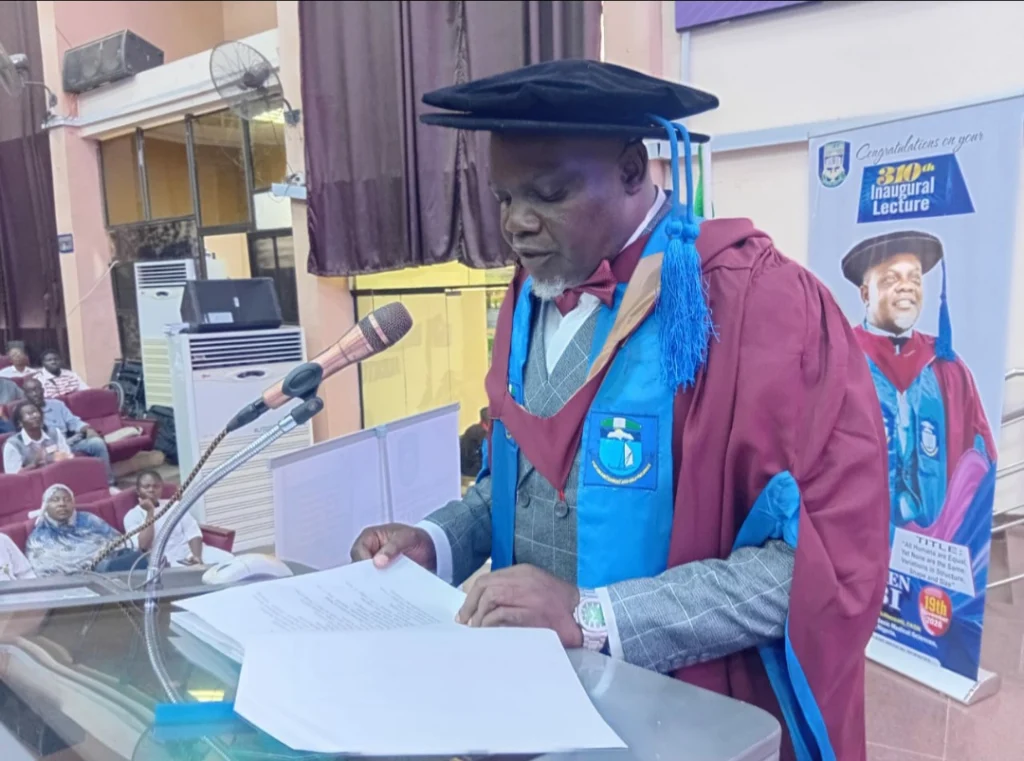
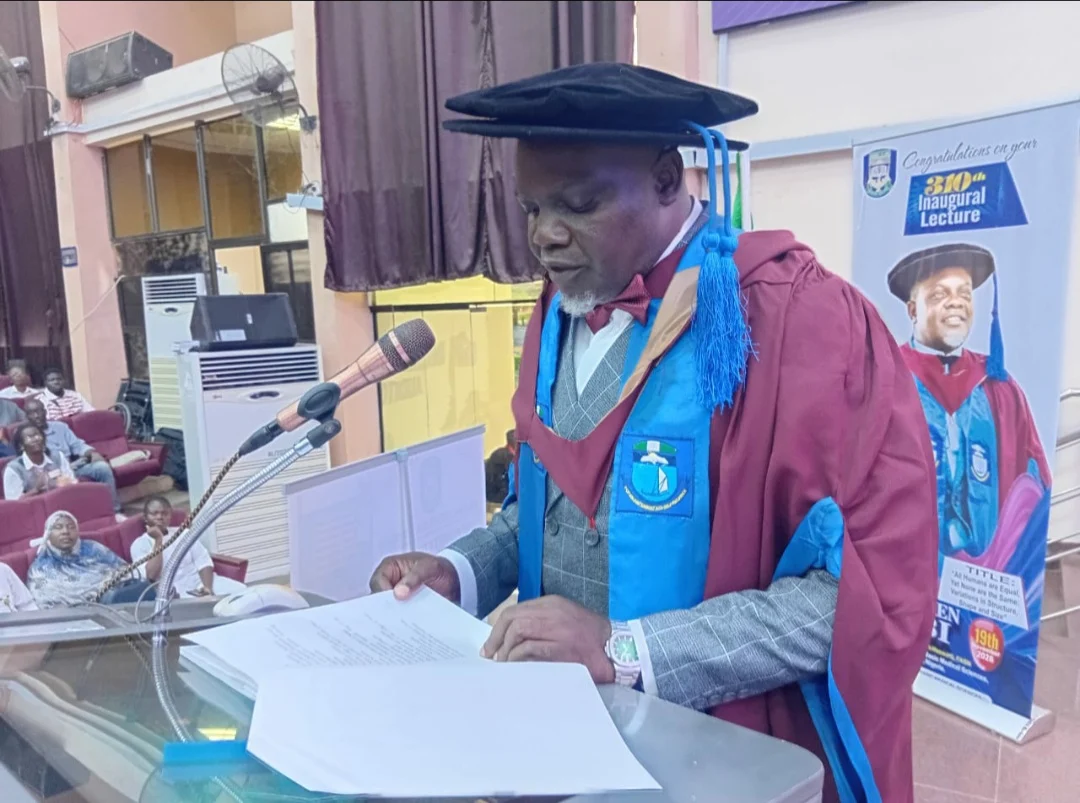
A Professor of Anatomy at the University of Ilorin, Ade Stephen Alabi, has called on the Federal Government to establish a centralised national anthropometric database documenting the physical characteristics of Nigerians across different ethnic groups to strengthen forensic investigations, medical practice and human identification.
Alabi said such a database would provide reliable scientific information for identifying unknown human remains, improving clinical assessments and developing population-specific standards for various professional and industrial applications.
The university don made the call while delivering the institution’s 310th Inaugural Lecture titled, “All Humans Are Equal, Yet None Are the Same: Variations in Structure, Shape and Size”.
He explained that although human beings share fundamental biological characteristics, differences in body structure, shape, size and other physical features remain important considerations in medical practice, physical anthropology and forensic science.
According to him, Nigeria needs to develop its own scientific reference data rather than depend excessively on anthropometric measurements and standards obtained from foreign populations, which may not accurately reflect the country’s biological diversity.
The professor urged the Nigeria Police Force, the National Forensic Science Laboratory and other law enforcement agencies to adopt population-specific osteometric and morphometric reference data in medico-legal investigations.
He explained that measurements of bones and other body parts should be interpreted using scientific standards relevant to the population under investigation to improve the accuracy of identifying unknown human remains.
Alabi also called on the Federal and State Governments to invest in modern scientific equipment to strengthen research into human physical variations.
He specifically recommended the provision of three-dimensional body scanners, high-resolution dermatoglyphic systems and improved access to radiological facilities, including Computerised Tomography (CT) and Magnetic Resonance Imaging (MRI), in Nigerian higher institutions.
The don further advocated the establishment of a Centre for Human Variation and Forensic Anthropology to systematically document biological markers associated with different populations.
He identified cephalic indices, cheiloscopic patterns, palatoscopic rugae configurations and dermatoglyphic ridge patterns as some of the biological features that could support forensic identification and profiling.
According to him, establishing such a centre would provide an organised scientific framework for studying human biological differences and developing reliable reference materials for forensic and medical applications.
He also emphasised the need for stronger interdisciplinary collaboration among specialists in Anatomy, Forensic Science, Radiology, Surgery, Criminology and Public Health to maximise the practical benefits of research into human variations.
Alabi noted that the application of anatomical and morphometric findings should be guided by scientific evidence, urging the public to reject unsubstantiated claims about the human body, particularly assertions concerning relationships between external body measurements and internal anatomical structures.
The inaugural lecture highlighted the relevance of understanding human biological differences to improving medical knowledge, forensic investigations and the development of scientific standards that reflect the peculiarities of Nigerian populations.
The professor’s recommendations underscore the need for Nigeria to strengthen its capacity in forensic science through investment in research infrastructure, specialised institutions and reliable population-based scientific data.
Comments