
GOV NAMADI FLAGS OFF NIGERIA’S FIRST STATE-LED INTEGRATED AGRO-INDUSTRIAL CLUSTER PROJECT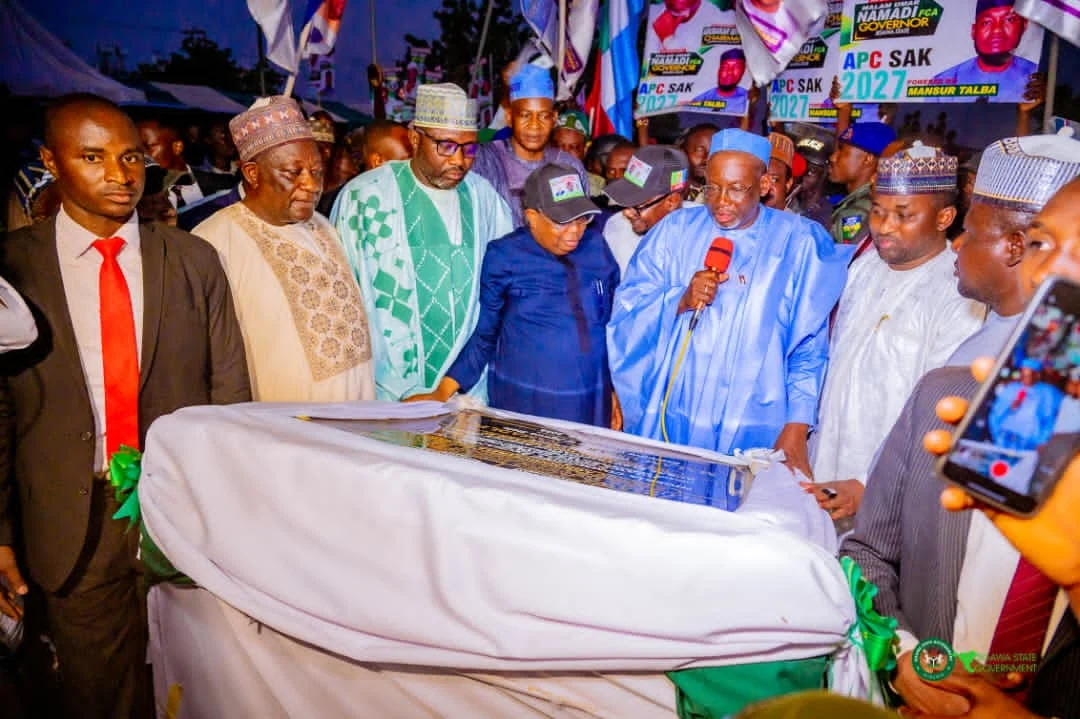
Jigawa State has become the first state in Nigeria to launch the construction of integrated agro-industrial clusters, marking a major milestone in the state’s drive to transform agriculture, strengthen food security and attract private-sector investment.
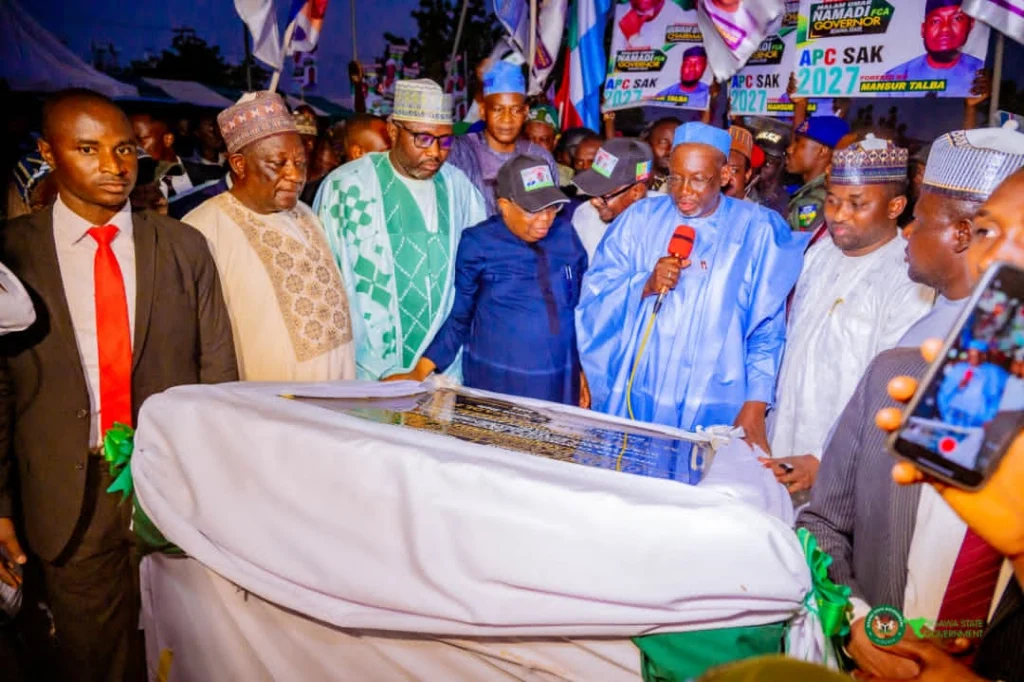
Governor Malam Umar Namadi performed the ground-breaking ceremony on Thursday, at Gujungu in Taura Local Government Area, describing the initiative as a significant step towards building a modern agricultural economy that connects farmers to reliable power, irrigation, storage facilities and organised markets.
The project will establish four agro-industrial clusters in Gujungu, Taura Local Government Area; Mallam Madori; Ringim; and Sara in Gwaram Local Government Area and when completed, the clusters will collectively provide four megawatts of solar power, 24,000 metric tonnes of commodity storage capacity and 200 hectares of centre-pivot irrigation facilities.
Speaking at the ceremony, Governor Namadi said the initiative would move Jigawa beyond traditional agricultural production by integrating critical infrastructure and market systems to improve productivity, reduce post-harvest losses and ensure farmers receive better returns for their produce.
“Beyond the commencement of a construction project, today we are laying the foundation for a new agricultural economy, integrating reliable power, dependable water supply, safe storage, and organised markets into one system that supports our farmers and rewards their hard work with fair and profitable returns,” he said.
The Governor explained that each cluster would feature a one-megawatt solar power facility, commodity aggregation and storage infrastructure with a target capacity of 6,000 metric tonnes, and approximately 50 hectares of centre-pivot irrigation.
The renewable energy component is being developed in partnership with the Rural Electrification Agency (REA) under the Distributed Access through Renewable Energy Scale-up (DARES) initiative, with co-financing from the Jigawa State Government.
The facilities will provide electricity for irrigation, cold storage, agro-processing and other productive activities.
Likewise, the commodity aggregation and market access component, being developed in collaboration with the Nigeria Commodity Exchange (NCX), will provide modern facilities for produce bulking, grading, quality assurance and storage, while through structured commodity trading and Warehouse Receipt Systems, farmers will be better positioned to access financing and negotiate competitive prices for their produce.
Governor Namadi said the irrigation facilities would promote year-round farming through efficient water management, enabling farmers to increase production beyond the rainy season and improve the commercial viability of their agricultural activities.
He stated that the strength of the initiative lies in the integration of its components, explaining that reliable power, water, storage and organised markets would collectively address some of the major challenges facing agricultural production and profitability.
The Governor said the project builds on his administration’s agricultural transformation agenda, which includes the establishment of the Jigawa Agricultural Transformation Agency (JATA), the State Agriculture and Rural Development Authority and the Jigawa Farm Mechanisation Company. He also highlighted the deployment of 400 tractors and 60 combine harvesters to improve farmers’ access to mechanised agriculture.
He noted that the clusters would create opportunities for farmers, young people, women-led businesses and private-sector operators across the agricultural value chain, while inviting investors, agro-processors, commodity merchants and financial institutions to take advantage of the emerging opportunities in Jigawa.
The Governor further urged investors to explore opportunities in processing mills, feedlots, logistics and other businesses around priority value chains such as rice, wheat, sesame and hibiscus.
In his remarks, the Honourable Minister of Power, Hon. Joseph Olusankanni Tegbe, commended President Bola Ahmed Tinubu and the Jigawa State Government for demonstrating effective collaboration between the federal and state governments to improve livelihoods through productive infrastructure.
He stressed the renewable energy interventions being implemented in the state, saying that the power infrastructure would support agricultural activities and improve access to electricity for communities and businesses.
Also speaking, the Managing Director of the Rural Electrification Agency, Abba Aliyu Abubakar, described Gujungu as a historic commercial centre with the potential to become a major hub for agricultural processing, preservation, packaging and export.
He said the integrated clusters would help farmers earn more from their produce, stimulate agro-based industries and create new economic opportunities, particularly for young people.
Comments