
Gov Namadi launches civil servants agricultural support programme phase 111
By Editor
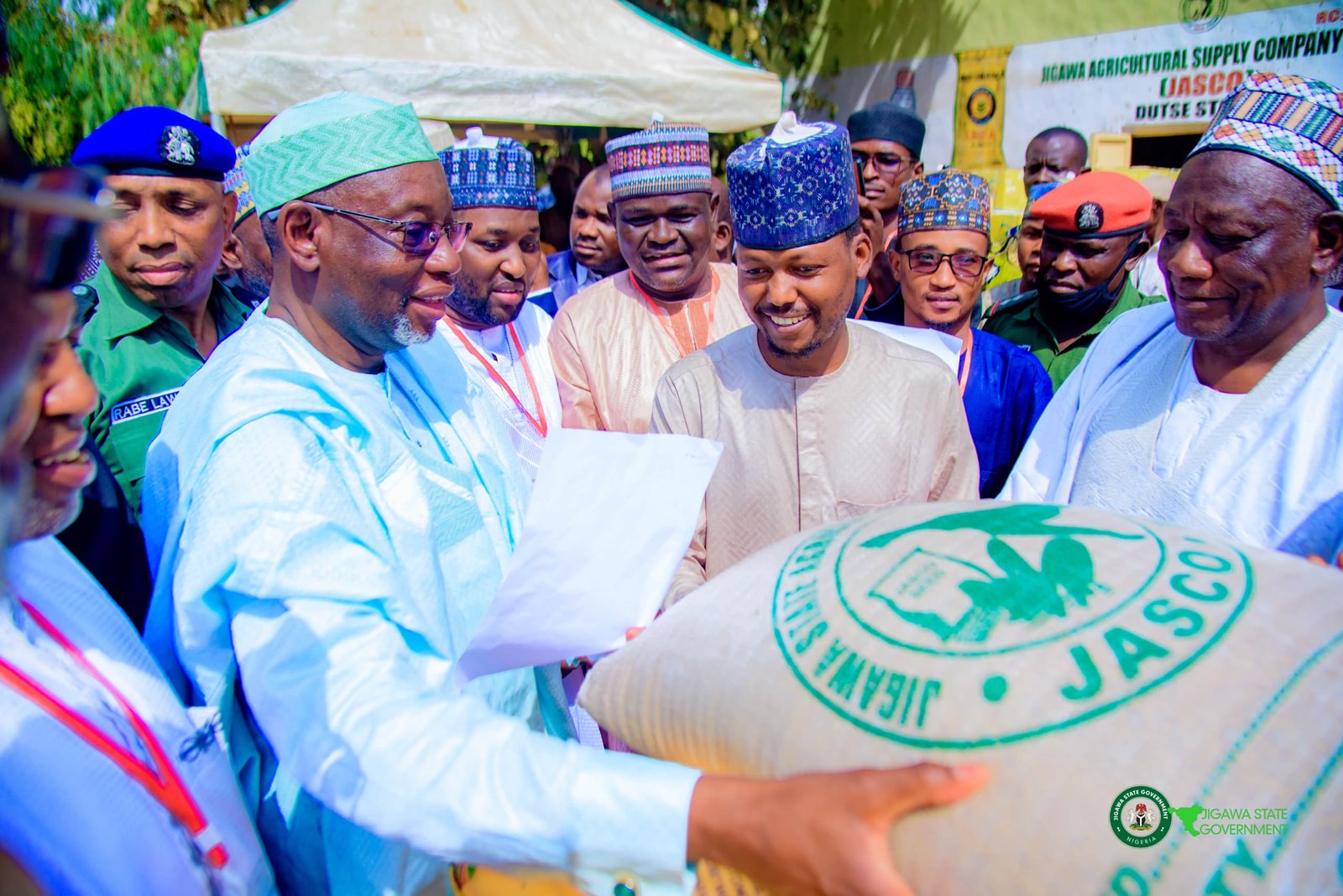
Gov. Umar Namadi, on Thursday advanced two major initiatives aimed at strengthening livelihoods and expanding economic opportunities in Jigawa State, launching the Third Phase of the Civil Servants’ Agricultural Support Programme while also unveiling the FADAMA J-CARES 1.0 Completion Report.
Together, the initiatives represent billions of naira in targeted investments supporting agriculture, economic recovery, and community resilience across the state, with thousands of beneficiaries already impacted through both programmes.
Making his address during the launch of the workers’ agricultural support initiative under the 2026 Dry Season Rice Production Programme, Governor Namadi described the intervention as a strategic effort to empower civil servants to participate more actively in agriculture while improving household income and long-term financial stability.
“As we know, the Civil Servants’ Agricultural Support Program is a wellpackaged program aimed to provide access to quality agricultural inputs at controlled prices with additional working capital to offset other cost components. These are provided as soft loans with flexible repayment schedules – either in cash or kind, with an extended repayment period,” he said.
The programme, first introduced in July 2024, has continued to record encouraging results, particularly through its strong loan repayment performance.
“This programme is helping our civil servants improve their livelihoods, increase their disposable income, and prepare for a more productive and fulfilling life after retirement,” the Governor said.
Namadi revealed that the first phase of the programme supported 8,432 beneficiaries with government assistance totalling over ₦3.03 billion, while 5,750 civil servants benefited from nearly ₦1.26 billion during the second phase.
With the launch of the third phase, about 3,000 beneficiaries will receive support valued at over ₦1.6 billion, bringing the total investment in the programme to more than ₦5.9 billion and the total number of beneficiaries to over 17,000 civil servants across the state.
“These figures are not merely statistics. They represent another aspect of our huge investment in the agricultural sector, directly impacting thousands of families, creating more farmers beyond routine civil service work, bringing thousands of hectares of land under cultivation, and a growing agricultural economy in Jigawa State.”
The Governor explained that the programme provides access to quality agricultural inputs at controlled prices alongside working capital through flexible soft loans with extended repayment periods.
He also highlighted improvements introduced to enhance transparency and efficiency, including digital profiling of beneficiaries, GPS-based verification of farm locations, and electronic tracking of input allocations at JASCO stores.
According to him, the focus on dry-season rice farming is deliberate, noting that increasing domestic rice production remains critical to strengthening Nigeria’s food security and reducing dependence on imports.
At a separate event later in Dutse, the Governor presided over the unveiling of the FADAMA J-CARES 1.0 Compendium and Completion Report, formally marking the conclusion of the programme implemented by the Jigawa State Government with support from the World Bank.
The Jigawa COVID-19 Action Recovery and Economic Stimulus (J-CARES) Programme was designed to cushion the economic impact of the COVID-19 pandemic and other shocks by supporting vulnerable households, farmers, and micro and small enterprises across the state.
Namadi explained that the initiative focused on three major result areas: Social Safety Nets, Food Security and Livelihoods, and Support to Micro, Small and Medium-Scale Enterprises.
According to him, the programme recorded significant results during its implementation, reaching more than 47,800 beneficiaries in over 1,200 hard-to-reach communities, covering all 287 political wards across the 27 Local Government Areas of Jigawa State.
He added that the intervention involved an investment of over ₦4.6 billion, providing beneficiaries with essential agricultural inputs such as rice, maize, millet, and sorghum seeds, as well as productive assets including processing machines, water pumps, and livestock.
Underlining the human impact of the programme, the Governor shared stories of some beneficiaries whose lives were transformed through the initiative.
“These stories prove that when we empower our citizens with the right tools and training, they possess the resilience to break the cycle of poverty.”
Namadi also emphasised the importance of transparency and accountability in programme implementation, noting that his administration introduced reforms in beneficiary selection and digital monitoring to ensure fairness and efficiency.
He expressed appreciation to the Federal Government, the World Bank, and the programme’s implementation teams for their partnership and dedication to the success of the initiative.
“As we conclude J-CARES 1.0, it is important to emphasise that this marks not an ending, but a new beginning. This initiative is fully aligned with our 12-Point Agenda and the Comprehensive Development Framework (CDF) that guides this administration.”
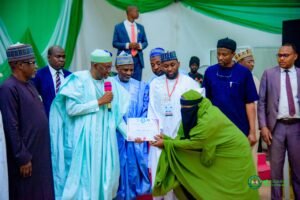
The Governor then formally unveiled the J-CARES 1.0 Compendium and Completion Report, describing the document as a testament to what can be achieved through strong partnerships, innovation, and a shared commitment to improving the lives of citizens.
Gov Namadi launches civil servants agricultural support programme phase 111