
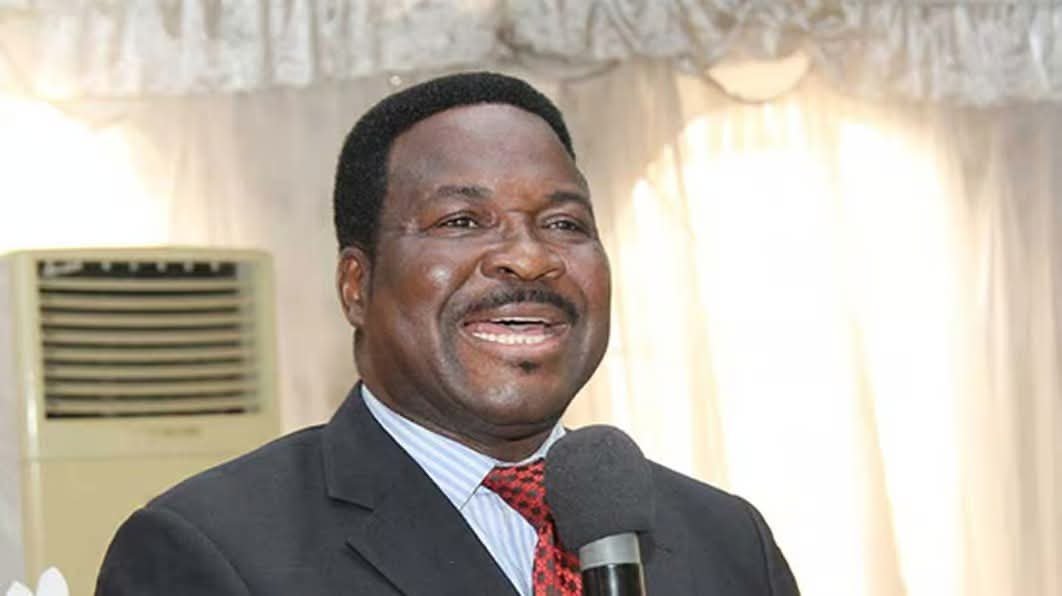

The Independent Corrupt Practices and Other Related Offences Commission (ICPC), has filed criminal charges against a Senior Advocate of Nigeria (SAN), Mike Ozekhome, at the Federal High Court in Abuja over alleged use of fake documents to a property in London belonging to a dead man.
The charges, filed on January 16, by Ngozi Onwuka of the ICPC’s High Profile Prosecution Department, follow a damning September 2025 judgment by a London property tribunal that linked the 68-year-old lawyer to “fraud and forged” documents in a dispute over a North London house.
In the first count, the ICPC alleged that Ozekhome sometime in August 2021, directly received House 79 Randall Avenue, London, purportedly given to him by one Shani Tali in a transaction the ICPC says constitutes a felony under the Corrupt Practices and Other Related Offences Act, 2000.
The second count accuses the senior lawyer of “making a false document,” a Nigerian passport bearing number A07535463 in the name of Shani Tali, with the intent to support a claim of ownership of the London property. This charge is filed under the Penal Code of the Federal Capital Territory.
In the third count, Ozekhome is accused of “dishonestly” using the allegedly false passport as genuine to support the property ownership claim when he had reason to believe the document was false.
It could be recalled that Judge Ewan Paton of the First-tier Tribunal (Property Chamber), had delivered a judgment on 11 September 2025 blocking Ozekhome from taking owbership of the house in North London.
The tribunal held that the case was built on a network of fraud, impersonation, and forged documents, and concluded that the late Jeremiah Useni, former Minister of FCT, was the genuine purchaser of the property in 1993.
In August 2021, Ozekhome applied through the Tribunal to transfer the property at 79 Randall Avenue into his name, claiming it was a gift from a man who presented himself as Tali Shani in appreciation for legal services.
However, the application was challenged in September 2022 by Westfields Solicitors, claiming to represent “Ms Tali Shani,” who insisted she was the registered owner of the property since 1993 and had never signed any transfer.
The London tribunal uncovered fraudulent Nigerian identity records, including a passport, a National Identification Number (NIN), and a Tax Identification Number (TIN) allegedly generated with the connivance of corrupt officials at the National Identity Management Commission (NIMC), the Immigration Service, and the Federal Inland Revenue Service.
NIMC admitted in evidence that the NIN assigned to “Ms Tali Shani” was fraudulently created remotely from Monaco, using a forged photograph and bypassing biometric requirements. The Nigeria Police Force also confirmed that the address used to back up the fraudulent phone bill was fictitious.
Judge Paton concluded that the supposed Ms Shani “was never a real living person” and that her documents were deliberately fabricated with the connivance of corrupt Nigerian officials. “The entire case was built on forgery and deception,” the judge said, before ruling that the property remained part of Useni’s estate, now subject to probate.
In a letter to the ICPC, the Nigeria Immigration Service confirmed that passport booklet number A07535463 was never utilised due to a defect and consequently had no record of a holder in its database.
The agency said preliminary findings indicated that the passport booklet had personal data “unlawfully superimposed on it with numerous inconsistencies on the data-page, suggesting significant irregularities in its production.”
The ICPC investigation was triggered by a petition from Olanrewaju Suraj, head of the Human and Environmental Development Agenda (HEDA).
The petition accused Ozekhome, his son Osilama, and several collaborators of conspiring with corrupt Nigerian officials to procure fake national identity documents in a bid to fraudulently claim ownership of the North London house.
“These findings reveal a grave conspiracy not only by senior and respected members of the Nigerian Bar but also by unknown Nigerian public officials who aided and abetted the fabrication of national documents, thereby undermining the integrity of Nigeria’s identification systems,” the petition reads.
“Such acts are squarely within the purview of the ICPC as they involve the abuse of public office, bribery, and corruption in the issuance of sensitive national identity instruments.”
The ICPC summoned individuals named in the UK judgment to appear before the commission for questioning.
Ozekhome appeared before the commission on 12 January to give a written statement.
In his statement at the ICPC, Ozekhome said he was aware of the judgment granted by the First Tier Tribunal in the UK. “It was prompted by an objection to my application for the transfer of a property situated at 79 Randall Avenue, London, to me, which was filed by myself and Mr Shani Tali before the H.M. Lands Registry UK. I have seen the judgement now shown to me (albeit an uncertified copy),” he stated.
“This fact about my title to the property, how I came about it, and all have been exhaustively written down and explained to the Economic and Financial Crimes Commission (EFCC), and I have no further explanation to the same, all issues having been under investigation by the Commission for many months now.”
Ozekhome further said the ownership had been with him since 2021, adding that everything concerning Tali Shani and himself, as regards evidence, could be found in the judgment.
In the UK court documents, Ozekhome admitted that he never knew Mr Shani until January 2019, more than two decades after the disputed purchase, and had no personal knowledge of how the property was acquired or managed in earlier years.
His confidence in the claim, he explained, stemmed largely from his long-standing relationship with Mr Useni, whom he described as both a client and friend for over 20 years.
The Nigerian lawyer told the tribunal that after being introduced to Shani in 2019, he undertook several legal services for him and that the property was later gifted to him in 2021 as an “expression of gratitude.”
Judge Paton of the UK Tribunal ruled that the house was secretly bought in 1993 by the late Useni, former Nigerian Minister of the Federal Capital Territory, using a false identity.
Useni, an army general who died in France in January 2025, but before his death, Useni appeared before the court through a video link in 2024. Contrary to Ozekhome’s defence, Useni told the court plainly: “I owned it. I bought the property. It is my property.”
Documents before the tribunal confirmed that the acquisition was made under a false identity, “Philips Bincan,” a practice consistent with findings by the Royal Court of Jersey in a separate 2022 case that exposed Mr Useni’s use of coded names like “Tim Shani” to conceal wealth.
The tribunal therefore ruled that since Mr Shani had no legal title, he could not have transferred the property to Ozekhome.
Ownership of the property, the judge said, now rests with whoever secures probate over Mr Useni’s English estate.
The court found that Ozekhome’s defence, supported by his son, amounted to a “contrived story… invented in an attempt to provide a plausible reason” for the 2021 transfer.
The tribunal concluded that Shani had no connection whatsoever to the 1993 purchase.
At the Federal High Court, the ICPC listed six witnesses, including its investigators, Joshua Wakili, Tosin Olayiwola, Ebenezer Nduo, and Blessing Monopo.
It also listed a representative of the Nigeria Immigration Service, and any other vital witness by way of subpoena or filing an additional list of witnesses.
The Attorney-General of the Federation (AGF), Lateef Fagbemi, confirmed that his office had launched a review of the case. Mr Fagbemi described the London judgment as a matter that “bears sadly on the integrity of the Nigerian legal profession.”
“It will be remiss of me not to bring such an egregious development to the attention of my lords, in the hope that it is addressed frontally,” the AGF said, while calling on the Nigerian Bar Association (NBA) and the Body of Senior Advocates of Nigeria (BOSAN) to cooperate with his office.
The NBA’s Anti-Corruption Committee, chaired by Babafemi Badejo, welcomed the AGF’s intervention in a statement, and urged a full investigation into the alleged forgery of passports, NINs, and utility documents linked to the London case and demanded accountability for civil servants and lawyers involved.
“Investigations should lead to the criminal prosecution of civil servants who connived with lawyers to tarnish the name of Nigeria,” the committee said.
It also warned that the matter must not be swept under the rug once media attention fades, stressing that “the credibility and sustainability of the legal sector in Nigeria are at stake.”
The Code of Conduct Bureau is also investigating the matter and recently secured a forfeiture order from a Nigerian Court for the London property.