
Skills-based technical education key to Nigeria’s industrial growth – Rector
By Muhammad Maitela, Damaturu

Dr. Ibrahim Bello Bashir, Rector of the Federal Polytechnic, Damaturu, has declared that strengthening skills-based technical education is critical to Nigeria’s economic growth and industrial self-reliance.
According to him, positioning polytechnic education must be strengthened because it remains a vital engine for industrial growth and a solution to reducing Nigeria’s dependency on imported technical expertise.
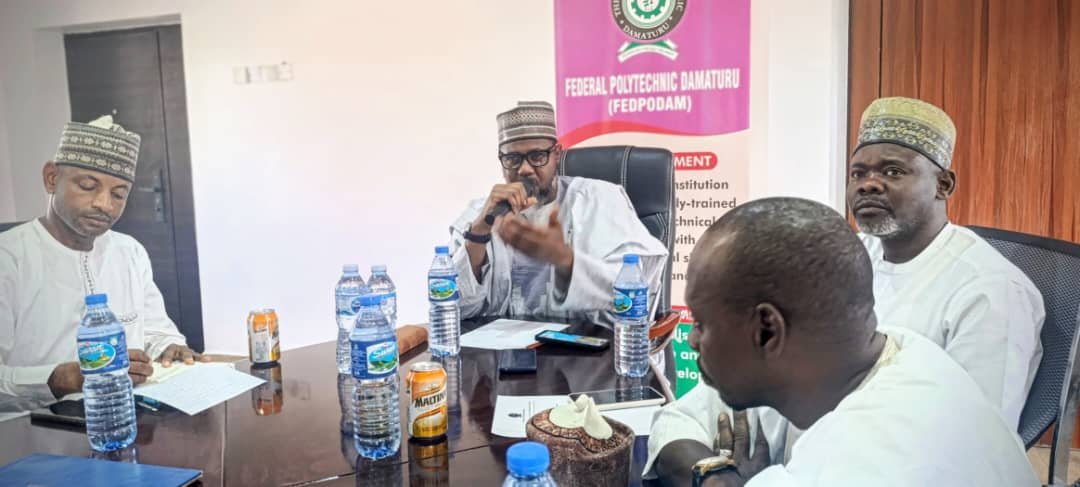
The Rector, who spoke on Friday during an interactive session with journalists to mark his one year in office, warned that Nigeria’s continued reliance on foreign skilled labour for major national projects is unsustainable.
He cited the example of Ajaokuta–Kaduna–Kano gas pipeline and the Mambilla Hydropower Project, where an estimated 35,000 skilled foreign welders and technicians dominated the workforce.
“Failure to prepare local manpower will worsen capital flight and unemployment,” Dr. Bashir stated.
He said that there must be proper certification and enhancement of practical competence of local artisans to bridge existing gaps in skilled technical manpower.
Highlighting polytechnics unique role in this regard, the Rector said the curriculum of his polytechnic has been designed with at least 70 per cent practical content to produce industry-ready graduates.
Dr. Bashir said Federal Polytechnic, Damaturu has introduced 24 new programmes aligned with critical sectors, including agriculture, health, construction, artificial intelligence, and cybersecurity.
He added that the polytechnic is repositioning its curriculum to support ventures in nutrition, catering, tourism, and agro-processing, aiming to create self-employed graduates and stimulate regional economy.
The Rector, however, said severe infrastructure deficit is a major obstacle to achieving their mission.
“Lack of functional workshops and laboratories remains a major challenge, and most existing infrastructure consists of lecture theatres with limited economic impact,” he noted.
During the event, members of the management staff commended the Rector for the infrastructural upgrades, programmes expansion, and improved engagement with government and industry stakeholders within his one year in office.