

Who Pays the Price for Cheap Food?
By Adamu Tilde
We all have blind spots. The tragedy of a blind spot is that it denies you the opportunity to view things from a vantage position—to see all the pieces on the board. And, as NNT warned, it is hard to see how things work by looking at single parts.
Few things illustrate these recurring blind spots more than the Nigerian commentariat. While nuanced voices certainly exist, they are often drowned out by dominant narratives. It is extremely rare to come across a commentator with the penetrating ability to analyze the country’s myriad challenges from multiple angles. More often than not, one does not need to go beyond the third paragraph to locate a commentator’s biases, inclinations, and leanings—Lagos-centric, an Arewa apologist, or a Southern irredentist.
This singularity of vision often finds its way into policy prescriptions, many of which end up being harmful to the very people they are meant to salvage. And because of the polarized nature of our public discourse, any attempt at offering alternative explanations—especially from the very people at the receiving end of such policies—is usually met with cacophonous embellishment and grandstanding, with little room for nuanced exchange or genuine understanding.
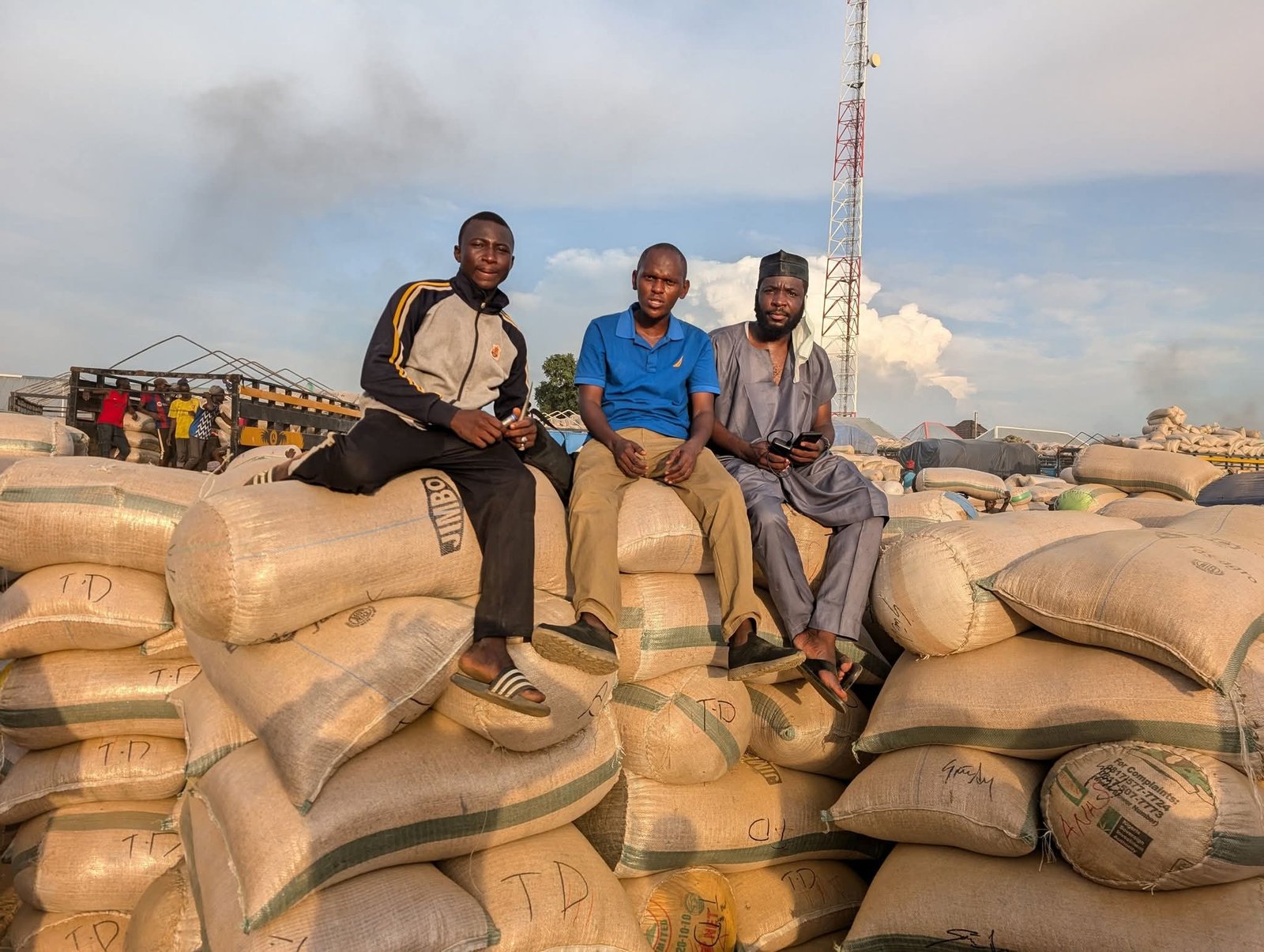
For example, the policy of the Tinubu-led government to open our borders to food importation for some selected crops is deeply hurtful to the northern Nigerian economy, at least in its present form. It may well ease food prices in the short term, particularly for urban consumers, but its broader consequences for a region whose economic life is still largely anchored in agriculture deserve far more serious reflection than they are currently getting.
Matter of fact, the policy appears to have dragged back the northern Nigerian economy by several years, or at least reversed some hard-won gains in agricultural productivity and rural income. What is, however, more disturbing is the grandstanding and stiff resistance to any critique of the policy, often from people with little or no appreciation of how the northern Nigerian economy actually works. Today, food may be cheaper, but where is the money to buy it? Yesterday, when food crops were at an all-time high, buyers still queued up to get them, because incomes along the value chain were stronger.
Northern Nigeria’s economy largely rotates on a tripod stand, with farming accounting for a dominant share, followed by FAAC allocations, and mining coming at a distant third. Once farming is disrupted, the northern economy does not merely wobble; it slips towards coma. This is not to deny that millions of northerners are also net food consumers who benefit from lower prices, but to insist that policy must confront the difficult question of who gains, who loses, and over what time horizon.
I do not need NBS-validated data alone to sense this dislocation, though such data would certainly be useful. Sometimes, all one has to do is count the number of Sharons, loaded to the brim, entering Jos from Kano during routine morning walks and compare it with previous years. Anecdotal as this may be, it often signals deeper structural shifts that statistics eventually catch up with.
It is sad that the people saddled with the responsibility of crafting economic policies for the country are, more often than not, approaching policymaking as if it were a zero-sum game. Northern Nigeria does not have to be poorer for a richer Southern Nigeria. All regions can prosper while harnessing their natural endowments.
But this requires policies that recognize complementarities rather than trade in easy binaries.
Policies should certainly not make life artificially easy for their beneficiaries, but they should be guided by a milk of human kindness and, more importantly, by structural intelligence. Opening our borders to cheap, highly subsidized food while farm inputs remain at all-time highs is harmful to domestic agriculture, particularly in the North. Importation may have a role in managing crises, but it cannot substitute for a serious strategy to protect and rebuild local productive capacity.
In the final analysis, our policy failures are not merely technical; they are failures of how we see. Until our discourse becomes less tribal, less linear, and more attentive to systems rather than slogans, we will continue to solve today’s problems at the expense of tomorrow’s stability.