
UNODC Country Representative Calls for African-led Counter-Terrorism Cooperation and Intelligence Sharing
By Editor 
Africa must strengthen cooperation, intelligence sharing and the responsible use of emerging technologies to confront terrorism and related crimes, the Country Representative of the United Nations Office on Drugs and Crime (UNODC), Mr Cheikh Toure, has said.
Toure made the call at the opening ceremony of the High-level African Lessons Learned Forum on Counter Terrorism Cooperation, Intelligence Sharing and Emerging Technologies, organised by the National Counter Terrorism Centre (NCTC) in Abuja on Monday.
He said the forum should remain focused on the people affected by terrorism, including farmers unable to access their fields, children whose education had been disrupted and security personnel working under difficult conditions.
“We are here for them, and we owe them honesty,” he said.
Toure said terrorism had gained a foothold in Africa at a scale that few had anticipated, with the Sahel now accounting for more than half of terrorism-related deaths worldwide.
He noted that four African countries—Burkina Faso, Nigeria, Niger and the Democratic Republic of the Congo—were among the five countries responsible for almost 70 per cent of the global death toll recorded in the previous year.
He described the counter-terrorism practitioners gathered at the forum as among the most experienced in the world because of the realities they had been forced to confront.
According to him, the threat continues to evolve, with foreign terrorist fighters moving across regions, terrorist groups cooperating with organised criminal networks, improvised explosive devices spreading and drones, digital content and artificial intelligence being used against vulnerable communities.
“The groups we confront cross borders with a fluency that too often exceeds our own. Our response must be equally fluent and it must be African-led,” he said.
The UNODC representative cautioned against applying international counter-terrorism practices without adapting them to local institutional realities.
He said procedures developed for well-resourced systems could become burdensome when transferred uncritically to countries with different capacities and operational environments.
He urged African institutions to treat international good practice as a reference point rather than a rigid template.
Toure commended the National Counter Terrorism Centre under the leadership of its National Coordinator, Major General Adamu Garba Laka, for adapting international guidance to Nigeria’s operational needs.
He said the NCTC’s Strategic Plan 2025–2030 provided a framework for translating guidance on evidence management, intelligence analysis, rehabilitation and reintegration into practical procedures that frontline officers could use.
“That is not imitation. That is authorship,” he said.
Toure also called for institutions to document lessons from investigations, cases and community engagement and use them to improve training, standard operating procedures and technology choices.
He described this process as the creation of a “living knowledge bank”, adding that Nigeria had made significant contributions to it.
He cited Nigeria’s National Strategy for Combating Organised Crime 2027–2031, launched by the National Security Adviser in August and developed under the Office of the National Security Adviser with UNODC technical support.
The strategy, he said, recognised the links between terrorism, trafficking and illicit finance and treated them as part of a connected criminal ecosystem.
He added that UNODC was working with the NCTC on a fusion-cell architecture intended to make inter-agency intelligence sharing routine rather than exceptional.
On terrorist financing, Toure said the NCTC and UNODC had inaugurated a working group on criminal and terrorist finance in the mineral sector.
He said the initiative was designed to address the channels through which terrorism could obtain financial support.
He also cited Nigeria’s exit from the Financial Action Task Force grey list as evidence of what disciplined, evidence-led cooperation could achieve, adding that Nigeria had offered to share its experience with other African countries.
Toure further highlighted cooperation between NCTC and UNODC experts to refine a toolkit for first responders dealing with sexual and gender-based violence linked to terrorism.
He said the work demonstrated that effective partnership was often built through sustained technical engagement rather than public ceremonies.
Addressing participants from the Sahel and Francophone Africa in French, Toure said the threat affected communities across linguistic and national boundaries and that cooperation must reflect the same reality.
He assured them that UNODC would continue to support their efforts with humility and consistency.
Toure said UNODC would work within African frameworks, including the African Union, ECOWAS and the Abuja Process, rather than operating alongside or outside them.
He also pledged continued support for institutions such as the NCTC so that they could develop into regional centres of reference.
He stressed that counter-terrorism measures rooted in human rights were not a weaker option but the most sustainable approach.
“Africa has much to teach the world about this threat. For the next two days, we are all here to learn,” he said.
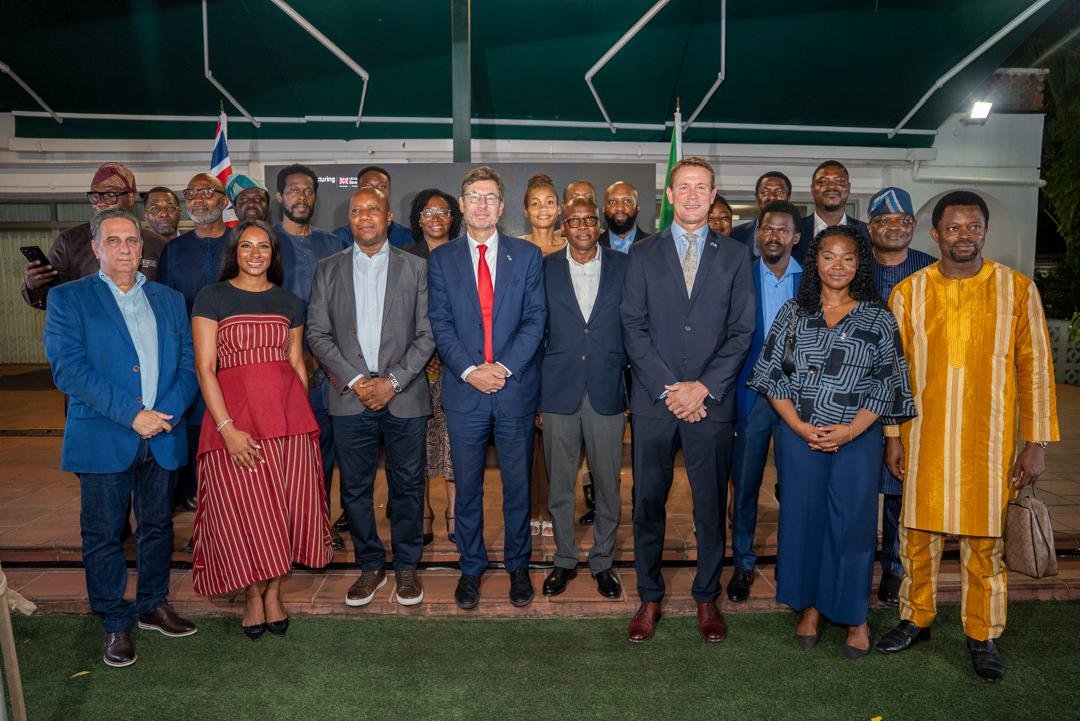
The forum was attended by the National Security Adviser, Mallam Nuhu Ribadu; the National Coordinator of the NCTC, Major General Adamu Garba Laka; members of the diplomatic community; representatives of partner institutions; the European Union; and the United Nations Office of Counter-Terrorism.
Toure thanked the National Security Adviser and the NCTC leadership for convening the forum, as well as the European Union and the UN Office of Counter-Terrorism for supporting the Federal Government of Nigeria.
He said the shared objective of the participants was to contribute to a safer Africa for all its people.