
Nafisa Abdullahi, Petronella Wyatt and what it really means to be feminist
By Bagudu Mohammed
I stumbled on a post where a British writer called Petronella Wyatt was quoted as saying feminism has failed her and her entire generation. The name was misspelled in the post as Petronella White, but my first impression was that familiar script, another myth rolled out to confirm what many men already want to believe, that feminists are villains, antagonists, opponents, rivals, arrogant women who have become uncultured enough to despise submission to any man, to refuse to humble themselves to live under his roof as culture and religion demand.
In that thinking, even two bosses in a relationship without a head, without leadership, even if it is merely symbolic or ceremonial, invites anarchy, because headship helps place responsibility and authority rather than leaving it vague.
Surprisingly, it turns out it is not a myth. A lady by the name Petronella Wyatt truly exists and she did blame feminism for her loneliness, her childlessness and her failure to marry at fifty-five. The first feeling that revelation gave me was self-doubt, that perhaps I do not fully understand what feminism means. Before exploring what it really means, we have to ask, who is Petronella Wyatt and what is her grudge with feminism?
Petronella Wyatt is not a feminist activist, and that is precisely why her article went so viral. She was born in 1968, daughter of Woodrow Wyatt, the former Labour MP who became Margaret Thatcher’s confidant, and Verushka. She is Oxford-educated, a journalist for The Telegraph and The Spectator where she once served as Deputy Editor, and she is best known in the British tabloids as the former partner of Boris Johnson in the early 2000s and mother of one of his children, a woman who has written extensively about relationships with powerful men. She is a conservative-leaning writer who grew up in an elite all-girls boarding school, not a placard-carrying feminist.
On 27 April 2024, the Daily Mail Femail published her piece titled, I am single, childless and alone. Feminism has failed me and my generation. Her core argument is deceptively simple. Her generation, women now in their mid-fifties born in the late sixties, were taught by second-wave feminist teachers in the seventies and eighties that marriage was shameful, that looking at a bridal magazine was anti-feminist, that traditional female roles were stereotypes invented by men to keep women under control.
She wrote, my English mistress once teased me for looking at a bridal magazine, but then she was an arch feminist who demonised men. She describes a ritual that is almost cinematic, every Monday she meets a group of friends in a London restaurant near the window, all in their mid-fifties, working women with prestigious educations, but there is an emptiness because they are all single and have no children.
Her conclusion is piercing, feminism promised you can have career first and family later, that you can be like men, but biology and time do not work like that. The movement told women to be hostile to men, to push them away, and now they pay the price in loneliness. She does not call for abolishing feminism, she simply says, we were told to put career before children, maybe we should rethink.
It caused a storm because it touched a real demographic pain. Office for National Statistics data shows that about one in five women born in 1970 are childless at forty-five, compared to one in ten for women born in 1945. Childlessness at fifty plus is rising across Western Europe. Research on loneliness by Holt-Lunstad and others shows single childless women in their fifties report higher social isolation than partnered peers, though married women also report isolation when marriages are unhappy.
The day after Wyatt’s piece, the Daily Mail ran a counter-piece by Mandy Appleyard, Don’t blame feminism if you’re unhappy in the autumn of your years, and on Mumsnet many women her age said they did not recognise her world at all, they were taught to be independent, to manage their own finances, not to expect to rely on a man, and that was not feminism demonising men, it was Thatcherite independence.
And then came the anti-feminist co-opting, the article was clipped, mistranslated into Arabic, French and Spanish and recirculated on conservative pages as Famous feminist Petronella White regrets feminism, with added quotes about a friend Sally, fifty-five, that never existed in the original. That viral version is the one many of us saw.
In her own context, Wyatt has spoken of an abortion she regrets, a turbulent relationship with Johnson where she felt pressured, and a later struggle to find stable marriage. Her grudge is personal more than theoretical, she blames an ideology that told her to prioritise male-defined career success over early family formation, calling it playing straight into what Herbert Marcuse would call one-dimensional capitalism, where people become economic units. She is not anti-choice in the classic sense, she is saying feminism’s version of liberation, be like men, failed to create what Nancy Fraser calls a woman-friendly world where you can pause a career without losing seniority or income.
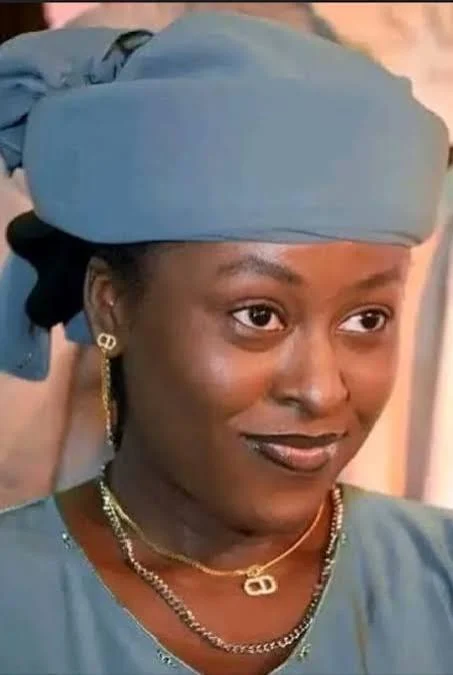
This reminds me of the popular Kannywood actress Nafisa Abdullahi who generated considerable controversy following her outspoken views about marriage, men, women’s independence and the expectations placed on wives in traditional households. Her comments, which circulated widely on social media in June 2026, attracted criticism from religious scholars and praise from younger women, and what she said mirrors Wyatt in fascinating ways even though they come from different continents.
Nafisa does not consider marriage compulsory for herself, she maintains she would marry if she wants to, but would equally remain unmarried if that is her preference, arguing that marriage should be a personal decision rather than something imposed on a woman by society. She fears losing her personal identity in marriage, concerned that marriage could make a woman lose her individuality in relationships where the husband expects unquestioning obedience.
She believes some men treat marriage as a domestic arrangement rather than a partnership, marrying primarily to obtain women who will cook, wash, raise children and shoulder domestic responsibilities without necessarily offering corresponding support. She objects to the unequal distribution of marital responsibilities, questioning why wives carry virtually all domestic burdens while husbands retain authority. She does not want to become a servant in the name of marriage, preferring to concentrate on her own life than be reduced to serving a man. She challenged the idea that marriage is necessarily the route to fulfilment, questioning the assumption that a woman must marry and have children to enjoy a meaningful life or secure support in old age.
Nafisa also questioned the assumption that children guarantee parental care, arguing that having children does not automatically guarantee they will look after parents. And after backlash, she defended her right to make her own choices, insisting she was not fighting religion or campaigning against marriage, that her comments were about personal preferences and she had no objection to women who wanted to marry. The controversy consequently became a wider discussion about feminism, marriage, religious values, male responsibility and changing expectations.
I think an important distinction must be made in the way we call everyone who hates men or has contempt for marriage a feminist, thereby creating the perception that feminism is evil, out to fight men, oppose men and compete.
Social role theory by Alice Eagly is useful, it shows that society assigns communal roles to women and agentic roles to men, and when women deviate, they are punished with labels. Misandry, hatred of men, is not feminism. Feminism is a critique of patriarchy, not of individual men, as bell hooks wrote, feminism is a movement to end sexism, sexist exploitation and oppression.
I equally believe Petronella Wyatt is very wrong to attribute her plight to feminism. Her case is more about what psychologists call confirmation bias and what Aaron Beck would call cognitive distortion, filtered through unresolved trauma and the immense social pressure to conform to be seen as normal, lucky and blessed even in face of bad fate about failed relationships.
Research by psychologist Paul Dolan at LSE actually shows unmarried childless women report being happier than married mothers on average, but that average hides the cultural stigma that makes singlehood feel like failure in a pronatalist society.
What does feminism really mean then? In its simplest definition, feminism is advocacy of women’s rights and equality between women and men in social, political, economic and cultural life. It is a movement founded on belief that women should enjoy same fundamental rights, dignity, opportunities and freedoms as men without discrimination because of gender. Historically it emerged as response to systematic disadvantages women experienced in education, employment, property ownership, political participation and legal recognition.
At its core, feminism is not about hating men or establishing superiority of women over men, neither does it inherently require women to reject marriage or motherhood. Feminism properly understood is about equality of rights, dignity, opportunity and freedom of choice. It should expand choices, not replace one form of social pressure with another. A movement that seeks to liberate women should expand their choices, not prescribe a particular lifestyle or create antagonism.
So likes of Nafisa Abdullahi and Petronella Wyatt should rather be called by another name if what they express is contempt for men, such as misandrists in Wyatt’s projection and personal autonomy advocates in Nafisa’s case, because feminism is not hatred or contempt for men or marriage, it does not seek dominance.
Feminism is a noble ideology that should not be misunderstood. This is reason many men are suspicious of any woman with tag feminist even when it is normal for any group to prioritise self-interest and advocacy that helps draw attention to silent issues. Petronella Wyatt should rather blame her case on unresolved trauma or phobia instead of making feminism a scapegoat, and Nafisa should be read as anti-conservatism.
*agudu Mohammed is the founder of Alternative Perspectives, a widely read commentary platform on social media, and writes a weekly newspaper column published every Monday on the back page of Peoples Daily.Web: https://alternativeperspective.onrender.com

Comments