
Re: Tinubu in Saudi: When a President Chooses Content Creation Over Competence
By Bagudu Mohammed
Ordinarily I would have ignored Mohammed Bello Doka’s piece with the title above, if Engineer Sadiq Dwafu had not tagged me with it. I suspect he wanted my opinion, and I have one, though not the one the crowd is clapping for.
We live in a season where emotionally charged intervention passes for courage. The closer we get to 2027, the more boldness is measured by how many strong words you can string against a target. Doka’s essay fits that mood perfectly, and that is why it travelled fast. Yet mood is not method.
Let me start from his title, because a title is a thesis. To say Tinubu chooses content creation over competence assumes competence is a button a president can choose to press. This is a category error. Competence is not a choice like tea or coffee, it is a function of capacity, aptitude, institutional wisdom, virtue and constraints.
In organizational psychology, what Robert Katz called technical, human and conceptual skills, and what Peter Drucker called the effective executive’s judgment, are not summoned by intention alone. A president may intend competence and still fail, just as a president may intend piety and still be doubted. So I respectfully disagree with the framing.
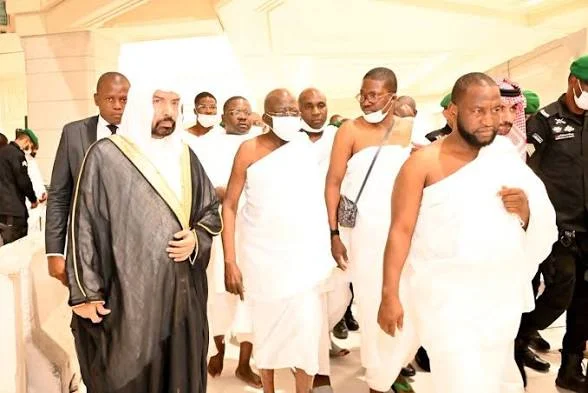
And what does this have to do with content creation? If we must be fair, we must acknowledge the provocation. Former Vice President Atiku Abubakar, now in the ADC, had thrown cynicism at Tinubu’s mission to Saudi Arabia, suggesting insincerity, suggesting he was not even there, suggesting he owed the public daily video proof.
The Presidency, perhaps unwisely, took up that challenge. What Doka calls content creation is therefore not an unprovoked theater, it is a response to an opposition trap. In media theory, what Daniel Hallin calls the sphere of legitimate controversy, once an accusation enters it, silence becomes admission.
The Presidency chose to respond with images. That choice can be criticized as clumsy, but to present it as if Tinubu woke up and decided to replace governance with photography is to omit half the story. Fairness demands we acknowledge who set the camera rolling.
Doka calls this a new wave of deception under Tinubu, a religious theatre to manufacture legitimacy. Here again I must pause, not as an APC member, I am not, nor a fan to speak for him, but as an interested judge who cherishes balance against the breeding of intolerance through exaggerated scripts.
If there is one accusation that does not stick on Bola Tinubu, it is religious bigotry. His political history is famously ecumenical to the point of offending purists on both sides. This is someone that some people like to demarket him as an inferior Muslim, by claiming he cannot recite Fatiha or does not pray.
This is inspite crossing the line Islam itself warns against. The Qur’an cautions against tazkiyat al-nafs, self-validation as saint and condemnation of others as sinner. The Prophet, peace be upon him, warned that the one who declares another a hypocrite may be closer to it.
So I ask Doka, what about governors, senators, local government chairmen who plead no money for salaries yet sponsor themselves for Umrah, Hajj every year with entourages? If this is misplaced priority, why does it become a national sin only when Tinubu does Umrah?
I have written many times calling out leaders, including northern leaders, to replace conspicuous piety with zakat, empowerment and selflessness. To single out the President while overlooking the same theater at state and local levels is double standard, and double standard is the beginning of distrust.
Doka leans heavily on the World Bank 2025-2026 report that 139 million Nigerians live below the national poverty line, concentrated in the North, with food inflation at 19.59 percent. It is painful, annoying, and worrying, no one denies it. But his obsession with Tinubu’s failure prevents him from acknowledging the archaeology of that poverty.
Nigeria was already christened the world poverty capital under Buhari in 2018 by the Brookings Institution. Poverty did not start on May 29, 2023. Fuel subsidy removal has indeed aggravated it, and the Tinubu administration has rightly taken responsibility for the decision.
Yet technically, as political economists like Dr. Ayo Teriba and Prof. Charles Soludo have argued, Buhari set the stage for an almost irreversible removal. By early 2023, Minister of Finance Zainab Ahmed, Governor Nasir El-Rufai and even Sanusi had warned it was unsustainable, there was no money to pay, and crucially there was no subsidy provision in the budget left for the incoming government, at a time of naira redesign crisis.
The crowd that clapped when Tinubu announced subsidy is gone was the same crowd that had applauded the idea for months, desperate for the cartel to end. This is not to excuse hardship, it is to place hardship in history. As Amartya Sen argues in Development as Freedom, poverty is not an event but a process of capability deprivation built over time. To isolate one administration from that process may win applause, but it does not win truth.
Doka further argues that the Muslim-Muslim ticket was supposed to deliver a dividend of prosperity and security but delivered hunger, inflation and despair. This begs a deeper question: why should prosperity be tied to Muslim leadership in the first place?
If religion determined progress, the North would have been most secure and prosperous under Buhari, a devout Muslim and retired General from Daura, and the South-East would have been most backward. The data says otherwise. This is what the late Claude Ake called the fallacy of identity as development strategy.
When we teach people that they can only progress when one of theirs is in power, we breed what Samuel Huntington would call a clash within, a culture of intolerance, desperation and the justification of mob action against anyone who thinks differently. The North is indeed more affected by banditry, terrorism and poverty, but those did not start today.
Under Buhari, many newspapers reported that the Emir of Katsina attributed insecurity to Buhari’s enemies, and many clerics interpreted poverty as trial from God for our sins, urging patience. Why then is patience now betrayal and empathy now deception? Why double standard?
His repeated emphasis on the North reveals another worry, the elevation of regionalism above nationalism and humanity itself. In social identity theory, Henri Tajfel shows how in-group favouritism can blind us to universal suffering.
Expressing self-grievance is normal, but when outrage is prioritized over tolerance, understanding and objectivity, when we lose capacity to acknowledge any merit, however little, from a perceived southern government, we are no longer demanding justice, we are rehearsing resentment.
Doka concludes that the North must reject this deception in 2027. That language unmasks something dangerous. It recalls 2011 when Jonathan defeated Buhari, when PDP supporters were not allowed to campaign freely in some northern states, when disagreement with perceived group interest ended in self-help and post-election violence that killed hundreds. The incitement does not have to carry a knife, it can carry a paragraph.
And yet Doka is not entirely wrong. His article raises legitimate questions about governance, accountability and the danger of using religious identity to shield political leaders from criticism. This is what Max Weber called the routinization of charisma, where legitimacy moves from performance to pretense.
Where I part ways is his central assumption that Tinubu’s Umrah was primarily a publicity stunt. Without credible evidence of intention, the accusation of riya, showing off in worship, is speculative. In Islamic jurisprudence, as Imam Al-Ghazali details in Ihya Ulum al-Din, intention is a matter of the heart known only to Allah, and even classical scholars like Ibn Taymiyyah warned believers against judging another’s worship.
To conflate the President’s personal act of worship with the government’s performance is to assume the two are mutually exclusive, that a leader cannot genuinely pray while still being criticized for governance. The strongest argument Doka makes, that religious identity should never replace competence, justice and public accountability, would have been more persuasive if he had separated verifiable failures of government from assumptions about the President’s spiritual motives, if he had offered prescription alongside description, and if he had applied the same scrutiny to northern governors and chairmen who perform the same theater with smaller cameras but similar cost.
Bagudu Mohammed is the founder of Alternative Perspectives, a widely read commentary platform on social media. It offers evidence-based analysis and real-life insights as a credible alternative to groupthink, convenient narratives, and echo chambers. The platform explores a wide range of issues, including politics, society, relationships, governance, and contemporary trends.
Web: https://alternativeperspective.onrender.com
Comments