
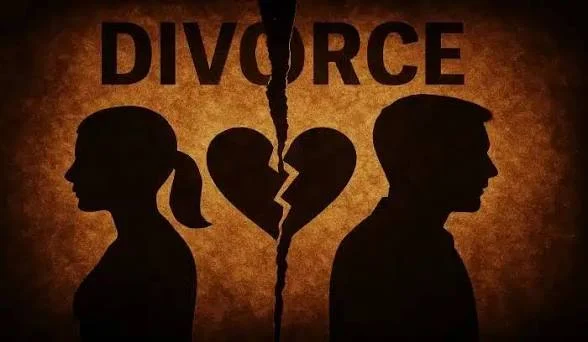
When Divorce Becomes Worth Celebrating
By Bagudu Mohammed
Normally you do not need anyone to tell you what news is. You feel it in your gut before you finish the headline. News of an engagement, let alone a wedding, arrives with an instinctive laughter, a dance in the chest, a sudden urge to celebrate. News of a breakup arrives with the opposite weight, pain, disappointment, bitterness, a silence that feels like mourning. That is how we were raised to read life, marriage is celebrated with joy, while divorce is often accompanied by grief.
But time is changing fast, and so is the grammar of our emotions. A family now gathers not to mourn a divorce but to celebrate it, to throw a party, to sing, to dance, to drink, to have fun, as if a marriage ending is not a tragedy or a loss but a rescue. What used to be whispered behind closed doors is now posted, hashtagged, and cheered, and the world is watching with a mixture of shock and secret envy.
There is now a full-blown social media storm with a caption that has become a joke, a challenge, and a declaration all at once, I am not the divorcee, I am the divorcee’s sister, bro. In the viral clip that started it all, a set of siblings took turns introducing themselves to the camera, each one stepping forward with mischief and pride. I am not a divorcee, I am the divorcee’s baby sister, said one. I am not a divorcee, I am the divorcee’s big sister, said another. I am not a divorcee, I am the divorcee’s big bro, said the brother.
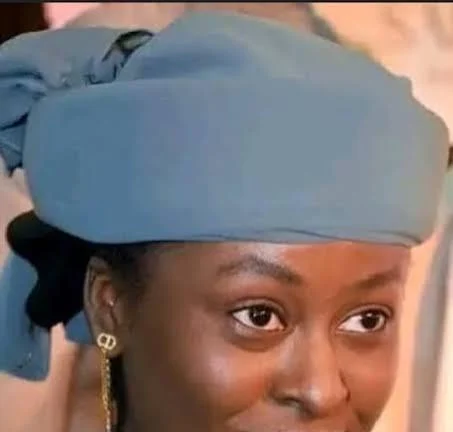
Another added with a laugh, I am the divorcee’s sister and assistant divorcee. Then the woman herself, dressed in a brown niqab, appeared with a big smile and announced with a confidence that disarmed the whole internet, Hi guys, I am the divorcee. Her siblings gathered around her, placed a crown symbolically on her head, celebrated her as their queen, showered her with praise, and made it clear that divorce had not reduced her worth or the love she receives. Her elder sister presented her with a bouquet of flowers. They used the moment to encourage people to walk away from toxic and unhappy marriages rather than remain in situations that destroy their well-being, and they ended with the now famous phrase, Clock it.
It blew up not because there was cake and a DJ, but because it was a family endorsement. In Nigeria, especially in Northern and Muslim communities where a divorced woman is often shamed, sent back home, or called bazawara with contempt, siblings publicly crowning her was radical, almost blasphemous to old sensibilities.
Supporters wrote, this is what family should do, she did not fail, the marriage failed. Critics fired back, you are normalising divorce, you are mocking marriage, what about the children. That split is exactly why the phrase has become a challenge. As one report noted, a new social media trend featuring the phrase has taken over online conversations, while others found it amusing because it turns a sensitive subject like divorce into online entertainment.
Sociologist Erving Goffman would have called this stigma management, the deliberate flipping of a spoiled identity into a celebrated one. Anthropologist Victor Turner would have called it a rite of passage, a liminal moment where a person is neither wife nor single, and the community must ritualise her crossing into a new status.
And the Nigerian siblings are not alone. In Port Harcourt in May 2023, a video resurfaced that still haunts every debate, an association of divorced Nigerian women celebrating the initiation of new members amid dancing and jubilation, carrying a cake that read I do, I did, I’m done, with a slogan that made the whole country laugh and gasp at once, End Of An Error, and live a free life.
On TikTok, a Nigerian woman known as AtusGirl wept with joy after finalising her divorce under the Matrimonial Causes Act, saying thank you Jesus, Father I’m free at last, and thousands commented that only those who have been through it understand, that what looks like a joke to outsiders is survival to insiders.
By July 2026 the News Agency of Nigeria was interviewing Abuja residents about divorce freedom parties, and the report captured the outrage, that celebrating breakups undermines marriage sanctity and shuts the door on reconciliation. One divorcee, Chidiebere Ezenwa, admitted that ending an abusive marriage could bring relief but warned that turning it into a public celebration diminished the seriousness of marriage. Marriage counsellor Ifeyinwa Nnubia warned that social media had influenced perceptions and that celebration should not trivialise the emotional, social and financial consequences. That tension, relief versus reverence, is the heart of the story.
Around the world the script is the same, only the accent changes. In London, 28-year-old Ilma Amin threw a party after divorcing her husband of three years, complete with divorce maids like bridesmaids, speeches, a Taylor Swift-inspired cake that read legally single, and balloons that read single and loving it. She said she never got to have that white wedding, so the party was her having it, a bachelorette party and a white wedding all at once, and she threw her bouquet to the next person to get divorced, asking who’s next, who dares to be my next husband, only for her new boyfriend to dump her two days later, a twist she laughed off by saying she could have celebrated a divorce and a breakup together.
In Macclesfield, 39-year-old Kirsty Henshaw threw what she called a funeral divorce party after her divorce was finalised in September 2026, setting fire to her two thousand pound wedding dress with a blowtorch and burning fifteen photos, while friends marched in all-black carrying a black heart-shaped cake that read divorced, and she now tells others it felt liberating and cathartic, a chapter closed.
In the United States, 42-year-old Toni Harding split after nine years, finalised her divorce in December 2025, and threw a party a month later with ninety friends, catering, a selfie booth, a DJ costing over two thousand six hundred dollars, a light-up divorced sign, and desserts reading the end of an error and I will survive, and she said it was better than my wedding, it was the best night of my life, filled with love, happiness and respect.
In Pakistan, influencer Azima Ihsan danced in a long shirt and gharara, saying divorce in Pakistani society is viewed as a death sentence especially for women, but divorce is not a sin nor an embarrassing word but a new beginning, that she did not decide lightly, but for her and her three children it was an escape, and that after two years she is living proof of how one can grieve, heal, and then dance.
In India, TV actress Akanksha Chamola joked with paparazzi, mera divorce party tera breakup party, my divorce party, your breakup party, while saying she is busy building her home first, then will party. In Egypt, women now throw Just Divorced parties with invitation cards, hotel ballrooms, fancy dress and a three-dimensional cake in bright pink icing saying Just Divorced, because to them it is not a failed marriage but a successful exit from an unhappy one.
In Mauritania, this is not new at all, in Nouakchott a finalised divorce is a rebrand, friends gather to apply fresh henna, help her wear her finest clothes, singing and dancing, and a divorced woman is called a shabiba, a star, experienced, no longer under the strict thumb of parents, a first divorce as a liberating rite of passage.
In America, the numbers tell the scale, searches for divorce parties have reached a five-year high, Pinterest recorded around thirty-nine thousand searches related to divorce parties, Google searches for divorce party decorations surged by sixty percent in three months, TikTok’s DivorceTok has millions of views, and one woman spent more than thirty thousand dollars on hers in 2024, while even Nicole Kidman was rumoured to hold one.
Psychologists quoted in Hello Magazine say that for many women, divorce parties are not necessarily about mocking marriage or celebrating pain, but instead they can represent survival, freedom, and the reclaiming of identity after years of feeling stuck, and that insight is supported by research.
Judith Wallerstein’s twenty-five-year longitudinal study of children of divorce found that the long-term outcome depends less on the divorce itself than on how the family reorganises after it, whether there is support, dignity, and a new narrative. Psychologist John Gottman, famous for predicting divorce with over ninety percent accuracy, argues that contempt, not conflict, kills marriages, and when contempt has already killed it, leaving can be healthier than staying.
The World Health Organization and trauma research on adverse childhood experiences show that children suffer more from chronic exposure to parental hostility than from a respectful separation. In that light, a party is not frivolity, it is what Emile Durkheim called collective effervescence, the group creating a new moral energy around a painful transition, turning private grief into public affirmation.
And yet there is a curious silence in all these open celebrations. They were done by the wives or the family of the wives, not by the husbands. It is also curious that the wives seem to wait for the man to first pronounce the divorce before they can celebrate with their family, as if they cannot simply walk out of a toxic relationship voluntarily. That paradox reveals a diagnosis. It reveals emotional intelligence at work, a coping mechanism, especially because there is a perception of woman as the bigger loser of a marriage breakdown even though pain is inevitable from both sides no matter how they try to mask or soothe it.
Feminist scholar bell hooks wrote that patriarchy wounds both men and women, but it shames women more loudly for leaving. In many Nigerian and South Asian contexts, a woman who leaves is called stubborn, a man who leaves is called decisive. So she needs her siblings to crown her, because society will not. He does not need a crown, because society already hands him freedom without a ceremony. When men do celebrate, research shows they do it privately, with a purchase, with a drink, with friends, not with a crown, because their masculinity does not require public rehabilitation. The woman’s party is therefore not just a party, it is a counter-ritual against stigma.
But celebration of divorce is not entirely a bad thing, it is a smart, clever way to cope with a situation people cannot change. What people should fear or try to protect at all costs is what can still be saved or has not happened yet. There is no need to fight for or adore spilled milk to the point of harm.
Hence it is emotional intelligence at work, consciously and unconsciously, that makes people prioritise the positive side, hope, and change the perception of looking at divorce as a matter of tragedy or mourning to another hope, relief and dignity that helps people, not loss of faith.
After all, many religious beliefs tell us that God does not make mistakes and what happens to people is for the best, the best thing to accept in good faith and trust His judgment or destiny. This makes celebration a therapy and another way of accepting what God has done, what is destined, with strength, faith and even positivity, which is not only therapeutic, healing, beneficial but a survival strategy, self-preservation which is the first law of nature and a divine injunction to keep faith alive in any condition.
In that sense, the crown, the bouquet, the cake that says legally single, the dress set on fire, the dance in a gharara, are not mockery. They are a people refusing to die of shame, choosing instead to live, to laugh, and to begin again.
Bagudu Mohammed is the founder of Alternative Perspectives, a widely read commentary platform on social media, and writes a weekly newspaper column published every Monday on the back page of Peoples Daily.Web: https://alternativeperspective.onrender.com

Comments