
PAOSMI: High Interest Rates, Power Costs, Skills Gap Stifle African Industrialisation
High lending rates, prohibitive electricity costs, shortage of skilled manpower and fragmented industrial standards across African countries are undermining industrialisation and the competitiveness of local businesses, the Pan African Alliance of Small and Medium Industries (PAOSMI) has warned.
The alliance has called for coordinated action by governments, industries, academia and the media to tackle the structural challenges confronting manufacturers and small businesses, warning that Africa’s industrial ambitions would remain elusive without policies that promote local production and strengthen productive capacity.
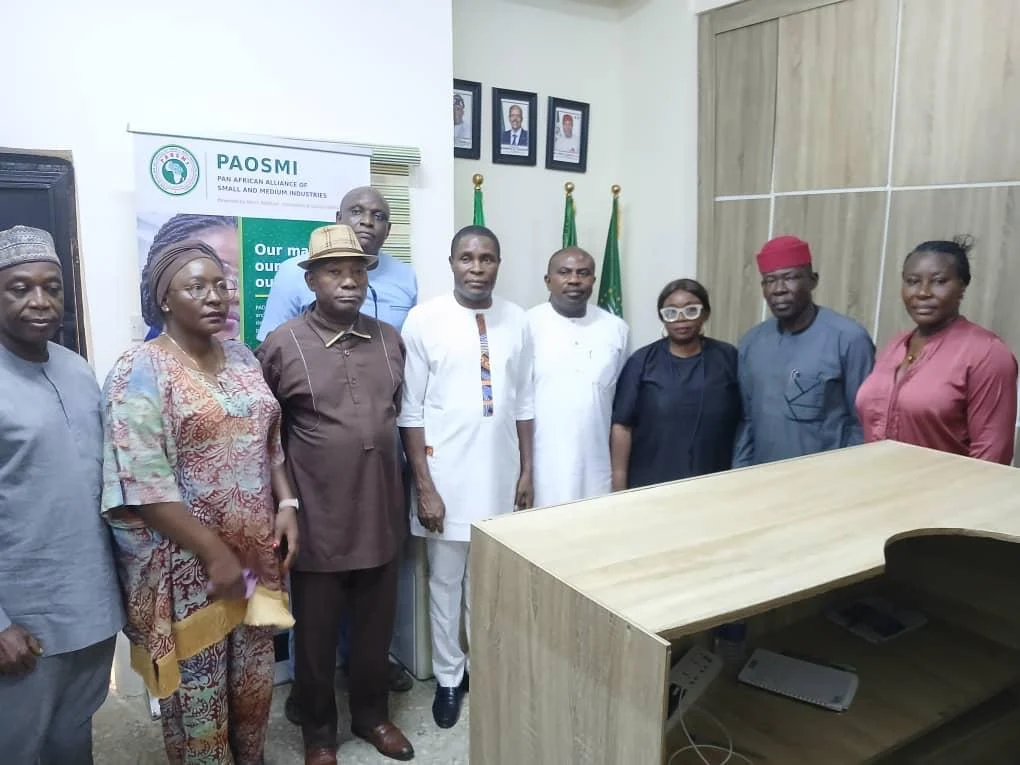
Director-General of PAOSMI, Dr Henry Emejuo, gave the warning on Thursday in Abuja when the executive members of the Association of West African Legislative Correspondents (AWALCO), led by its President, Comrade Innocent Odoh, paid him a courtesy visit.
Emejuo said PAOSMI was a continental organisation committed to supporting small and medium industries, emerging manufacturers and start-ups as critical drivers of economic transformation and industrial development across Africa.
He said the alliance operated both as a development institution and a membership-based organisation, designing and implementing programmes to strengthen businesses and expand industrial capacity, with affiliate networks in 40 countries and about 84 affiliate networks, including ASURI in Nigeria.
He explained that PAOSMI’s industrial development strategy was anchored on collaboration among industry, academia and government, with the media serving as an important partner in communicating policies, opportunities and challenges confronting the sector.
Under the framework, he said, universities and research institutions were expected to drive research and innovation, industries to translate research findings into commercially viable products, while governments provide policies and an enabling environment for businesses to grow.
Emejuo stressed the need for African countries to align their industrial policies with regional and continental frameworks, particularly the African Continental Free Trade Area (AfCFTA), to facilitate cross-border trade, expand markets and enable businesses to scale up production.
He said inconsistent policies and regulatory frameworks across countries continued to frustrate businesses seeking to operate beyond their domestic markets, making policy harmonisation imperative for the continent’s industrial advancement.
High borrowing costs, electricity burden
The PAOSMI director-general identified high interest rates and the short-term nature of loans available to businesses as major impediments to industrial investment, noting that manufacturers required long-term financing to acquire equipment, establish factories and expand production.
According to him, the cost of borrowing across Africa remained significantly higher than in more industrialised economies, while the limited duration of available credit made it difficult for businesses to undertake capital-intensive projects.
He argued that the lending practices of banks across the continent were not sufficiently geared towards supporting productive investments, calling for advocacy and reforms to make financing more affordable and accessible to manufacturers.
Emejuo also identified expensive and unreliable electricity as a major threat to the competitiveness of African industries, particularly Nigerian manufacturers, who often contend with high energy costs and inadequate supply.
He said electricity costs in Nigeria, estimated at about 16 cents per kilowatt-hour, placed local manufacturers at a disadvantage when competing with producers in countries where energy was cheaper and more reliable.
Beyond the cost, he said the unreliable supply of electricity further compounded the burden on businesses, forcing them to contend with additional operational expenses and making sustained production difficult.
He described the combination of expensive electricity and inadequate supply as a double jeopardy for businesses, stressing that industrial growth depended on access to affordable and dependable energy.
Skills deficit, fragmented standards
Emejuo also expressed concern over the shortage of skilled technical manpower needed to sustain industrial expansion, questioning the capacity of Nigeria’s educational and vocational training systems to adequately prepare graduates for the demands of industry.
He cited the deployment of foreign technical personnel in major industrial projects, including refinery operations, as a reflection of the need to reassess the country’s skills development and technical education framework.
He called for stronger partnerships between educational institutions and industries to identify skills requirements, redesign training programmes and equip graduates with competencies needed to operate modern industrial facilities.
The PAOSMI chief also advocated harmonisation of product standards and certification requirements across African countries to ease the movement of locally manufactured goods and reduce the cost of doing business within the continent.
He said businesses should not be compelled to undergo multiple registrations and certification processes when seeking to sell products in other African markets, adding that harmonised standards would facilitate trade and strengthen the AfCFTA.
While acknowledging efforts by the African Organisation for Standardisation and national standards agencies towards harmonisation, he urged stakeholders to accelerate the process to remove regulatory bottlenecks confronting manufacturers.
He further identified weak financial connectivity, difficulties in transferring funds across African countries, mobility constraints and transportation challenges as additional obstacles to intra-African trade.
AWALCO seeks stronger partnership
Earlier, AWALCO President, Comrade Innocent Odoh, said the association was seeking to deepen its partnership with PAOSMI to strengthen coverage of industrial development, trade, investment and manufacturing issues.
Odoh said an earlier engagement with PAOSMI had exposed members to the organisation’s activities and generated discussions on how both bodies could build a sustained relationship beyond occasional meetings.
He said the association was interested in expanding reportage of PAOSMI’s programmes and creating opportunities for its members to participate in interviews, conferences, seminars and workshops that would deepen their understanding of industrial and economic development.
Odoh said AWALCO, whose members cover legislative activities and related policy issues, was committed to enriching the partnership through sustained media engagement and wider dissemination of information on initiatives affecting businesses and the economy.
He assured PAOSMI of the association’s readiness to support its activities through reportage, adding that closer engagement would enable journalists to better understand issues affecting manufacturers and provide more informed coverage of policies and programmes aimed at strengthening the industrial sector.
Emejuo welcomed the proposed partnership, saying stronger engagement with the media would help bring the challenges confronting African industries to the attention of policymakers, governments and regional institutions while promoting advocacy and solutions capable of advancing industrial development.

Comments