
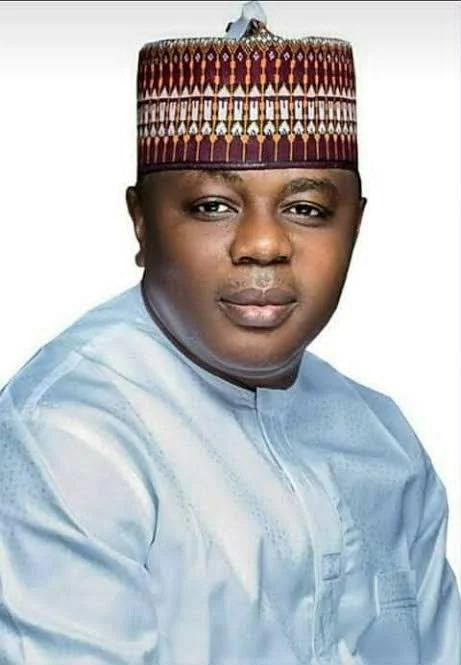
Betara’s Constituency Footprint, Legislative Clout Renew Calls for Higher Leadership Role in Reps
..lFive-term lawmaker’s record in key House committees, 2023 speakership bid strengthen prospects of greater influence for Borno constituency
By Michael Olukayode
The growing debate over the leadership record of Hon. Muktar Aliyu Betara has brought renewed attention to his contributions to his Borno State constituency, his influence in the House of Representatives and his potential to assume an even higher leadership responsibility in the Green Chamber.
Representing Biu, Bayo, Kwaya-Kusar and Shani Federal Constituency since 2007, Betara has built a political and legislative profile spanning five consecutive National Assembly terms, occupying some of the most strategic committee positions in the House.
His record of constituency interventions, experience in parliamentary leadership and relationships across political divides have increasingly placed him among the influential ranking members whose experience could become relevant in determining the future leadership direction of the House.
The argument for a broader assessment of Betara’s leadership was recently advanced by Dr James Bwala in an opinion article titled Beyond Politics: The Betara Leadership Question – An Independent Assessment of Hon. Muktari Betara Aliyu.
Bwala, responding to an open letter by Habib Mohammed Biu, argued that while constituents have every right to demand accountability, Betara’s performance should not be measured exclusively by immediate local expectations without considering his wider legislative responsibilities and contributions.
The argument raises an important question about the relationship between legislative influence and constituency development: how much more could a representative with extensive experience and greater institutional responsibility attract to his people?
Betara’s legislative journey provides an important background to that question.
First elected in 2007, he served in the House Committee on Customs and Immigration and as Chairman of the Subcommittee on NDIC, Banking and Currency. In the Seventh Assembly, he became Chairman of the House Committee on Army, before moving to chair the Committee on Defence in the Eighth Assembly.
His most prominent national legislative assignment came in the Ninth Assembly, when he chaired the powerful House Committee on Appropriations, a strategic position that placed him at the centre of the federal budget process.
He currently chairs the House Committee on the Federal Capital Territory in the 10th Assembly.
The succession of these positions, particularly his leadership of the Appropriations Committee, reflects the confidence placed in his legislative experience and capacity over successive assemblies.
His experience also came into sharp focus during the 2023 contest for Speaker of the 10th House of Representatives.
Betara formally joined the speakership race in April 2023, emerging as one of the prominent contenders for the position following his tenure as Appropriations Committee chairman.
Contemporary reports by The Guardian indicated that he enjoyed considerable support among returning and newly elected lawmakers, with his experience, legislative competence, accessibility and relationships with colleagues cited among the factors strengthening his aspiration.
His campaign was also associated with expectations of an inclusive legislature capable of accommodating different political interests and strengthening cooperation among members.
However, the contest eventually took a different direction following the ruling All Progressives Congress’ zoning arrangement.
On June 11, 2023, Betara and another prominent contender, Yusuf Adamu Gagdi, stepped down after a meeting with President Bola Tinubu, paving the way for Tajudeen Abbas to emerge as Speaker and Benjamin Kalu as Deputy Speaker.
The decision was widely reported as a move to respect the party’s preferred leadership arrangement and avoid a divisive contest within the ruling party.
Betara’s withdrawal did not diminish the significance of his emergence as a major contender in the race. Rather, it demonstrated the level of political engagement and institutional experience he had accumulated among members of the House.
Indeed, his previous speakership ambition provides an important reference point in considering his prospects for a future leadership position, whether as Speaker or one of the principal officers of the House.
Although no such position is guaranteed, his ranking status, committee experience and knowledge of parliamentary procedures constitute important considerations in any future leadership discussions.
Beyond his legislative profile, Betara’s constituency development record is another significant part of his political standing.
His interventions across Biu, Bayo, Kwaya-Kusar and Shani have reportedly covered infrastructure, education, healthcare, rural electrification, agriculture, youth empowerment and social support.
Reports on his constituency projects have highlighted the construction of health centres, provision of ambulances, classroom blocks, rural roads, transformers and solar-powered streetlights.
A 2023 profile published by The Guardian reported that his interventions included 20 health centres, 10 ambulances, a mini stadium and more than 600 solar-powered streetlights.
Another account published by THISDAY in July 2025 highlighted the construction of more than 48 blocks of classrooms, the provision of transformers to over 289 communities, healthcare facilities and interventions in skills acquisition, entrepreneurship and agricultural development.
The reports also identified scholarship support, medical assistance and empowerment programmes as components of his constituency interventions.
These projects, if sustained and properly maintained, represent important contributions to communities where access to basic infrastructure and social services remains a major development concern.
His constituents have also demonstrated their appreciation through political support. In 2022, delegates from the four local government areas returned him unopposed as the APC candidate for the 2023 election. Reports at the time said constituents purchased his nomination forms in recognition of his contributions to the constituency.
More recently, his May 2026 homecoming in Biu attracted supporters, youth groups, women associations and political loyalists, with residents highlighting infrastructure projects and other interventions associated with his representation.
During the gathering, Betara acknowledged the importance of his previous committee assignments in attracting development to his constituency, particularly his tenure as Chairman of the Appropriations Committee.
He also identified the long-awaited Gombe-Biu road as one of the major outstanding infrastructure needs of the area, acknowledging that more work remained to be done.
That admission is significant because it underlines the fact that constituency development is an ongoing responsibility rather than a completed assignment.
It also reinforces the argument that Betara’s political influence at the national level could be important in attracting further federal attention to the development needs of Southern Borno.
Bwala, in his assessment, also pointed to Betara’s intervention in the Joint Admissions and Matriculation Board registration process as an example of his support for young people and families facing financial difficulties.
He argued that political responsibility should not be concentrated on one individual, noting that other members of the National Assembly, state officials, local government authorities and community leaders also have obligations to the people.
On concerns surrounding financial support to political associates and musicians, Bwala urged that such matters be examined within their proper context, while emphasising that public resources must remain subject to transparency and accountability.
These observations do not suggest that Betara should be insulated from scrutiny. Rather, they reinforce the need to evaluate his public service through a balanced consideration of his constituency interventions, legislative responsibilities, achievements and outstanding obligations.
For a constituency comprising four local government areas, the importance of having an experienced representative with access to influential positions in the National Assembly cannot be overstated.
The House leadership structure is particularly important because principal officers and committee chairmen play significant roles in legislative coordination, policy direction, parliamentary administration and oversight.
A higher leadership responsibility for Betara could therefore provide another platform for him to deploy his legislative experience and relationships towards attracting more development opportunities to his constituency and Borno State.
His previous experience in Appropriations, Army and Defence, coupled with his current responsibilities in the FCT Committee, gives him an institutional background that could be relevant in future leadership considerations.
Ultimately, the question surrounding Betara is no longer simply whether he has made contributions to his constituency, but how his experience, influence and political standing can be translated into even greater opportunities for the people he represents.
His supporters have reasons to point to his record, while his constituents retain the right to demand more, particularly in addressing outstanding infrastructure and social development needs.
For Betara, the next phase of his legislative journey could present an opportunity to consolidate his constituency achievements and potentially assume a greater responsibility in the House.
Whether through the speakership or another principal office, a higher leadership position would place greater expectations on him to demonstrate that legislative influence can translate into wider national and constituency benefits.
For a lawmaker who has spent nearly two decades in the Green Chamber and has previously contested its highest office, the prospect of greater leadership responsibility is a natural extension of the debate about his political future.
Michael Olukayode is a political analyst based in Abuja.
Comments