
Jigawa extends National School Feeding Programme to Primary 6 says Gov Namadi 
By Ali Baba-Inuwa
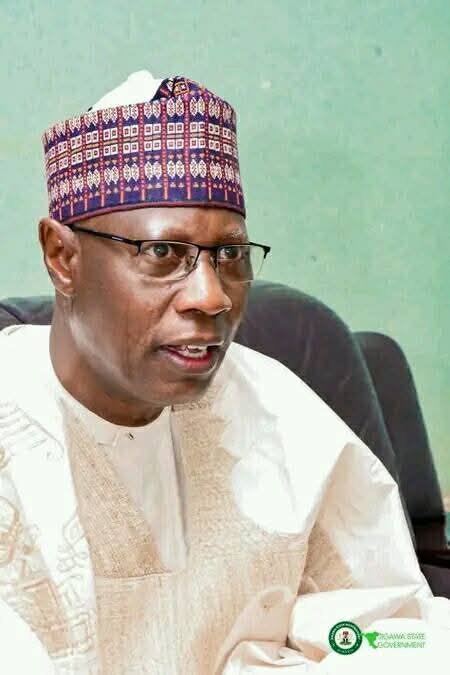
Gov. Umar Namadi has disclosed that the Jigawa State Government has expanded the National Home-Grown School Feeding Programme to cover pupils in primary four, five and six, making the state the only one in the country to complement the deral Government’s implementation of the programme beyond the lower primary level.
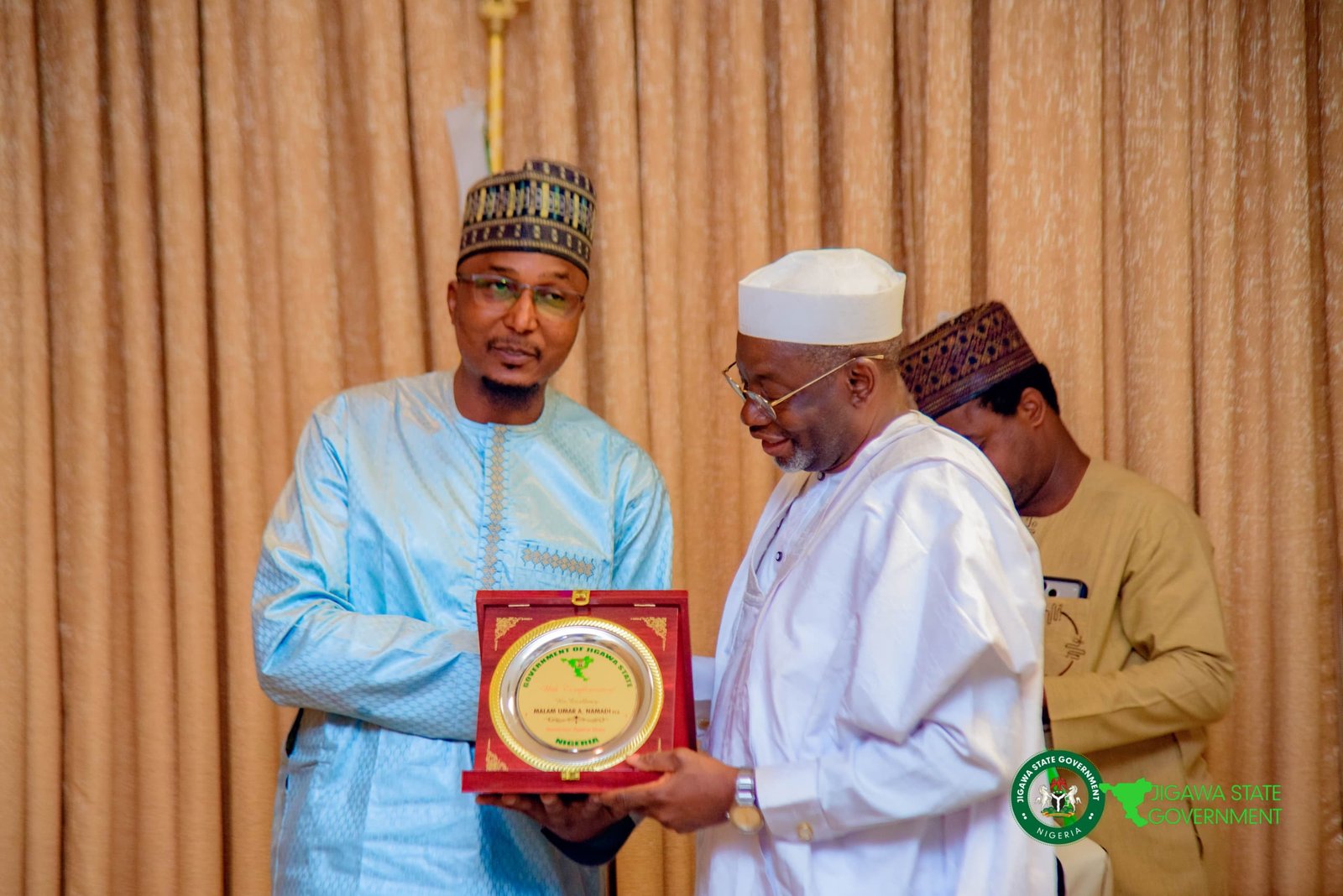
The governor made this known on Tuesday while receiving the North-West Strategic Committee on the National Social Investment Programme (NSIP), led by its chairman, Professor Mudassir Nasiru, during a courtesy visit to the Government House, Dutse.
The committee is currently engaging with state governments across the region to promote greater ownership and effective implementation of the National Social Investment Programme.
Governor Namadi described the National Social Investment Programme as one of the federal government’s most impactful interventions for supporting vulnerable households, saying that its various components—including the Cash Transfer Programme, the National Home-Grown School Feeding Programme and other social intervention initiatives—continue to improve livelihoods and strengthen social protection at the grassroots.
“The National Social Investment Programme is one of the most important programmes that touches the lives of vulnerable people, and I believe it is an important programme that needs to be sustained,” he said.
Stressing Jigawa State’s contribution to the programme, Governor Namadi explained that while the Federal Government currently provides school meals for pupils in primary one, two and three, the Jigawa State Government has extended the programme to pupils in primary four, five and six to ensure that more children continue to benefit.
“If you recall, while the federal government is implementing the programme for primary one, two and three pupils, the Jigawa State Government is implementing it for primary four, five and six pupils. I believe we are the only state in this country that has complemented the programme in this way.”
The Governor stated that the school feeding programme has become an important tool for improving school enrolment, attendance and retention, while also creating opportunities for local farmers, food vendors and other participants across the agricultural value chain.
“Improving the lives of vulnerable people is one of the cardinal principles of this administration. It is also one of the priorities under our 12-Point Agenda. Again, I believe this is also part of the Renewed Hope Agenda of Mr. President. Therefore, whatever comes as part of the Renewed Hope Agenda, the Jigawa State Government is ready to key into it.”
He also assured the committee that the Jigawa State Government would examine the roadmap and implementation framework with a view to adopting the necessary measures for effective execution and sustainability of the programme across the state.
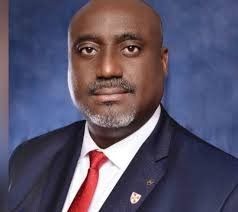
Speaking earlier, the chairman of the North-West Strategic Committee on the National Social Investment Programme, Professor Mudassir Nasiru, said the committee was established to encourage state governments to take ownership of the programme and strengthen its implementation through closer collaboration with the federal government.
He explained that the National Social Investment Programme, initiated under the administration of former President Muhammadu Buhari and now coordinated by the Federal Ministry of Humanitarian Affairs and Poverty Reduction, comprises several interventions aimed at improving the welfare of vulnerable households across Nigeria.
Professor Nasiru recommended the adoption of the National Home-Grown School Feeding Programme under the new implementation framework, saying that it has the potential to improve food security, increase school enrolment, stimulate local agricultural production and strengthen economic activities along the value chain.
He assured the governor that the committee would provide the blueprint, implementation template and technical support required for successful implementation, while also facilitating access to development partners and donor support.
Jigawa extends National School Feeding Programme to Primary 6 says Gov Namadi