
JIGAWA RECORDS 96% SUCCESS AS TSANGAYA REFORM PROGRAMME PRODUCES CERTIFIED GRADUATES
By Ali Baba-Inuwa
The Jigawa State Government has recorded a major milestone in its ongoing education reform drive, as 96 percent of participants in the Six-Month JISTEB/NBAIS Special Programme successfully met all required standards and obtained nationally recognized certificates.
The programme, implemented through the Jigawa State Tsangaya Education Board in collaboration with the National Board for Arabic and Islamic Studies (NBAIS), trained 150 Alarammas across study centres in Dutse, Hadejia, and Gumel.
Participants were taught and examined in nine subjects, including English Language, Arabic, Islamic Studies, Mathematics, and Computer Studies, in a structured learning environment designed to integrate Islamic and conventional education.
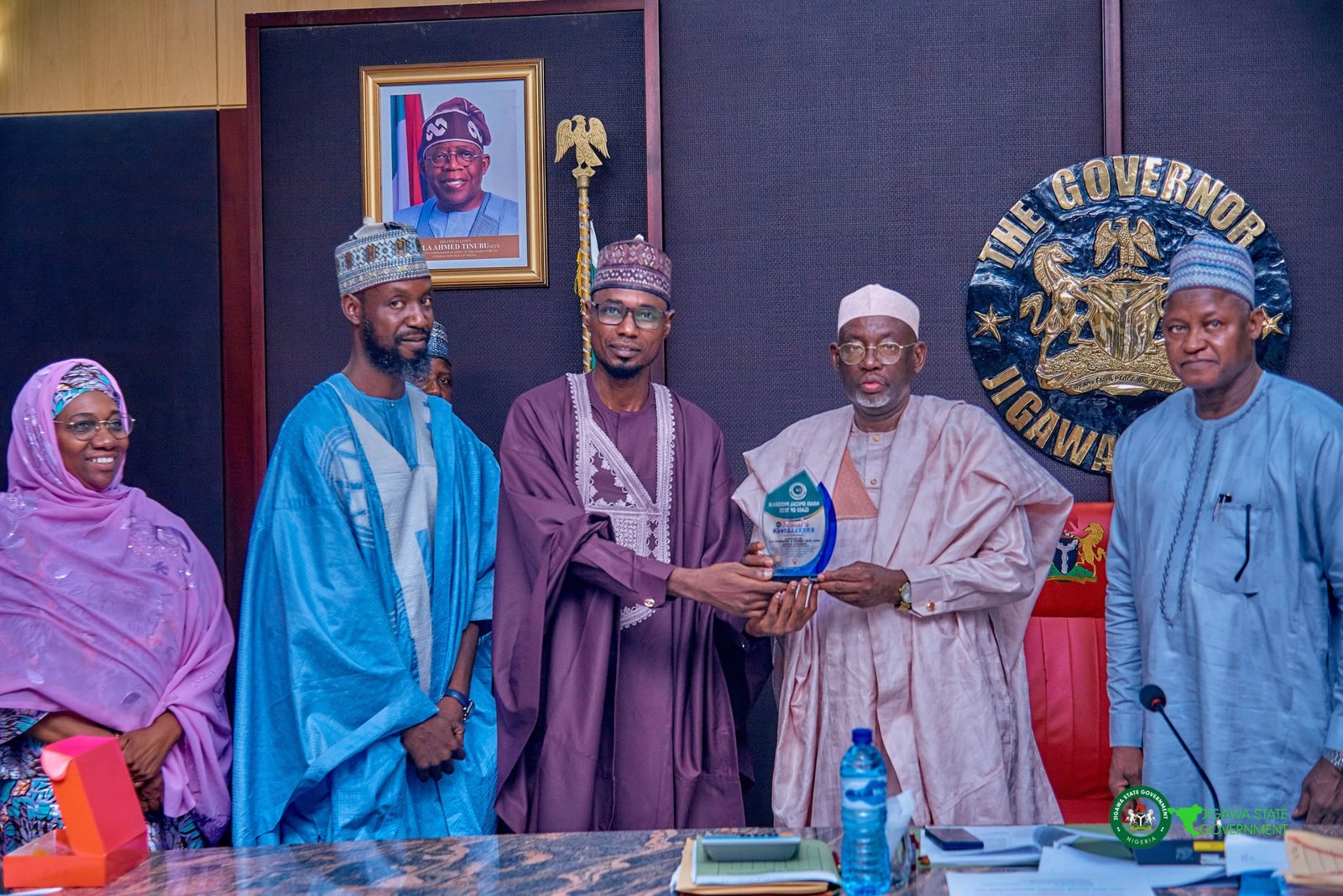
Speaking when the executive secretary of the Tsangaya Board presented the report during the monthly sector meeting, Governor Umar Namadi expressed profound satisfaction with the outcome, describing it as a groundbreaking achievement for the state’s education sector.
“Alhamdulillah, today we are truly very happy about this achievement recorded by our brothers who have completed this course and obtained certificates. The fact that about 96 percent of them met all the required standards is no small achievement,” the governor said.
He noted that the success of the programme demonstrates the untapped potential within the Tsangaya system when properly supported.
“Each of them has now acquired what is necessary to continue their education. Within just six months, they were taught and examined in English, Arabic, Islamic studies, and other subjects—nine in total—and they passed. This is a remarkable success.”
Governor Namadi further pointed out the importance of the achievement, particularly given the background of the participants.
“None of them had attended formal primary school, yet they were able to pass examinations equivalent to the secondary school level. This clearly shows that this programme is something we must continue,” he stated.
Restating his administration’s commitment, the governor assured that the initiative would be sustained and expanded.
“Insha Allah, as a government, we will sustain this programme and build on it because it will bring us even greater benefits. It also demonstrates that if we continue with this initiative, it will serve as a strong safeguard for us in Jigawa State.”
Highlighting the real-life impact of the programme, Governor Namadi cited a practical example of its value.
“There was a participant who contested for a position that required a secondary school certificate. Initially, he did not have one but later remembered he had undergone this training. He retrieved his certificate, and it was accepted, enabling him to secure the position. This is a clear testimony to the importance of this programme.”
He commended all stakeholders involved in the successful implementation of the initiative, including facilitators, coordinators, and the Tsangaya Education Board.
“I congratulate you all on this success you have achieved. This is a collective effort, and it shows what can be done when we work together with commitment and sincerity,” he said.
The report also highlighted key components that contributed to the programme’s success, including stakeholder engagement, rigorous screening processes, curriculum development, provision of accommodation and learning materials, and performance-based incentives for participants and facilitators.