
Nigeria, India Sign Human Rights Agreement as Fagbemi Pledges Support for Implementation
…AGF calls for stronger institutional independence, practical safeguards for citizens amid emerging AI-related human rights challenges; NHRC records 384,196 complaints in October
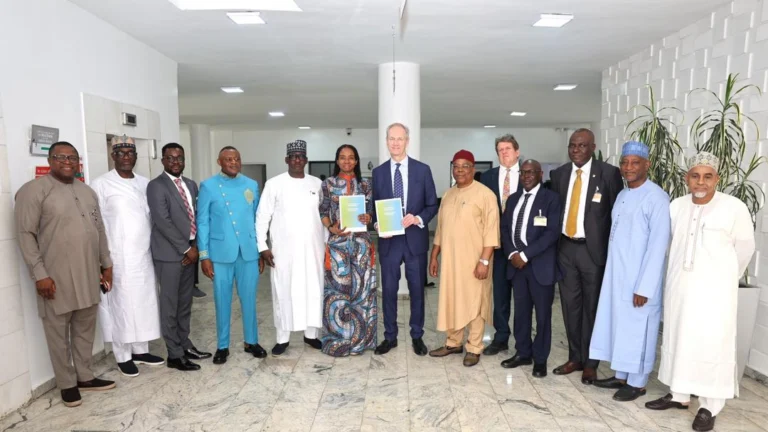
Nigeria and India have signed a bilateral agreement to strengthen human rights protection, institutional capacity and access to justice, with the Attorney-General of the Federation and Minister of Justice, Prince Lateef Fagbemi, SAN, pledging the Federal Government’s support for its implementation.
Fagbemi described the agreement as a strategic partnership between the two countries, stressing that its success would ultimately be measured by its impact on ordinary citizens, particularly vulnerable and marginalised groups seeking justice.
The agreement, executed between Nigeria’s National Human Rights Commission (NHRC) and its Indian counterpart, is designed to deepen institutional cooperation, facilitate knowledge transfer, promote technical exchanges and strengthen operational capacity in addressing human rights violations.
The Attorney-General stated the Federal Government’s position when he received a joint delegation of the two commissions at the Federal Ministry of Justice in Abuja, describing the partnership as timely in an increasingly interconnected world where effective human rights protection requires stronger legal frameworks, institutional collaboration and respect for the rule of law.
The development followed an engagement between the two commissions and the Chief Justice of Nigeria (CJN) at the Supreme Court Complex, Abuja, as part of a working visit by the Indian delegation.
The Nigerian delegation was led by the Executive Secretary of NHRC, Chief Tony Ojukwu, SAN, OFR, FICMC, while the Indian delegation was headed by the Chairperson of India’s NHRC, Justice V. Ramasubramanian, accompanied by the Commission’s Joint Secretary, Mr Samir Kumar.
Fagbemi said the partnership brought together two major democracies with shared common-law traditions, diverse populations and dynamic constitutional frameworks. He also expressed satisfaction with the thematic areas identified for cooperation under the agreement.
He specifically highlighted access to justice and the protection of digital rights as critical areas requiring urgent attention, particularly as emerging technologies, including Artificial Intelligence (AI), continue to reshape society and create new human rights concerns.
According to him, both countries must develop legal safeguards to protect data privacy, prevent algorithmic bias and safeguard civic space, while ensuring that technological advancement does not undermine fundamental freedoms.
He said the Ministry of Justice expected the two commissions to produce actionable research and policy recommendations capable of addressing these emerging challenges.
Beyond emerging technologies, the Attorney-General stressed that Nigeria’s commitment to human rights must be reflected in the practical implementation of constitutional guarantees and international obligations rather than merely in the existence of legal provisions.
He cited the African Charter on Human and Peoples’ Rights, which Nigeria domesticated through the African Charter on Human and Peoples’ Rights (Ratification and Enforcement) Act, Cap. A9, Laws of the Federation of Nigeria 2004, as a major instrument underpinning the country’s human rights jurisprudence.
The Charter provides important protections relating to non-discrimination, human dignity, fair trial and personal liberty, reinforcing the fundamental rights guaranteed under Nigeria’s Constitution.
Fagbemi maintained that the true measure of a country’s commitment to human rights was its ability to translate constitutional provisions into accessible institutions, accountable public authorities and an independent judiciary.
He assured the Indian delegation that the Federal Ministry of Justice fully supported the bilateral initiative and was prepared to facilitate technical engagements, joint legal reviews and policy consultations aimed at improving the efficiency of the justice sector.
The Attorney-General also reaffirmed the institutional independence of Nigeria’s National Human Rights Commission, stressing that its autonomy was essential to its credibility and effectiveness.
He specifically drew attention to Section 6(3) of the National Human Rights Commission (Amendment) Act, 2010, which provides that the Commission, in exercising its statutory functions, shall not be subject to the direction or control of any other authority or person.
According to him, the administration has continued to respect and protect the Commission’s statutory independence, describing it as fundamental to institutional integrity.
He further noted that the relationship between the NHRC and the Federal Ministry of Justice had been characterised by constructive institutional synergy, mutual respect and a shared commitment to advancing human rights.
The Attorney-General commended Ojukwu and the Nigerian commission for spearheading the bilateral initiative, while expressing appreciation to the Indian delegation for bringing its expertise and institutional experience to the partnership.
Meanwhile, Ojukwu has disclosed that the National Human Rights Commission recorded 384,196 complaints across its 38 locations nationwide in October 2026, representing an increase of more than 45,000 complaints, or 14 per cent, compared with September.
Presenting the Commission’s October 2026 Human Rights Situation Dashboard, the NHRC Executive Secretary said the monthly report remained an important part of the Commission’s commitment to transparency, accountability and evidence-based human rights protection.
He explained that the dashboard provides an opportunity to assess the country’s human rights situation, identify emerging patterns of violations and draw the attention of relevant authorities and stakeholders to issues requiring intervention.
Ojukwu stressed that the dashboard was more than a statistical report, noting that every complaint represented a person, family or community whose rights and dignity deserved protection.
According to him, the increase in complaints could partly reflect greater awareness of human rights and improved access to the Commission’s complaint mechanisms, while also underscoring the continuing challenges confronting individuals and communities across the country.
The October data showed that complaints relating to freedom from discrimination constituted the largest thematic category, with 217,243 complaints.
Of this figure, 184,624 were recorded under the protection of internally displaced persons, highlighting the scale of protection needs among displaced populations and the importance of ensuring that displacement does not deprive individuals and families of their dignity, security and access to basic rights.
Ojukwu said the figures reinforced the need for public institutions to remain responsive, accountable and guided by their human rights obligations.
The NHRC Executive Secretary also highlighted persistent insecurity as a major human rights concern during the reporting period, citing reports of killings, armed attacks and abductions across different parts of the country.
He said the Commission’s Human Rights Observatory documented incidents involving attacks on farming communities, travellers, students, traditional leaders and security personnel.
Particularly concerning were reports of mass killings and abductions in parts of Taraba, Borno, Zamfara, Niger and Plateau States, among other locations.
According to Ojukwu, the incidents have direct human rights implications, affecting the rights to life, liberty, dignity and security of person, disrupting livelihoods, restricting freedom of movement and exposing children and other vulnerable persons to further risks.
He urged relevant security agencies to intensify efforts to protect affected communities, rescue abducted persons and ensure that perpetrators were brought to justice in accordance with the law.
The Commission also expressed concern over the continuing vulnerability of women and children to sexual and gender-based violence, exploitation and abuse.
Ojukwu disclosed that the October Observatory recorded several incidents involving alleged rape and sexual abuse of children, trafficking, domestic violence and other forms of abuse.
Reports of children subjected to severe physical violence, abandonment and neglect further demonstrated the need for stronger child protection mechanisms.
He called for stronger preventive measures, prompt and effective investigations, support for survivors and improved access to justice.
The Commission also documented alleged violations by public authorities and security personnel, alongside concerns relating to freedom of expression and civic space.
Ojukwu reiterated that democratic participation must be protected and disagreements must not be resolved through violence or intimidation. He also stressed the importance of investigating allegations of abuse by public officials through appropriate accountability mechanisms.
The Executive Secretary further raised concerns over electoral violence and political intolerance ahead of the January elections, calling on political actors to exercise restraint and conduct themselves within the provisions of electoral laws and human rights standards.
He emphasised that elections, both in process and outcomes, reflected the interplay of various human rights, with the right to participation serving as a cornerstone of constitutional democracy.
However, he observed that the playing field of the electoral process had not been level, inclusive or peaceful.
Ojukwu said the Commission had witnessed rising electoral violence and political intolerance in recent weeks, urging political actors to respect human rights and the law.
He also reiterated the Commission’s call for the prosecution of persons who had incited hateful and divisive speeches.
Despite the challenges, Ojukwu acknowledged developments during the reporting period that demonstrated the continuing relevance of institutions and processes in advancing human rights protection.
He cited decisions of the ECOWAS Community Court of Justice, including cases concerning the rights of persons in detention and the protection of communal land rights, as examples of the importance of access to justice and regional human rights accountability.
He also highlighted the Commission’s advocacy for economic and social rights during Nigeria’s 66th Independence Anniversary, when it called for rights-based development and equal justice for all.
Similarly, during World Teachers’ Day, the Commission emphasised the need for increased investment in teachers, schools and learning facilities, recognising that the right to quality education required safe learning environments and adequately supported teachers.
Ojukwu also highlighted the Commission’s collaboration with the Centre for Human Rights, University of Pretoria, and BAOBAB for Women’s Rights on the protection of women’s rights.
The Commission convened a two-day stakeholders’ engagement on Nigeria’s implementation of the Protocol to the African Charter on Human and Peoples’ Rights on the Rights of Women in Africa, popularly known as the Maputo Protocol.
The engagement brought together government representatives and civil society organisations to discuss implementation of the Protocol, including the responsibilities of government institutions and the contribution of civil society through monitoring, documentation and shadow reporting.
The Commission also welcomed the participation of the Special Rapporteur on the Rights of Women in Africa, Honourable Commissioner Janet Ramatoulie Sallah-Njie.
Earlier, during the engagement with the Chief Justice of Nigeria, Ojukwu emphasised the complementary responsibilities of the judiciary and national human rights institutions in protecting fundamental freedoms, upholding the rule of law and ensuring access to justice.
He identified complaint management, Alternative Dispute Resolution, security sector accountability, comparative legal research, digital rights, Artificial Intelligence ethics and environmental justice as priority areas for cooperation between both countries.
The Chief Justice reaffirmed the commitment of the Nigerian Judiciary to human rights protection and encouraged both commissions to exchange experiences and adopt best practices, particularly in strengthening safeguards for vulnerable groups, including women, children and persons with disabilities.
The Indian delegation described the engagement as significant to relations between the two countries, noting that the MoU represented a first-of-its-kind institutional partnership for India’s National Human Rights Commission.
According to Ojukwu, the agreement provides a framework for cooperation in the exchange of expertise and best practices, capacity building, joint research and publications, as well as engagement on regional and international human rights issues.
He said the partnership would provide an opportunity for both institutions to learn from each other’s experiences, deepen institutional capacity, broaden their knowledge base and strengthen their respective approaches to the promotion and protection of human rights.
The NHRC Executive Secretary expressed the Commission’s commitment to translating the agreement into practical programmes and sustained cooperation through deliberate planning, regular engagement and the implementation of mutually agreed activities.
The agreement is expected to promote sustained institutional exchanges, strengthen complaint-handling mechanisms, improve professional capacity and encourage comparative research into legal and policy approaches to human rights protection.
Ojukwu also stressed that human rights protection could not be achieved by the Commission acting alone, requiring the commitment of government institutions at all levels, security and law enforcement agencies, the justice sector, civil society organisations, development partners, the media and citizens.
He said the NHRC remained committed to strengthening its monitoring and reporting mechanisms, improving the handling and resolution of complaints, and ensuring that documented concerns informed policy, institutional reforms and appropriate interventions.
He maintained that the Commission’s objective was not merely to record violations after they occurred, but to contribute to a system in which violations were prevented, victims obtained justice and public institutions were held accountable.
Fagbemi, however, cautioned that the ultimate benchmark of the agreement must go beyond official engagements and institutional exchanges to deliver tangible improvements in the lives of citizens, especially those most vulnerable to violations and denied access to justice.
He expressed confidence that the partnership would advance the shared commitment of both countries to human dignity, justice and the protection of fundamental rights.

Comments