 Nigeria targets unified digital government as Korea hands over N2.0 e-Government blueprint
…New master plan seeks to end fragmented public services, connects MDAs through common digital infrastructure; KOICA trains 2,276 officials, donates 572 NIN devices
Nigeria is moving towards a major overhaul of its public administration system, with the Federal Government set to adopt a new digital governance blueprint designed to integrate government operations, eliminate fragmentation in public services and make access to government institutions easier for citizens.
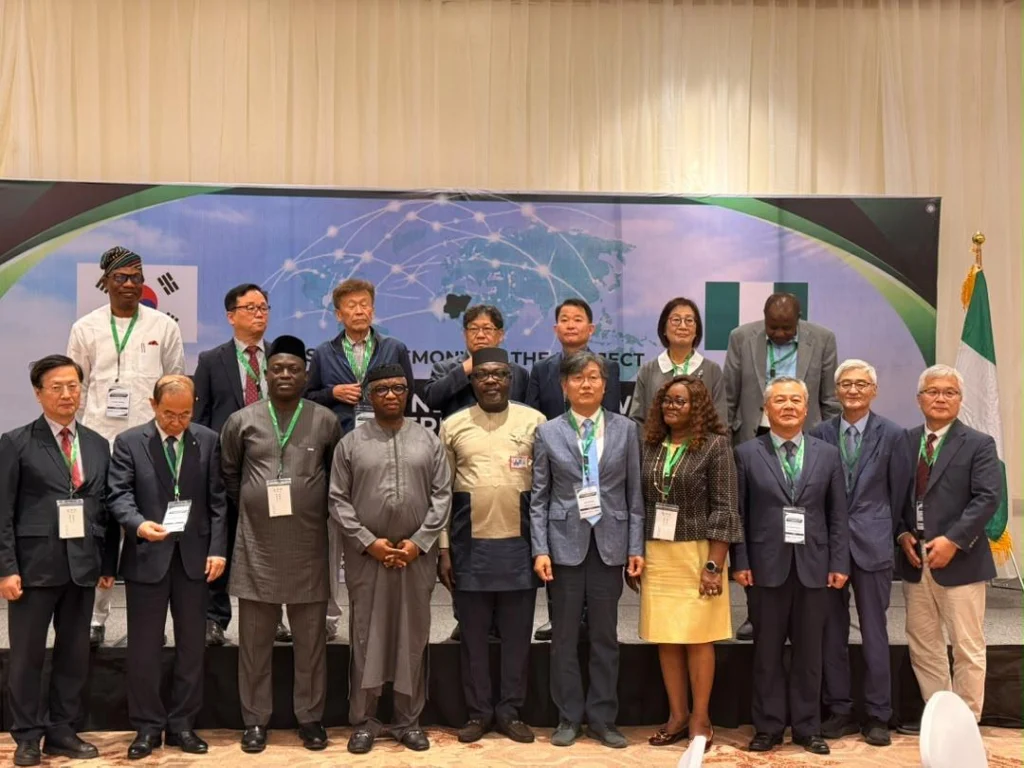
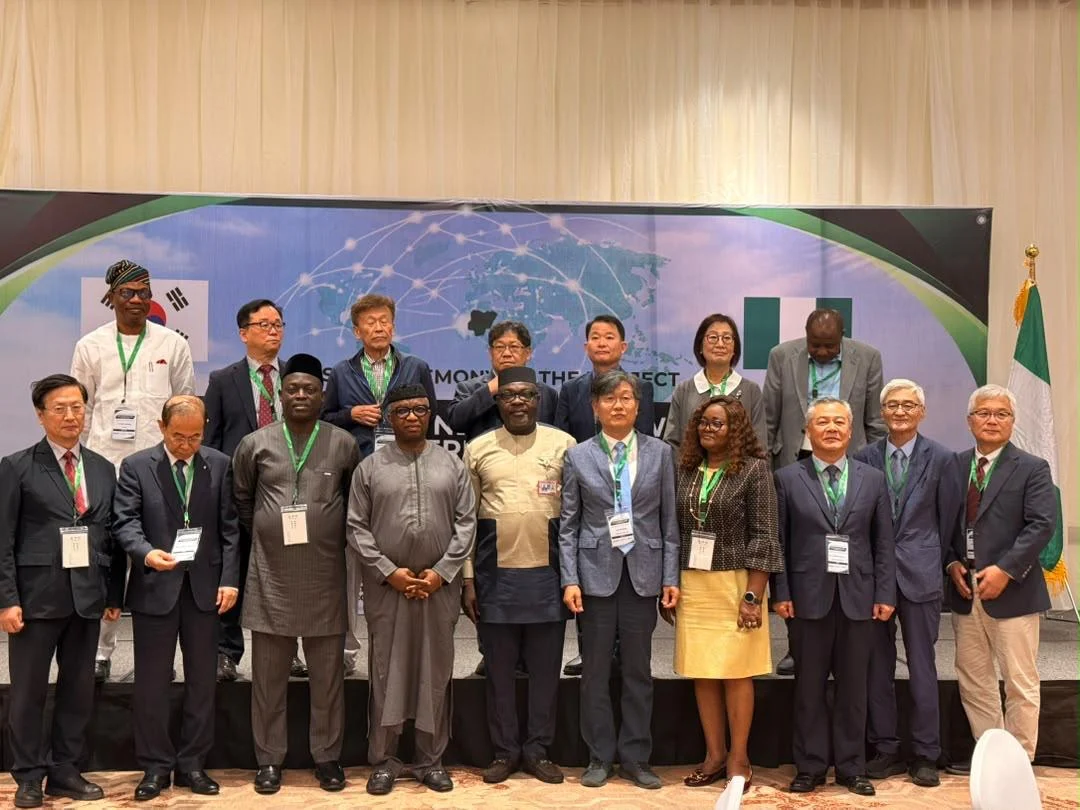
The development follows the handover of Nigeria’s e-Government Master Plan 2.0 (e-GMP 2.0) by the Korea International Cooperation Agency (KOICA) to the Federal Ministry of Communications, Innovation and Digital Economy in Abuja on Thursday, following the completion of a five-year digital governance partnership between Nigeria and South Korea.
The master plan, covering 2026 to 2030, is expected to provide the framework for transforming how government institutions operate, exchange information and deliver services, with an emphasis on moving Nigeria from disconnected digital platforms towards an integrated, citizen-centred system.
At the heart of the initiative is the recognition that putting government services online is not enough to achieve digital transformation unless the systems, databases and operations of different public institutions are interconnected.
For citizens, the proposed transformation could mean less time spent moving between government offices, fewer repetitive administrative procedures and easier access to public services through a centralised digital platform.
For government, it offers an opportunity to improve institutional coordination, strengthen accountability, reduce administrative inefficiencies and build a more reliable system for managing public information.
The handover came at the closing ceremony of KOICA’s project, Building Foundations Towards Digital Governance in Nigeria (2022–2026), which has supported the development of digital governance infrastructure, institutional frameworks and technical capacity across the public sector.
Speaking at the ceremony, KOICA Country Director, Mr Kim Eunsup, described digital governance as an increasingly important pillar of Nigeria-South Korea cooperation, stressing that the intervention was designed as a long-term investment in Nigeria’s institutional capacity rather than a collection of isolated projects.
“Digital governance has become an increasingly important pillar of Korea-Nigeria cooperation. KOICA’s support in this area reflects a long-term investment in Nigeria’s institutional capacity and its people, rather than a series of standalone projects,” he said.
The new master plan consolidates the 25 initiatives contained in Nigeria’s first e-Government Master Plan into 10 strategic initiatives organised under five pillars: Integrated Digital Infrastructure; Sustainable Digital Government; Citizen-Centric Digital Service Transformation; Digital Governance and Institutional Reform; and Innovations, Partnerships and Digital Capacity.
Developed from May 2022 through consultations with relevant government Ministries, Departments and Agencies (MDAs), with technical expertise from South Korea, the framework is intended to establish common direction and standards for digital transformation across government.
Presenting the document, Prof. Hung Kook Park, Project Manager from Sangmyung University in South Korea, outlined the project’s journey from planning to implementation, highlighting its achievements, critical success factors and roadmap for taking the master plan forward.
A significant outcome of the partnership is the soft launch of Nigeria’s first single-window Government Service Portal (GSP) in July 2026.
The portal is designed to provide a central access point for government digital services, potentially reducing the burden on citizens of navigating different institutional websites and platforms to obtain public services.
The project also delivered Enterprise Architecture frameworks for the National Information Technology Development Agency (NITDA), Nigeria Customs Service, Nigeria Immigration Service and National Identity Management Commission (NIMC).
An Enterprise Architecture Portal was handed over to NITDA in March 2026 to support the coordination and standardisation of digital systems across public institutions.
The importance of these frameworks lies in their potential to address one of the fundamental challenges of digital government: the proliferation of systems that operate independently, making information sharing and coordinated service delivery difficult.
KOICA also donated 572 mobile National Identification Number (NIN) registration devices to NIMC and the Nigerian Postal Service (NIPOST), in a move to strengthen the country’s digital identity infrastructure and expand registration capacity.
Beyond infrastructure, the partnership invested significantly in developing the human resources required to sustain the transformation.
A total of 630 state government officials from six states were trained to develop their own e-Government Master Plans, while 69 new instructors were prepared for the Nigerian e-Government Training Centre.
Furthermore, 1,646 public-sector information technology professionals benefited from four KOICA-supported DevsinGov training sessions, adding to the more than 2,000 government officials trained in Nigeria and South Korea during the earlier phase of the partnership.
The earlier intervention also facilitated the development of Nigeria’s first e-Government Master Plan and the establishment of the Nigerian e-Government Training Centre.
The scale of the latest intervention highlights the growing importance of digital infrastructure and institutional capacity to Nigeria’s public-sector reform agenda, particularly as governments worldwide increasingly rely on technology to improve efficiency, transparency and citizen engagement.
However, the handover of the e-GMP 2.0 also brings the Federal Government to a critical point: translating a comprehensive digital strategy into functioning public services that citizens can actually access and trust.
While the plan has been submitted to the Federal Ministry of Communications, Innovation and Digital Economy for formal adoption, its success will depend on sustained government investment, effective coordination among MDAs, institutional commitment and the ability to maintain the systems beyond the lifespan of donor-supported projects.
Kim acknowledged this responsibility, saying the completion of the master plan should be regarded as the beginning of national implementation rather than the conclusion of the partnership.
He emphasised that Nigerian ownership, sustained investment and strong coordination across government would determine whether the project’s achievements translated into lasting improvements.
“The close of a project is not the close of a partnership. The systems, frameworks and skills developed under this project now belong to Nigeria, and KOICA stands ready to remain a trusted partner as Nigeria takes this work forward,” he said.
KOICA, the grant aid agency of the Government of the Republic of Korea, has partnered with Nigerian institutions since 2008, supporting interventions in e-government, governance reform, digital capacity building and national ICT infrastructure development.
With the submission of the second master plan, the challenge before Nigeria is no longer simply to develop digital policies or acquire technology, but to ensure that government institutions work together through an integrated system that makes governance more efficient and public services more accessible to millions of Nigerians.

Comments