
By Maharazu Ahmed
In the politics of Katsina State, the Funtua Senatorial District is both Governor Dikko Radda’s home ground and his hardest test. The governor enters the reelection campaign as the clear favourite in a zone he carried decisively in 2023, backed by a consensus ticket, an entrenched party machine and a tour that has sought to turn incumbency into inevitability.
Yet the same zone that delivered his margin is the zone where the state’s security crisis bites deepest — and where voters will judge whether promises of peace, roads, water and fertiliser have survived contact with banditry, displacement and a budget that has not always moved as fast as the rhetoric.
Although Radda’s reelection campaign is built through disciplined messaging, backed by a relatively united local elite and a record to defend, there’s a huge contradiction the campaign can not campaign away.
In Faskari, Funtua, Malumfashi, Bakori, Matazu and Kankara, the local governments where security has most visibly failed, the governor’s political future may be decided not by the opposition’s strength, but by whether people feel safe enough and are willing enough to vote.
The 2023 baseline
The arithmetic is formidable. In 2023, Radda won 10 of the 11 local governments in the Funtua zone, losing only Kankara. Across the zone, the All Progressives Congress (APC) polled 307,985 votes against 196,502 for the Peoples Democratic Party (PDP), representing 61.0% two-party vote in the district. Radda’s strongest ground was Musawa at 70.9% and Kafur at 69.5%, followed by Malumfashi, Matazu, and Danja.
Even in the weaker contests, the APC held above 58% in Funtua, Dandume, Bakori, and Sabuwa. Only Faskari, at 54.8%, and Kankara, at 43.6%, suggested real vulnerability.
That baseline matters because it was not merely a statewide wave.
In the Funtua zone, the APC’s organisational structure, traditional networks, and local government structures had produced a result that the opposition has not yet shown it can reverse. The question in 2027, therefore, is not whether the machine still exists, it is whether insecurity, voters turnout and anger over unmet expectations can erode a margin of more than 111,000 votes from the till of the APC.
The 2027 campaign
The Radda campaign has been built to avoid the mistake that destroys incumbents – internal division. Right from the start of the party primaries, the APC has adopted a consensus ticket to reduce the space for a damaging primary. Even so, there was the aftermath bitterness, which the governor is still handling even as the campaign continues, the target fundamentally is to chaperone a party through the elections, with a house relatively settled, united and focused.
In the Senate race for the district, Senator Muntari Dandutse has been affirmed, giving the ticket a familiar, established presence at the top of the ballot in the zone. The effect is both organisational and symbolic. A consensus process allows local leaders, stakeholders, and ward structures to align behind one slate rather than spending the campaign season settling scores.
In a zone of 11 local governments with distinct rivalries, that discipline is itself a campaign asset and a signal to voters that the APC intends to govern the campaign the way it governs the state.
The scorecard
The campaign’s central set-piece has been the scorecard of the administration throughout the tour, which began from Funtua on October 28 and ended on November 8 in Matazu.
The tour’s message was direct. Judge us by what we have done.
For instance, the campaign says it has delivered 1,070 projects and used each stop to list roads, schools, health facilities, and water schemes tied to the local government visited.
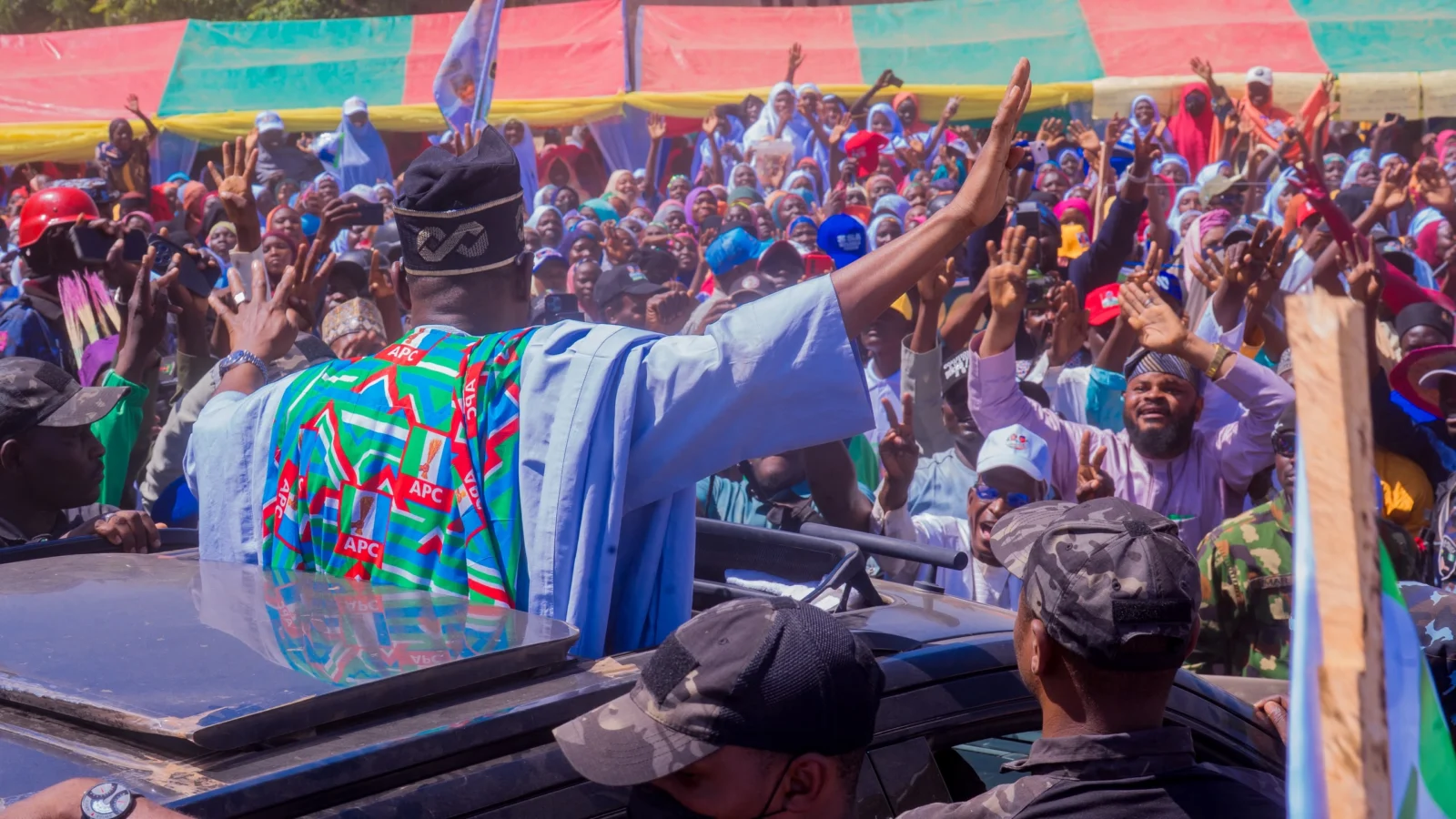
The governor has also used the tour to meet stakeholders, aggrieved party members, reward loyalists, reassure competitive areas, and show presence in places where the state’s authority has been contested. Indeed, presence matters, and the governor was there, across the Funtua zone for 12 days.
In communities that have lived with curfews, displacement, and fear, a governor who arrives is making a statement that the state has not abandoned them, even where residents may feel sceptical about it.
“We are not coming with mere promises; we are coming with a record of achievements for the people to assess,” Governor Radda consistently said during the tour of the zone.
Security: the decisive contradiction
Despite the political talks and claims, no issue defines this election in Katsina State more than security and harsh living conditions. The government claims a 70% reduction in banditry, a claim which, if true, would certainly transform the governor’s acceptability. In reality, the evidence from the zone is more fractured. Peace deals have collapsed in Bakori and Faskari. Killings and abductions are ongoing. There are also deaths linked to community watch committees.
For many voters, security is not a statistic. It is whether a road is safe after dark, whether a market can open, whether children can walk to school, and whether a farmer can bring his harvest home.
So far, the campaign’s answer has been about spending and structure. The state has confirmed N36.87 billion in security spending, while community watch arrangements, joint operations, and support for security agencies have been presented as proof of seriousness. Yet the contradiction remains: a government that says banditry has fallen sharply must still explain why some of its most loyal communities feel the least safe. In Faskari and Kankara, that gap between claim and lived experience is the election.
Agriculture and livelihoods
If security is the campaign’s vulnerability, agriculture is its most tangible pitch to rural voters. The state has promoted fertiliser at N25,000 per bag, with Funtua zone allocated 60 bags per polling unit through a distribution model designed to be visible, local, and hard for opponents to match.
For farming communities in Danja, Malumfashi, Bakori, and Kafur, fertiliser is not an abstract policy. It is the difference between a planting season that works and one that fails.
The risk, however, is that livelihoods can not be separated from security. Farmers who can not reach their farms, traders who can not move their goods, and families displaced from villages can not be compensated by subsidised inputs alone.
The campaign’s agricultural argument is strongest, where security allows people to farm. Where it does not, the same policy is evidence that the state government understands prices better than it understands protection.
The opposition fragmentation
The opposition enters the race divided. The PDP led by Yakubu Lado Danmarke, its governorship candidate, has not demonstrated that it can convert the people’s dissatisfaction into a coordinated zone-wide challenge. Similarly, the African Democratic Congress (ADC) came into the race deeply fractured, with key figures such as Mustapha Inuwa and Lawal Daura abandoning the ship. This fracture has helped the APC. Inuwa has moved to the APC, and Daura has gone to the Allied People’s Movement (APM). The result is an opposition split across parties, personalities, and structures, rather than a united opposition presenting a single alternative government-in-waiting.
Invariably, that fragmentation is Radda’s second advantage after incumbency.
In a first-past-the-post contest, a divided opposition does not need to be defeated in argument; it can simply be out-organised.
Unless the PDP, ADC, and APM find a way to cooperate — or unless insecurity itself becomes the opposition candidate — the APC’s machine is likely to hold, even where enthusiasm is thin.
Campaign violence and accountability
The campaign has already been touched by violence. On October 28, a convoy was attacked on the Yashe–Funtua road. Fourteen people were arrested. Deaths were reported, at least two. That sequence — attack, arrest, release — has become a test of accountability. Supporters of the governor say the state acted swiftly. Critics ask what swift action means if no one is held to account.
For voters, the incident is a reminder that campaign season carries real risk and that the state’s ability to protect its own convoys is inseparable from its ability to protect ordinary travellers.
The campaign must also answer a long-standing political demand. The call for the creation of Karadua State, which is backed by powerful voices across the 11 local governments of the zone. The demand speaks to a sense that Funtua zone has given much to Katsina politics and received too little in return.
How this is handled by the campaign team, and also by the opposition, whether as a distraction, a negotiation, or a promise, will shape whether the zone votes as a loyal base or as a bargaining bloc.
What to watch before polling day
Three things will decide the margin. First is the turnout. If insecurity suppresses voting in Faskari, Kankara, and other places, the APC’s statewide lead will definitely shrink, even if it still wins.
Second, security incidents in the final weeks before the election will also have huge consequences. A single major attack can undo months of messaging about the 70% reduction in insecurity. It can swing the election outcome.
Third, the opposition’s ability to unite or make the election a referendum on safety and extremely harsh living conditions rather than a choice between parties is also likely to substantially affect its outcome.
For now, Radda, with his political machine that is largely intact, seems to be the favourite. The opposition remains fragmented.
That, not withstanding, the biggest threat that will influence the outcome of the election in the Funtua zone will come not from other candidates but from fear. Even though fear does not appear on the ballot, it will decide who reaches it.
Maharazu Ahmed is a Kaduna-based media consultant
Comments