
Shettima Tasks Stakeholders to Implement Drug Control Plan with Commitment, Accountability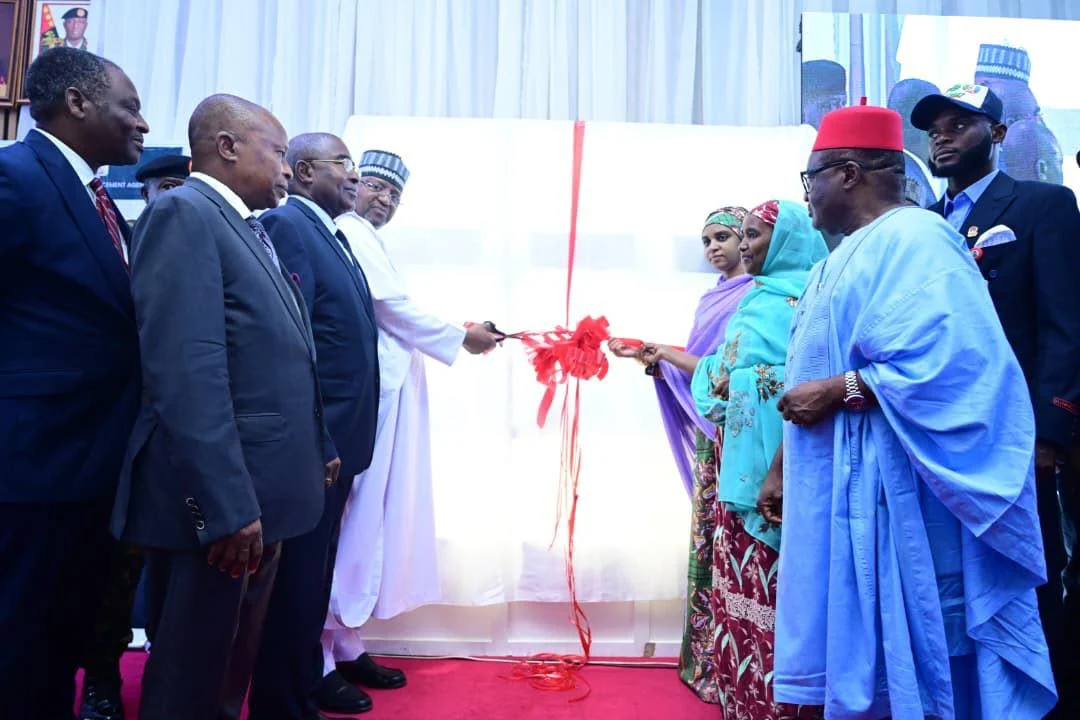
…New NDCMP will strengthen NDLEA, says Fagbemi; ECOWAS, lawmakers pledge support
Vice President Kashim Shettima has challenged all tiers of government, institutions and private sector stakeholders to translate Nigeria’s National Drug Control Master Plan (NDCMP) 2026–2030 into measurable results, warning that the country cannot afford another policy framework without sustained funding, accountability and implementation.
Shettima said drug control must remain a national priority, describing the drug problem as a public health concern, security threat, development challenge and economic issue requiring a coordinated response beyond arrests and seizures.
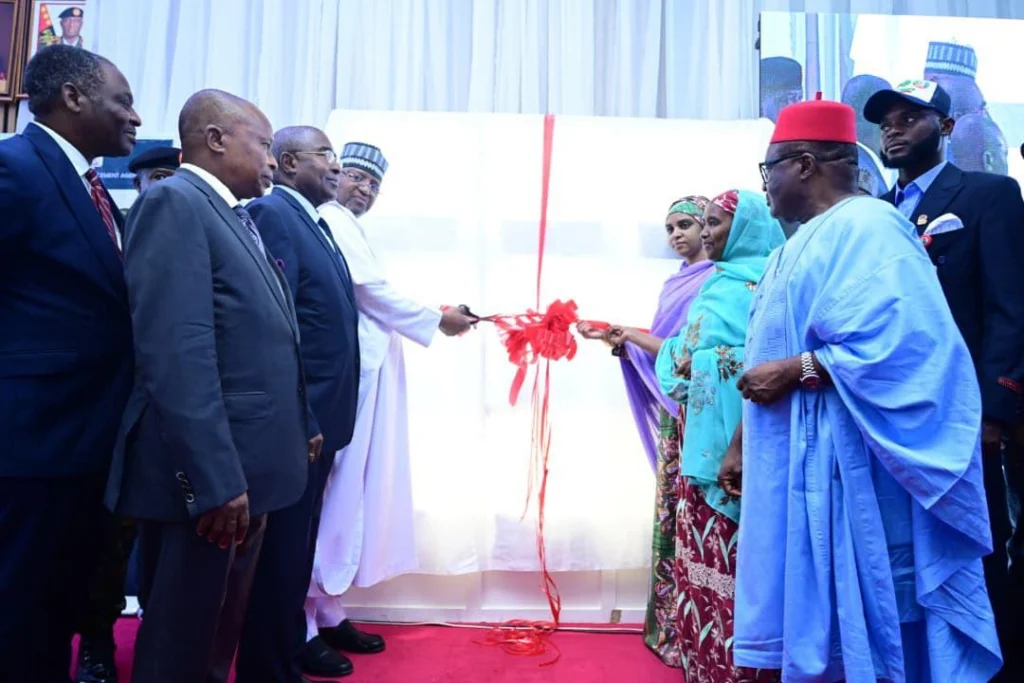
Speaking on Monday at the official launch of the five-year Master Plan in Abuja, the Vice President, represented by the Special Adviser to the President on Special Duties, Office of the Vice President, Dr Modibbo Aliyu Umar, urged federal ministries, departments and agencies, state and local governments, the National Assembly, private sector organisations, traditional and religious institutions and international partners to embrace the plan with urgency and discipline.
He said the plan, launched on behalf of President Bola Tinubu, provided a framework for addressing the country’s drug challenges through prevention, treatment, enforcement, rehabilitation, alternative livelihoods and disruption of illicit financial networks.
“A nation cannot secure its future if it fails to protect the people who must build that future,” Shettima said.
He identified the six pillars of the plan as supply reduction, drug demand reduction, access to controlled medicines for scientific and medical purposes, alternative development and sustainable livelihoods, disruption of the illicit drug economy, and governance, financing and coordination.
Shettima commended the National Drug Law Enforcement Agency (NDLEA), under the leadership of Brig. Gen. Mohamed Buba Marwa (retd.), for pioneering alternative development programmes in Africa, noting that its pilot initiative was already transforming three communities in Ondo State.
He urged state and local governments to take ownership of the programme, which seeks to replace illicit drug cultivation with legitimate agricultural activities and sustainable livelihoods.
The Vice President, however, stressed that the success of the plan would depend largely on funding and the willingness of institutions to translate its objectives into concrete actions.
“A national plan without a credible financing pathway risks becoming a declaration of good intentions,” he warned, directing stakeholders to incorporate the plan’s priorities into institutional work plans, budget proposals and implementation schedules.
He challenged each institution to identify its immediate responsibilities towards the plan, insisting that global complexities must not become an excuse for national inaction.
“Five years from now, the significance of today’s launch will not be judged by the ceremony,” he said. “Let this be the moment Nigeria moves from policy to action.”
Earlier, NDLEA Chairman and Chief Executive Officer, Marwa, said the new Master Plan was designed to consolidate previous gains, address identified shortcomings and respond to emerging threats in the drug control landscape.
He disclosed that the evaluation of the 2021–2025 Master Plan recorded 77,736 arrests, seizures of more than 14.8 million kilogrammes of illicit drugs and over 14,200 convictions, while 32,400 people received treatment, counselling and rehabilitation services.
Marwa said the evaluation also exposed gaps in coordination, financing, service delivery, data management, monitoring and accountability, as well as weak capacities at state and local government levels, which informed the development of the new framework.
He said the 2026–2030 plan would strengthen Nigeria’s response to increasingly sophisticated trafficking networks, synthetic drugs, new psychoactive substances and criminal syndicates exploiting encrypted communications and cryptocurrency.
The NDLEA chief cited the agency’s April 28, 2026, joint operation with the United States Drug Enforcement Administration (DEA) and law enforcement partners in Switzerland, France and Greece, which dismantled a transnational criminal organisation, as evidence of the need for intelligence-driven and international cooperation.
The operation led to the arrest of alleged billionaire drug baron Amadi Simon in Switzerland and two female kingpins, Jecinta Amara Ikechi in Anambra and Blessing Ngozi Amadi in Delta.
He said several bank accounts and cryptocurrency wallets linked to the network had been blocked, while the agency secured interim forfeiture of multi-billion-naira properties allegedly connected to Simon, including two hotels in Delta State and an apartment building in Mabushi, Abuja.
Marwa also recalled the dismantling of a Nigerian-Mexican methamphetamine network and a clandestine laboratory in Ogun State, involving drugs and chemicals valued at about $362.9 million, as well as the subsequent discovery of four other Mexican-linked methamphetamine laboratories in Oyo, Ebonyi and Enugu states.
The operations led to the arrest of 10 Mexican nationals and 14 Nigerian collaborators, who are facing criminal charges, he said.
Describing sustainable financing as critical to the success of the new plan, Marwa urged federal budget authorities to incorporate its priorities into annual budgets and the Medium-Term Expenditure Framework, while calling on state and local governments to make dedicated provisions for their drug control committees.
He also sought partnerships with banks, telecommunications and technology companies, agribusinesses and philanthropists to support prevention, treatment and livelihood programmes.
“A policy priority without resources is merely an aspiration,” he said, adding that the NDLEA would develop a resource mobilisation framework supported by costed implementation plans.
Marwa welcomed President Tinubu’s transmission of the National Drug Law Enforcement Agency Bill, 2026, to the National Assembly, noting that it had passed second reading, while assuring that enforcement would remain guided by the rule of law, due process and respect for human rights.
Attorney-General of the Federation and Minister of Justice, Prince Lateef Fagbemi, SAN, described the NDLEA as the bedrock of Nigeria’s drug control architecture, saying the new Master Plan would strengthen the agency by integrating law enforcement with public health, education, social development, financial investigation and community participation.
Fagbemi commended Marwa and the agency’s personnel for their contributions to intelligence operations, drug interdiction, investigation, prosecution and public sensitisation, describing the NDLEA chairman as a consistent achiever.
He pledged that the Ministry of Justice would work with the judiciary to accelerate the prosecution of drug cases in line with the Administration of Criminal Justice Act, ensure that convictions were accompanied by the confiscation of illicit assets, and strengthen mutual legal assistance, extradition and cross-border asset recovery.
The minister also praised the NDLEA’s collaboration between investigators and prosecutors at the early stages of investigations, saying it helped preserve evidence and prevent procedural errors.
He stressed the need to distinguish drug traffickers from people suffering from drug dependence, insisting that while criminal kingpins must face the full weight of the law, persons with drug use disorders required evidence-based treatment, counselling and reintegration.
Fagbemi further applauded the agency’s alternative development programme, which encourages communities to abandon illicit drug cultivation in favour of legitimate cash crops and other agricultural ventures, describing it as consistent with Tinubu’s economic philosophy of turning challenges into opportunities.
The ECOWAS Commission, represented by its Commissioner for Human Development and Social Affairs, Prof. Nassirou Bako-Arifari, described the plan as aligned with regional commitments and a significant contribution to a safer and healthier West Africa.
He said its success would depend on political will, adequate financing and cooperation among governments, civil society, communities, the private sector and international partners.
The commission pledged to support Nigeria through experience-sharing, resource mobilisation and regional coordination, noting that the country’s progress could provide direction for other member states.
The House of Representatives Committee on Drugs and Narcotics, represented by Hon. Dominic Okafor, also pledged legislative support, oversight and policy advocacy, while emphasising the need for adequate funding, accountability and coordination among implementing agencies.
The First Lady of Yobe State, Hajiya Hafsat Kollere Buni, equally assured the NDLEA of partnership in implementing the plan.
The launch, themed “Strategic Action for a Drug-Free Nation,” was attended by ministers, lawmakers, diplomats, representatives of the European Union, UNODC and ECOWAS, members of drug control committees, traditional and religious leaders, civil society organisations, private sector representatives and youth groups.


Comments