
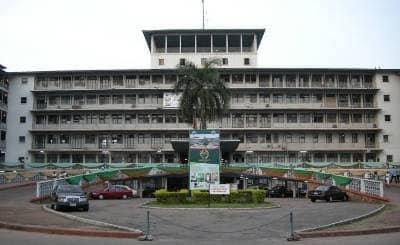
UCH CMD: After Decades of Christian Leadership, Give a Muslim a Fair Chance
_Why representation, merit and equal opportunity must shape the next appointment_
By Mallam Ibrahim Agunbiade
6 October 2026
The next Chief Medical Director of the University College Hospital, Ibadan, should be a Muslim if a qualified Muslim candidate emerges from a transparent and merit-driven selection process.
This is not a demand for religious favour. It is a demand for fair representation after decades of non-representation.
Since the emergence of the office of Chief Medical Director as reflected in UCH’s official historical record, the institution has had successive leaders, yet no Muslim has occupied the position. The succession has included Prof. E. O. Akande (1978–1984), Prof. A. O. K. Johnson (1984–1985), Prof. B. O. Osuntokun (1986–1990), Prof. O. O. Ajayi (1990–1998), Prof. M. O. Olatawura (1998–2003), Prof. A. O. Ilesanmi (2003–2011), Prof. T. O. Alonge (2011–2019) and Prof. Jesse Abiodun Otegbayo (2019–present).
Professor Otegbayo was subsequently reappointed for a second term in 2023.
There is no need to disparage any of these distinguished professionals. Their individual records should be judged on merit. But a pattern extending across decades deserves to be examined.
How long should a qualified section of the institution’s community wait before it sees one of its own given a genuine opportunity to lead?
That is the question.
UCH is a federal teaching hospital. Its mandate is national. Its patients and workforce include Muslims, Christians and Nigerians of different backgrounds. Its leadership should therefore reflect the principles of equal opportunity upon which a public institution ought to operate.
The current CMD selection process provides an opportunity to demonstrate that principle.
The position has been advertised, with stringent professional requirements covering medical registration, post-qualification experience, specialist fellowship, consultancy experience, integrity, administrative competence and other qualifications. The process is therefore fundamentally about competence.
And that is precisely the point.
There are qualified Muslims who can meet those standards.
The demand, therefore, is not that UCH should appoint a Muslim because he is Muslim. The demand is that if a Muslim candidate is professionally qualified, experienced, competent and suitable, his religion must not become an invisible barrier to his appointment.
Representation and merit are not enemies.
A Muslim CMD will not turn UCH into a Muslim hospital. He will remain the Chief Medical Director of a federal institution serving every Nigerian who walks through its doors.
Just as a Christian CMD can serve Muslim patients without difficulty, a Muslim CMD can serve Christian patients with the same professionalism.
This is why the present moment matters.
For decades, Muslim professionals have contributed to medicine, teaching, research and healthcare delivery at UCH. They have occupied senior positions and built distinguished careers. Yet the highest executive office has remained outside their reach.
It is time to ask whether that should continue indefinitely.
The same question has broader significance because of UCH’s historic relationship with the University of Ibadan, where the question of religious representation in the highest leadership has also generated legitimate concern among Muslim stakeholders.
This is not a call for religious confrontation.
It is not an attack on Christians.
It is not a rejection of merit.
It is a call for inclusion within merit.
Let every qualified candidate compete. Let credentials be examined. Let professional experience be assessed. Let integrity and vision determine the outcome.
But if a qualified Muslim emerges as the strongest candidate, let him lead without his faith becoming a disadvantage.
After decades without a Muslim Chief Medical Director, giving a qualified Muslim a genuine opportunity would not be a concession.
It would be a statement that UCH belongs to all Nigerians.
And an institution that belongs to all Nigerians should not have a leadership door that appears permanently closed to one part of its community.
Mallam Ibrahim Agunbiade
Ibadan, Oyo State