

Army Chief urges troops to strengthen mental resilience, shun drug abuse
The Chief of Army Staff (COAS), Lt.-Gen. Waidi Shaibu, has urged Nigerian Army personnel to strengthen their mental resilience, uphold warrior ethos and shun substance abuse to enhance operational effectiveness.
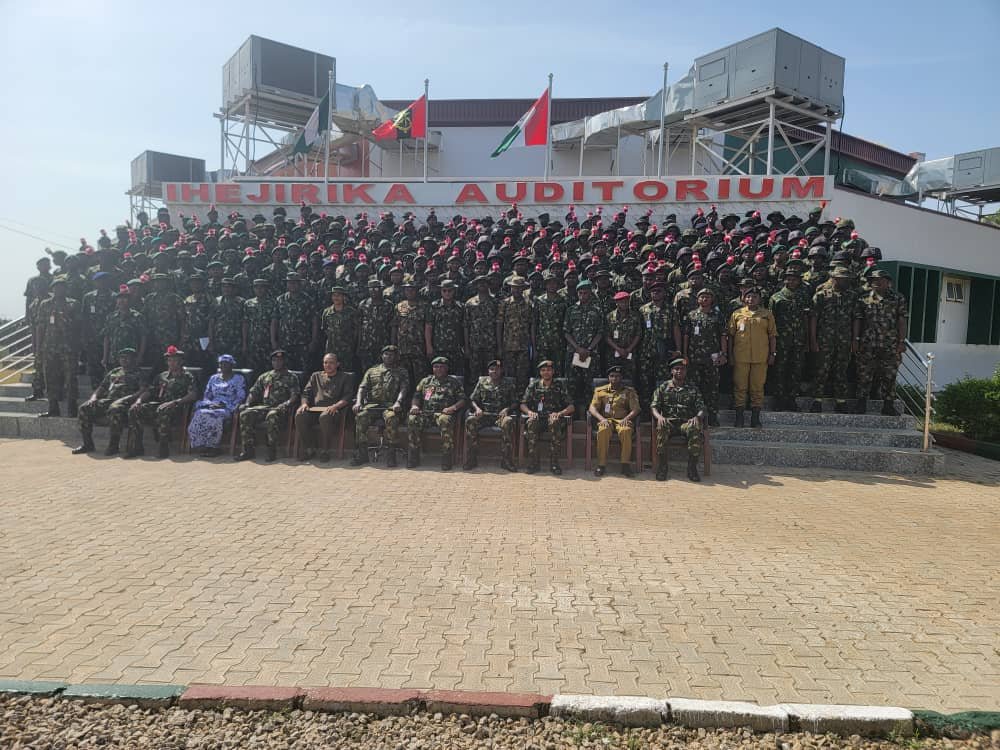
Shaibu made the call on Tuesday at a sensitisation seminar on Warrior Ethos, Post-Traumatic Stress Disorder (PTSD) Management and Drugs/Substance Abuse organised by the Army Headquarters Department of Transformation and Innovation at the Nigerian Army School of Infantry, Jaji, Kaduna State.
The COAS, represented by the Commander, Infantry Corps, Maj.-Gen. Godwin Mutkut, said the increasingly complex security environment required soldiers to demonstrate not only physical strength and combat skills but also mental resilience, emotional stability and sound judgment.
He said the ability to fight effectively depended on the strength of character, soundness of mind and resilience of individual soldiers, in addition to physical fitness and superior equipment.
Shaibu described warrior ethos as the foundation of military service, encompassing courage, discipline, loyalty, commitment to mission accomplishment and determination not to abandon fellow soldiers.
He said the values must be reinforced through purposeful leadership, realistic training, mentorship, discipline and a strong sense of responsibility among personnel.
The COAS, however, acknowledged that prolonged exposure to combat, traumatic incidents, the loss of colleagues and separation from families could impose significant psychological and emotional burdens on soldiers.
He stressed that courage did not make soldiers immune to psychological injuries, adding that the military must provide appropriate professional care and rehabilitation for personnel experiencing mental health challenges.
Shaibu urged military leaders to dismantle the stigma associated with seeking psychological support, noting that personnel should be encouraged to obtain professional assistance without fear of humiliation or unfair treatment.
On substance abuse, he warned that the misuse of drugs and other intoxicating substances could impair judgment, undermine discipline, weaken unit cohesion and expose soldiers and their colleagues to avoidable risks.
He called for a comprehensive response involving preventive education, effective supervision, early identification, medical intervention, rehabilitation and appropriate disciplinary measures.
The COAS urged commanders to recognise that substance misuse could sometimes be associated with unresolved psychological distress, prolonged stress and other personal difficulties.
He said the three focus areas of the seminar were interconnected, explaining that warrior ethos strengthened the determination to fight, psychological resilience enhanced the capacity to endure, while freedom from substance abuse preserved the judgment and discipline required for mission accomplishment.
According to him, the seminar’s outcomes should translate into practical measures at formation and unit levels, particularly in leadership awareness, psychological support, preventive education and early intervention programmes.
He also urged commanders and relevant military establishments to strengthen personnel welfare mechanisms, expand access to counselling and improve rehabilitation support, particularly for soldiers returning from prolonged or traumatic operational deployments.
Shaibu commended President Bola Tinubu, the Commander-in-Chief of the Armed Forces, for his strategic guidance and support to the Nigerian Army.
He also appreciated the Commander, Infantry Corps, the Commandant of the Nigerian Army School of Infantry, other military commanders and resource persons for their contributions to the seminar.
Earlier, the Chief of Army Transformation and Innovation, Maj.-Gen. Peter Okoye, represented by his deputy, Maj.-Gen.
Michael Agi, said the seminar was organised to reinforce the fighting spirit, strengthen regimentation and promote unit cohesion among military personnel.
Okoye said the seminar’s focus on warrior ethos, mental toughness, substance abuse and PTSD reflected the need to address psychological and behavioural challenges that could undermine military effectiveness.
He said the initiative aligned with the COAS’s command philosophy, which recognised the importance of personnel welfare and mental and physical well-being in achieving operational readiness.
The chief urged participants to engage actively in the discussions and translate the lessons into practical measures within their respective formations, units and training institutions.
He thanked the COAS for approving the seminar and providing the resources for its successful organisation.
Okoye also commended the Commander, Infantry Corps, the Commandant of the Nigerian Army School of Infantry and other military commanders for supporting the initiative.
He urged participants to use the seminar to bridge the gap between trauma and valour, while sustaining the honour of the Nigerian Army and contributing to national security.
The seminar, scheduled to hold from Oct. 26 to Oct. 31, brings together military personnel and resource persons to examine issues relating to warrior ethos, PTSD management, substance abuse and their implications for operational effectiveness. (NAN)

