

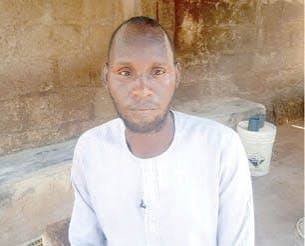
27 Years in Darkness: The Miracle of Seeing for the First Time
By Bagudu Mohammed
An extraordinary story published by Daily Trust on Saturday, 17 October 2026, invites us to reflect on the wonders of medical science, the resilience of the human spirit and the destiny helpers God places along our paths.
Under the headline “How I Regained Sight 27 Years After,” the newspaper told the story of Abdullahi Abubakar, a 30-year-old man born in Kebbi State but raised in Wudil, Kano State, who lost his sight at the age of three. After 27 years of darkness, surgery at Makkah Specialist Eye Hospital, Kano, gave him the opportunity to see the world for the first time.
Recalling his experience, Abdullahi explained that his family had visited several hospitals without success. Eventually, he accepted his condition and abandoned the search for treatment. Yet blindness brought challenges beyond the inability to see. He recalled how people sometimes treated him as though his only purpose was to be fed and cared for.
This reflects what sociologist Erving Goffman described as stigma: society reducing an individual to a perceived limitation rather than recognising the whole person. Abdullahi, however, refused to surrender to that identity. He studied Islamic knowledge, sold water and traded animals to earn a living, begging only when necessary. Friends often became his eyes, guiding him through unfamiliar places.
His breakthrough came when a neighbour, a police officer, took him for medical assessment. Doctors reportedly determined that his condition could be treated surgically, but the cost was beyond his means. An intervention by Wudil Local Government eventually connected him to the hospital, where the operation was performed.
After surgery, the doctors removed the covering from his eye, and he encountered bright light. Initially, identifying objects was difficult, but he gradually learned to recognise what he was seeing. His experience illustrates an important scientific distinction: restoring sight does not necessarily mean immediately understanding everything the eyes perceive. The brain must interpret visual information, and this learning process can take time.
One of his greatest joys was seeing his daughter’s face for the first time. He also examined his own face using his phone camera and discovered the resemblance between himself and his daughter, something his wife had often told him about. His daughter’s face became a daily source of happiness.
Imagine the emotions of a father who has loved his child without ever seeing her face, suddenly discovering her features. And imagine the love of a wife who chose him and built a family with him while he was blind. Their story reminds us that genuine love is not dependent on physical appearance.
Abdullahi was equally fascinated by the world around him. The Wudil River, people diving from its bridge, boats transporting sand, bustling markets and roadside shops became objects of wonder. Even the stars amazed him. His wife explained that the bright object was the moon while the smaller ones were stars.
He can now walk independently along familiar routes, although he continues learning about objects by asking friends to identify them. He also explained how he had previously recognised people through their voices and footsteps. Such abilities illustrate how the brain can adapt when one sense is unavailable, strengthening reliance on others.
His dreams have changed, too. Before surgery, he dreamed of things he had never physically seen, including cars. Now, he says, his dreams increasingly reflect the appearance of objects he encounters in everyday life. This raises fascinating questions about how visual experience influences the brain’s interpretation of the world.
Abdullahi’s story also challenges us to understand blindness medically rather than assume that every case is incurable. Some conditions can be reversed, others treated to preserve or improve remaining vision, while some forms of blindness remain irreversible with current medical technology.
Cataracts, for example, can often be treated surgically by replacing the cloudy lens. Certain corneal conditions may benefit from transplantation, while some retinal diseases have specialised treatments. However, advanced damage to the optic nerve, including damage caused by glaucoma, is generally irreversible. Treatment can often slow further deterioration but cannot reliably restore nerve tissue already destroyed.
The possibility of recovery therefore depends primarily on the underlying cause, the extent of damage and available treatment, not simply the number of years a person has been blind. Anyone experiencing visual impairment deserves a proper assessment by an eye specialist rather than assuming that nothing can be done.
The World Health Organization (WHO) estimates that at least 2.2 billion people worldwide have near or distance vision impairment, with at least one billion cases preventable or yet to be addressed. These figures underscore the importance of accessible eye care, early diagnosis and community-based interventions.
Abdullahi’s experience is also a reminder of the importance of opportunity. In the language of economist Amartya Sen, disability and deprivation can restrict people’s capabilities, not necessarily their determination, intelligence or willingness to contribute to society. Before surgery, Abdullahi was already working to support himself. Afterward, he received ₦100,000 from the local government chairman to restart his animal-trading business.
What a difference timely assistance can make!
I commend Wudil Local Government for facilitating his treatment, the medical team at Makkah Specialist Eye Hospital and the many unsung heroes who make life-changing medical interventions possible in our communities. Their actions demonstrate what compassionate leadership and accessible healthcare can achieve together.
For Abdullahi, this is more than recovering sight. It is an opportunity to rediscover his daughter, appreciate his surroundings, strengthen his independence and imagine new possibilities for his future.
At 30, after 27 years in darkness, he is discovering a world he has known only through sound, touch, imagination and the descriptions of others.
What a world. What a triumph of medical science. What a reminder never to underestimate the possibilities that emerge when human compassion meets scientific knowledge.
Bagudu Mohammed is the founder of Alternative Perspectives, a widely read commentary platform on social media, and writes a weekly newspaper column published every Monday on the back page of Peoples Daily.Web: https://alternativeperspective.onrender.com


