
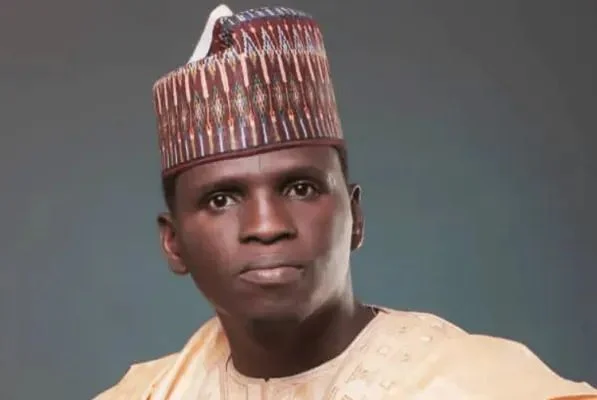
By Bagudu Mohammed
There is a pleasant piece of news coming out of Abia State, attributed to the people’s governor, Alex Otti, saying that he would not campaign for re-election, and it is making for a fascinating read, a headline, and an epic post to re-share, the kind of story that stops the thumb mid-scroll and forces even the cynic to pause.
One of the commenters called it “the audacity of performance,” and that phrase captures the drama perfectly, but what did Otti truly say?
Governor Alex Otti said he will not spend public funds campaigning for a second term because his first-term performance is already before the people to judge, and campaigning should be left to those who have not yet had the opportunity to serve, a declaration that sounds almost like a rebuke to an entire political class addicted to billboards, convoys, and rented crowds.
While I acknowledge the uncommon feat of the governor as one in a generation, as someone wrote, the question that will not leave me alone is this: would Otti still not campaign if he defects to the APC, PDP, or ADC despite his outstanding performance, can emotions remain the same, and can perception of performance, honesty, merit, and goodwill survive a change of jersey?
These are the questions that expose the complexity of politics, because as the sociologist Pierre Bourdieu warned, political capital is never owned, it is only borrowed from the field in which it is performed, and the same performance can be celebrated in one arena and booed in another.
I have been consistent in saying that perception of performance or effectiveness of leadership is mostly influenced by emotions or situation than anything else, and it is for this reason that the situational theory of leadership, as developed by Fred Fiedler and later refined by Hersey and Blanchard, dealt a heavy blow to the trait theory that proposes integrity, competence, and character as the sole determinants of good leadership.
If Obama is a good leader in the United States, he might not necessarily be the same in Kenya, because the situation is different, the followers are different, the expectations are different, and the enemies are different.
It is that situation that creates a hostile atmosphere for people like Governor Zulum of Borno, Governor Abba Yusuf of Kano, Governor Caleb Mutfwang of Plateau State, and the likes of Rarara, who once sang songs for elites and lived large without being called oppressive, until the music changed and the same voice began to sound like noise to a new audience.
Evidence on the ground suggests that Governor Charles Soludo is not necessarily doing poorly, but he largely remains unpopular, while Governor Caleb Mutfwang was excused for various insecurity challenges until he changed platforms.
Recall that Mutfwang was the one who defected and outdid Professor Nentawe, the current APC chairman, in the unusual manner of outdoing the ruling APC in the state, proving once again that in Nigeria, loyalty is often judged not by what you do, but by where you stand when you do it.
In a Matters Arising 6060 online poll conducted on its WhatsApp channel from November 7 to 16, 2026 and published on November 16, 2026, the late President Umaru Musa Yar’Adua emerged as the clear favourite among Fourth Republic presidents with 67.6% (92 of 136 votes), ahead of Goodluck Jonathan (9.6%), Muhammadu Buhari (8.8%), Bola Tinubu (8.1%) and Olusegun Obasanjo (5.9%), while in the vice-presidential category with 163 votes, Jonathan also topped the poll with 41.7%, followed by Atiku Abubakar (30.1%), Yemi Osinbajo (21.5%), Kashim Shettima (6.1%) and Namadi Sambo (0.6%), though the poll itself notes it was an opt-in channel poll, not a scientifically weighted national sample.
The favourable ranking of former President Buhari above Olusegun Obasanjo tells a deeper story, that while emotions and not necessarily performance or verifiable records often determine perception of good leadership, for as the psychologist Daniel Kahneman demonstrated in his research on judgement and decision-making, people do not remember records, they remember feelings, stories, and the last emotional impression left on them.
This is why people like Atiku, Kwankwaso, El-Rufai, and even Rarara could become heroes or villains depending on the situation and the unstable performance rate or perception of merit, because as Max Weber understood in his theory of charismatic authority, the leader does not create the moment, the moment creates the leader, and when the moment shifts, the hero of yesterday can become the villain of today without changing a single step in his dance.
Bagudu Mohammed is the founder of Alternative Perspectives, a widely read commentary platform on social media. It offers evidence-based analysis and real-life insights as a credible alternative to groupthink, convenient narratives, and echo chambers. The platform explores a wide range of issues, including politics, society, relationships, governance, and contemporary trends.
Web: https://alternativeperspective.onrender.com


Comments