Nigeria’s state governments have spent less than a quarter of the money they approved for the 2026 fiscal year, raising fresh questions about budget implementation and service delivery across the country.
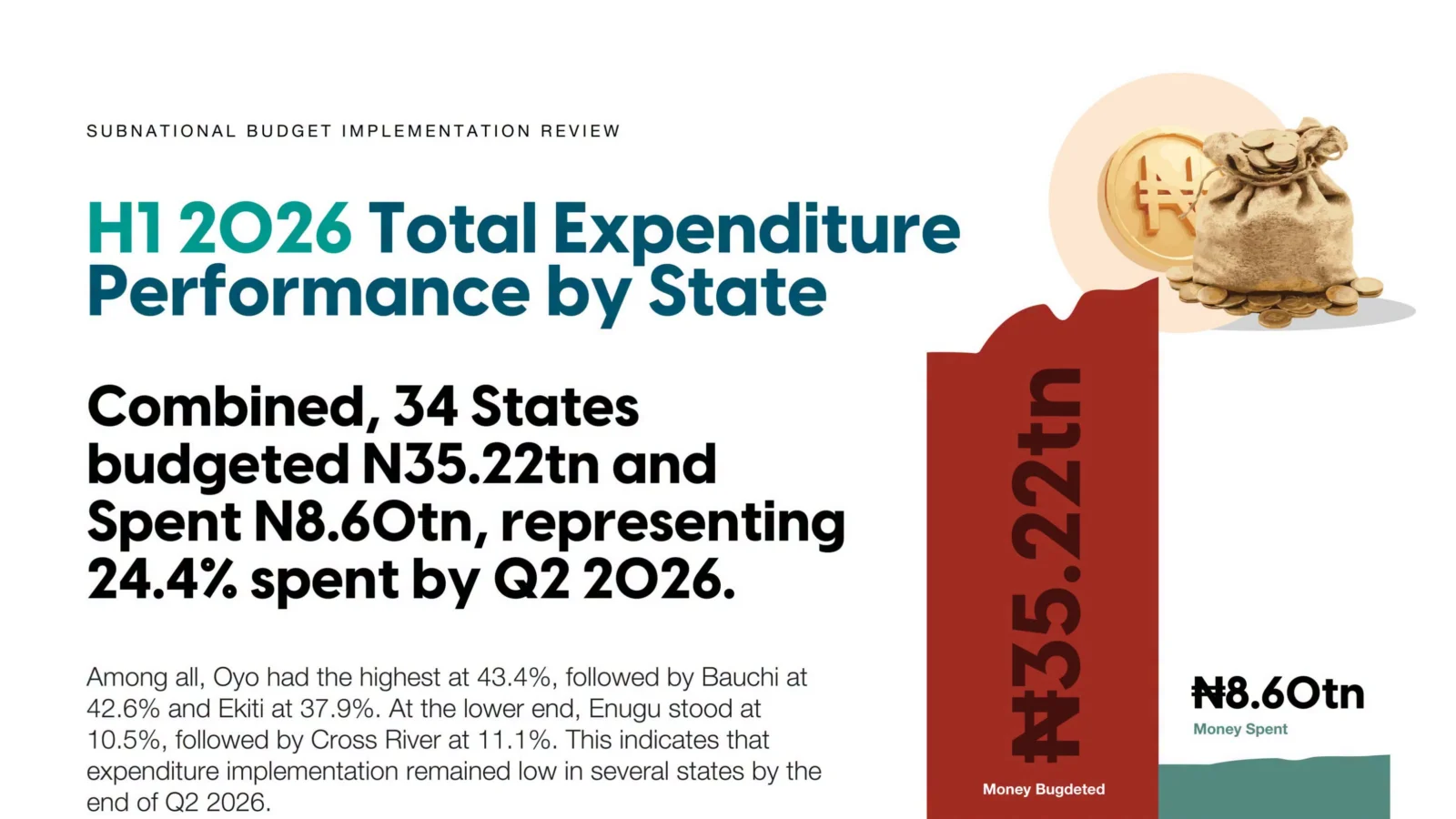
Data from state Budget Implementation Reports show that 34 states approved a combined N35.22 trillion in budgets for 2026, but had spent only N8.60 trillion by the end of the second quarter, representing 24.4 percent of total approved spending.
The figures highlight a persistent gap between budget approval and actual expenditure, a trend that has long frustrated citizens expecting improvements in infrastructure, healthcare, education and other public services.
Oyo State recorded the highest expenditure performance at 43.4 percent, followed by Bauchi at 42.6 percent and Ekiti at 37.9 percent.
At the other end, Enugu recorded the lowest performance among states with available data, spending just 10.5 percent of its approved budget. Cross River followed at 11.1 percent.
Rivers and Osun states were not assessed because their Q2 2026 Budget Implementation Reports were not available at the time of compilation.
With only 24.4 percent spent halfway into the year, analysts and civic groups say state governments must explain what is delaying implementation and when citizens will begin to feel the impact of the approved funds.
For many Nigerians, the concern is familiar: approving billions on paper does not automatically translate to better roads, schools, hospitals or jobs.
State governments are now under pressure to provide clear explanations for the delays, ensure proper accounting of public funds, and deliver visible results from the budgets they have already approved.
Comments