
FG commends Jigawa AGILE Project Implementation, ranks state among leaders in Girl-Child Education
By Ali Baba-Inuwa
The Federal Government has commended the Jigawa State Government for what it described as outstanding progress in girl-child education, digital literacy expansion, and educational inclusion through the successful implementation of the AGILE Project across the state.
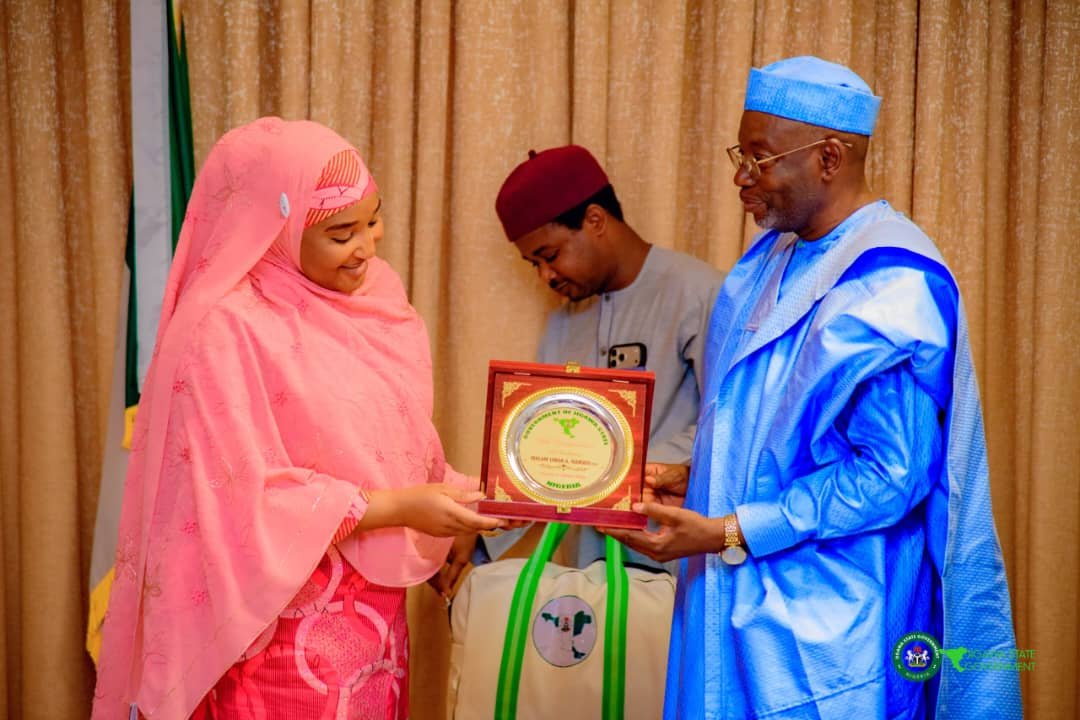
The commendation came during a courtesy visit by the Honorable Minister of State for Education, Professor Suwaiba Sa’id Ahmad, and her delegation to Governor Umar Namadi at Government House, Dutse, as part of ongoing monitoring and stakeholder engagement activities under the Adolescent Girls Initiative for Learning and Empowerment (AGILE) Project, a World Bank-supported programme implemented by the Federal Ministry of Education.
The AGILE Project is designed to improve access to secondary education opportunities, strengthen life skills, expand digital learning, and support adolescent girls between the ages of 10 and 20, particularly in underserved communities.
Addressing the governor during the visit, the Honourable Minister of State for Education said the Federal Ministry of Education was highly impressed by the level of commitment demonstrated by the Jigawa State Government toward improving educational outcomes and expanding opportunities for vulnerable children.
According to the minister, members of her delegation had spent several days visiting schools and project sites across different local government areas, including Miga, Kazaure, Dutse, Ringim, and Birnin Kudu, to assess the impact of interventions under the AGILE programme.
She stated that the team observed visible improvements in school infrastructure, digital learning facilities, sanitation systems, and support services targeted at adolescent girls across beneficiary schools.
“Reports reaching us and what we have physically witnessed today clearly show that the AGILE Project in Jigawa State is recording meaningful progress in expanding access to education, improving infrastructure, supporting adolescent girls, and strengthening digital learning opportunities across the state,” the minister said.
The minister disclosed that under the project, 1,360 classrooms had been rehabilitated, 667 new toilet facilities constructed, and 694 motorized boreholes installed to improve water access in schools across the state.
She further revealed that over 75,000 sets of furniture, alongside thousands of teaching and learning materials, had been distributed under the programme to improve classroom conditions and learning outcomes for students.
On the life-skills component of the project, the minister said that more than 11,000 adolescent girls were currently benefiting from structured mentoring and empowerment programmes supported by 420 trained mentors.
She particularly praised the confidence, communication skills, and leadership qualities displayed by students she interacted with during visits to project schools in the state.
The minister also commended Jigawa State’s growing investment in digital learning, noting that 100 senior secondary schools were already benefiting from ICT laboratories, computers, solar systems, internet connectivity, projectors, and other digital learning tools under the AGILE initiative.
According to her, the interventions align with the federal government’s broader digital education reform agenda aimed at preparing students for computer-based learning and examinations.
She further announced that Jigawa State had been selected as one of eight pilot states under the forthcoming LUMINAH 2030 Initiative—a national programme focused on expanding educational access and alternative learning pathways for vulnerable girls and out-of-school children.
The minister attributed Jigawa State’s selection to the consistency of the state government’s commitment toward girl-child education and educational inclusion.
“I will not be wrong to say that among the 36 states and the FCT, Jigawa State ranks among the leading states supporting girl-child education in Nigeria,” she stated.
The minister further stated that the educational transformation efforts taking place across the state were both encouraging and deeply personal to her.
“I want every girl child to have the opportunities that I had—and even greater opportunities. It is my hope that if educational hope can rise in Jigawa, then it can rise across Nigeria.”
Responding, Governor Umar Namadi expressed appreciation to the Federal Ministry of Education for the partnership and support being extended to Jigawa State through AGILE and other educational interventions.
He described education as one of the central pillars of his administration’s 12-Point Development Agenda and reaffirmed the state government’s determination to improve learning outcomes while drastically reducing the number of out-of-school children.
Governor Namadi stated that beyond implementing AGILE interventions, Jigawa State introduced additional monitoring and quality assurance mechanisms to guarantee transparency, accountability, and project quality.
The governor also highlighted the administration’s investments in technical and vocational education, including the establishment of eight Centres of Excellence and the upgrade of the School of Preliminary Studies, Babura, into a College of Technical and Vocational Education with investments running into billions of naira.
He further spoke on the Danmodi Student Care Initiative, established to support vulnerable students who could not continue their education due to financial or academic limitations.
According to him, over 9,936 students identified through the programme had received remedial support and sponsorship for WAEC examinations, with more than 85 percent successfully obtaining the requirements needed to continue their education.
He assured the Federal Ministry of Education of Jigawa State’s continued support for all programmes aimed at improving educational access, strengthening skills development, and empowering vulnerable children across the state.
“We believe no child in Jigawa State should be left behind. That is why we will continue investing in education and creating opportunities for every child to succeed.”